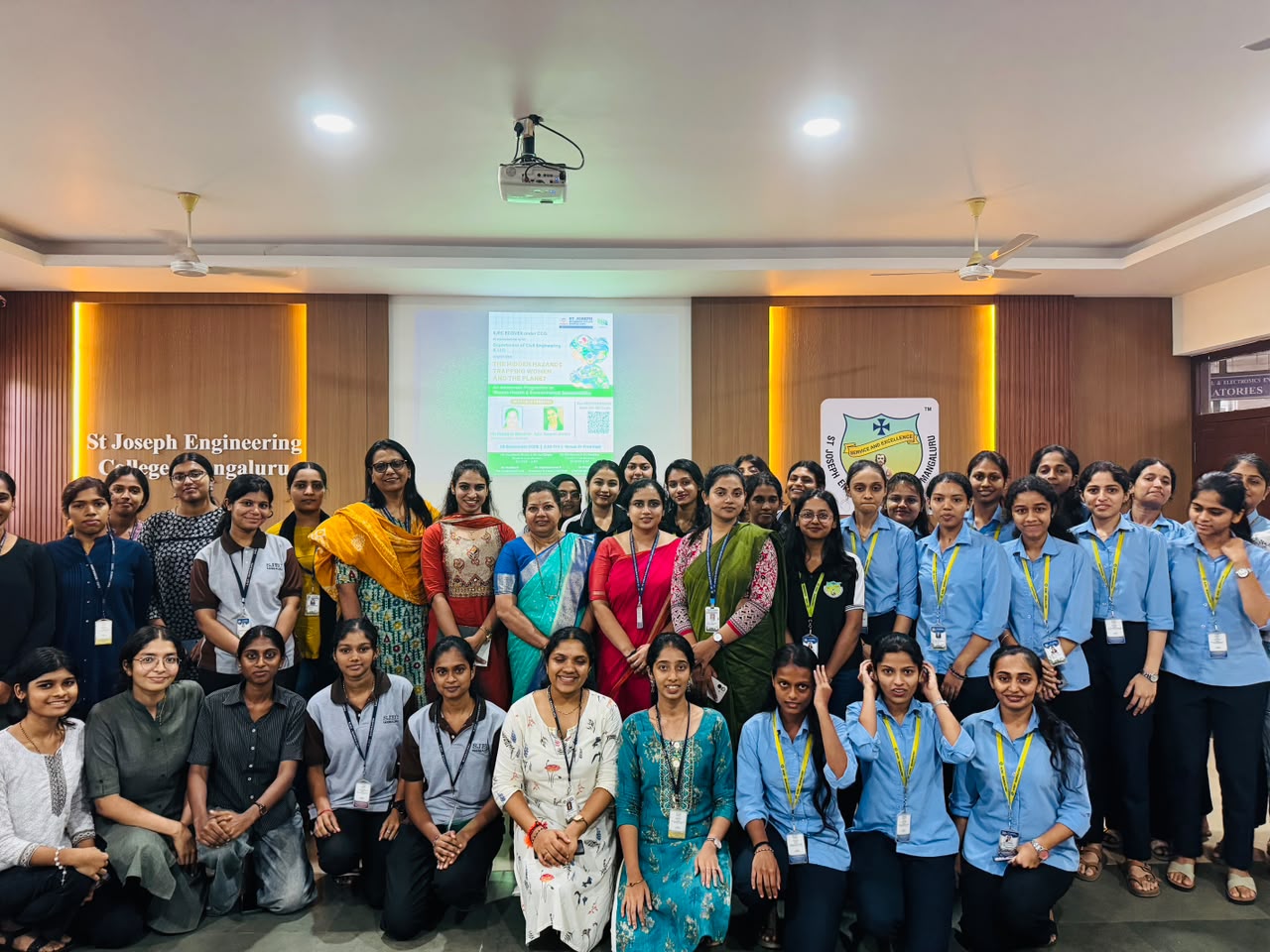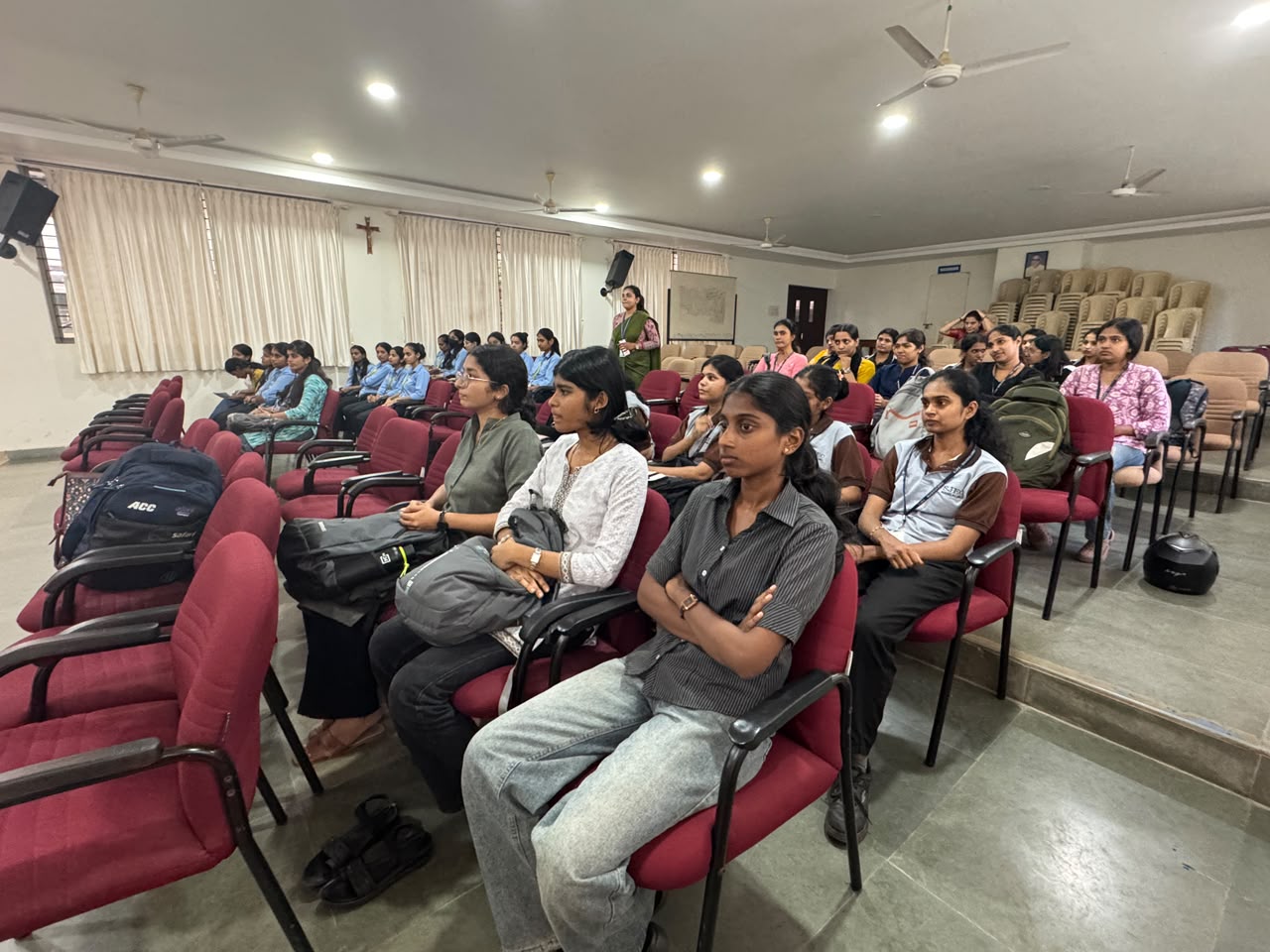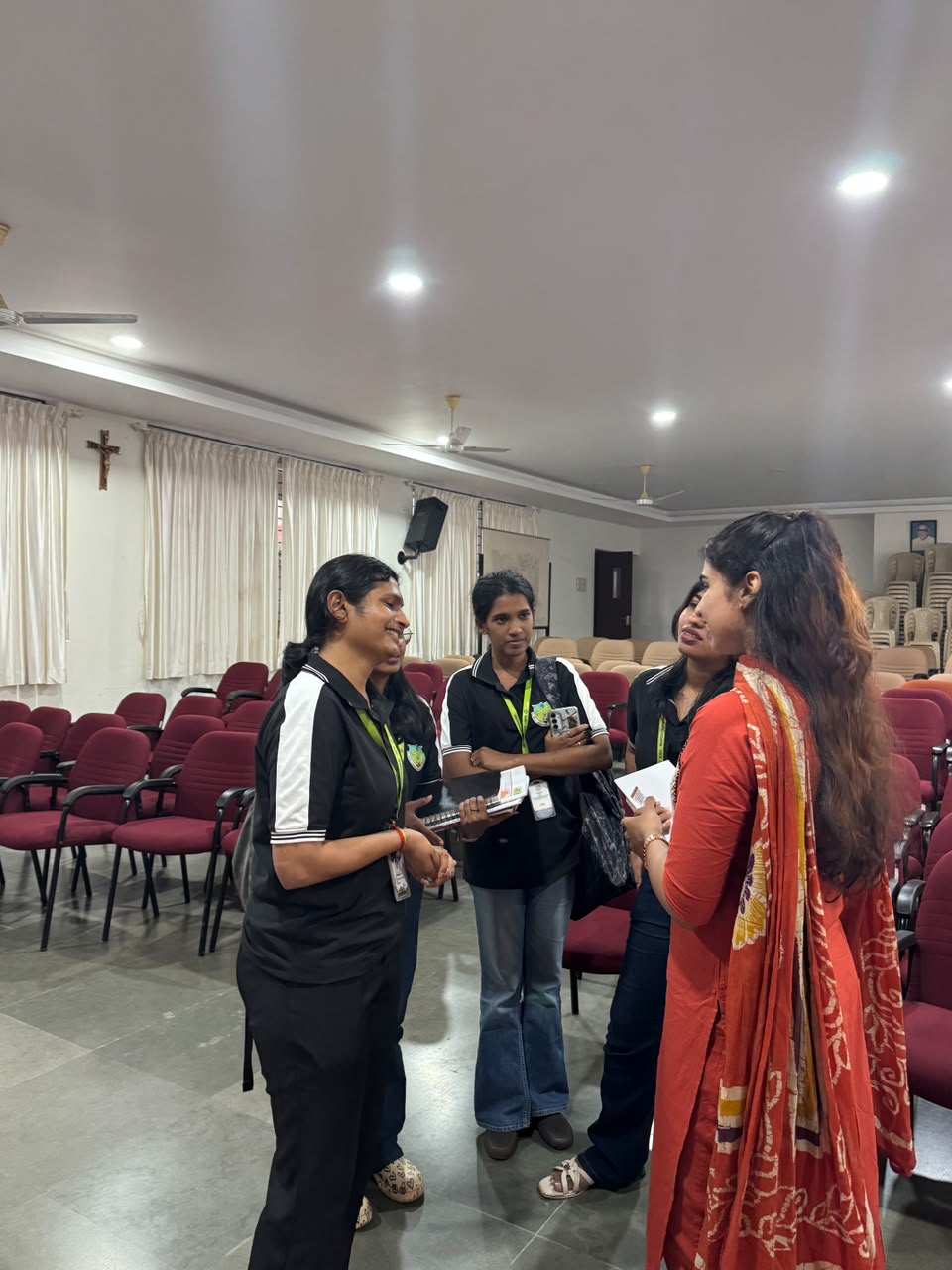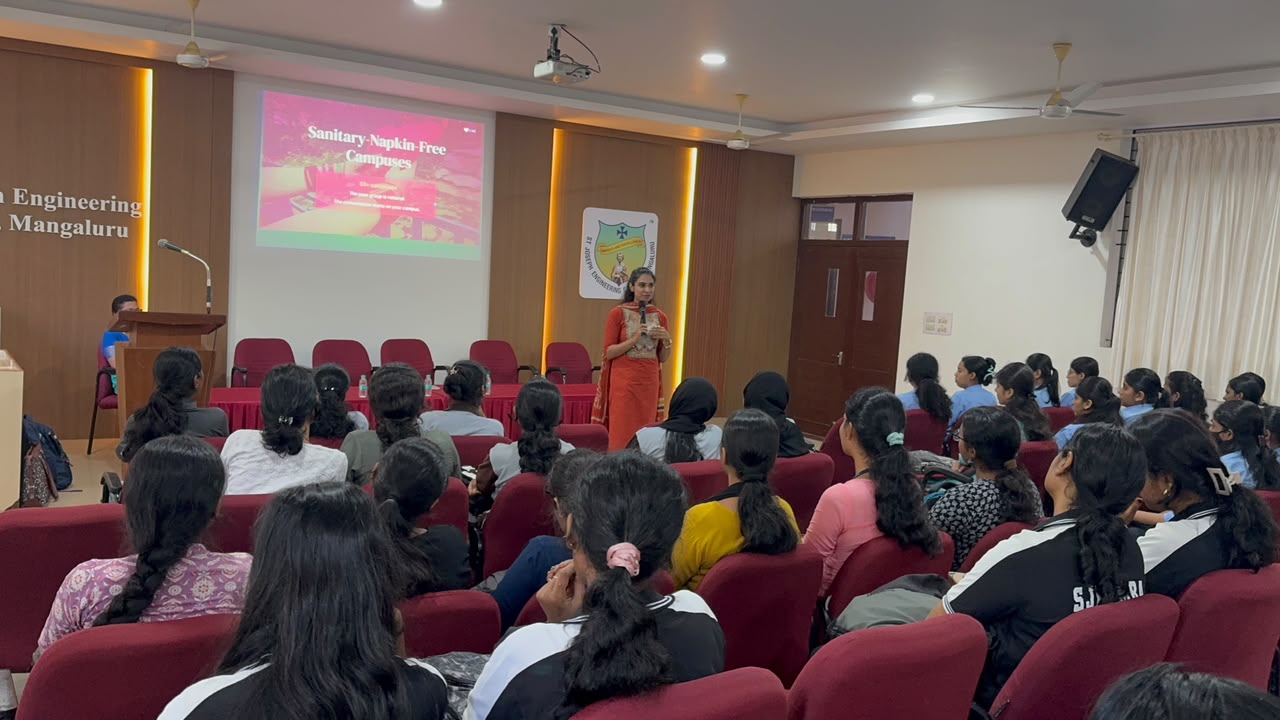
SJEC ECOVEX under CCG, in association with the Department of Civil Engineering and LLG, organized an awareness programme titled “The Hidden Hazards Trapping Women and the Planet” on 18 September 2026 at 3:30 PM at Fr. Fred Hall. The programme was coordinated by Ms. Sinchana K. and Ms. Ranjitha, Coordinators, SJEC ECOVEX. The programme was organized to create awareness among students about the interconnected impacts of everyday consumption practices on women’s health, human well-being, waste generation, and environmental sustainability. A total of 39 girl students participated in the programme. Adv. Swasti Shetty and Ms. Kalpana Bhaskar served as the resource persons and shared their perspectives on women’s health, menstrual hygiene, sustainable choices, and environmental responsibility.
The session focused on the often-overlooked environmental and health implications associated with everyday practices and consumption patterns. Particular attention was given to the connection between menstrual health, menstrual hygiene products, waste generation, and environmental sustainability. The participants were sensitized to the environmental concerns associated with disposable sanitary products, including their contribution to long-lasting waste and the challenges associated with their disposal.
The resource persons discussed reusable menstrual products as a sustainable alternative and highlighted their potential contribution to waste reduction and responsible consumption. The CARE material presented during the programme emphasized the role of reusable menstrual products in supporting zero-waste practices, climate action, and women’s empowerment. The session also encouraged students to act as awareness ambassadors and contribute to creating informed and sustainable practices within the campus community.
The programme provided students with an opportunity to understand the relationship between women’s health, menstrual hygiene, responsible consumption, and environmental sustainability. It encouraged participants to consider the environmental consequences of everyday choices and the importance of adopting sustainable alternatives. The programme aligns with SDG 12 – Responsible Consumption and Production by promoting awareness of reusable alternatives and the reduction of waste generated from disposable menstrual products.