
About the Electronics and Communication Engineering Programme
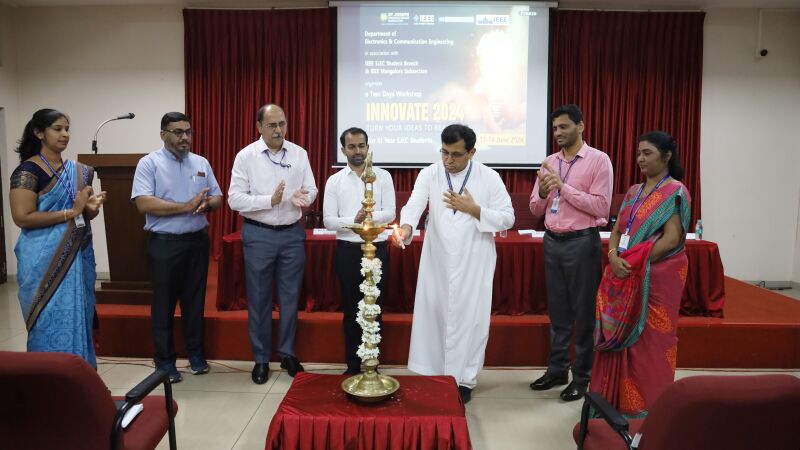
The Department of Electronics and Communication Engineering at SJEC was established in 2002 with the aim of integrating theory with real-world smart technologies. We have an industry-oriented curriculum that provides students with advanced knowledge of VLSI, 5G/6G, IoT, Artificial Intelligence, and Robotics. Our unorthodox learning method is through our unique program, the “Innovate” initiative, which mentors students on early, practical capstone projects by expert faculty members.
This is enabled by a combination of advanced laboratories, including industry tools such as Cadence and MATLAB, with strategic industry MoUs and rigorous placement training to equip graduates with the technical skills and confidence necessary to build successful careers in core electronics, product design, and modern communication sectors.
00 +
STUDENTS
00 Cr+
WORTH SOFTWARE TOOLS
00 Cr+
WORTH HARDWARE TOOLS
00 %
PLACEMENT (LAST 5 YEARS AVERAGE)
- Active and student-centric learning strategies
- Strong support mechanisms for difficult subjects through bridge courses
- Hands-on, laboratory-driven learning
- Industry exposure through workshops, internships, and expert talks
- Strong alumni and industry engagement
- Emphasis on research, innovation, and interdisciplinary projects
- Unique faculty–student mentorship system
- Core company placement training
- Encouragement for product-based and research-oriented projects
- Collaborative, problem-based assignments with rubric-based evaluation
To Excel in Electronics and Communication Engineering Education and Research, focusing on the needs of Industry and Society, with professional ethics
- Provide opportunities to deserving students for quality professional education in the field of Electronics and Communication.
- Design and deliver curricula to meet the changing needs of industry through student centric learning methodologies to excel in their profession.
- Recruit, Nurture and Retain best faculty and technical manpower.
- Consolidate the state-of-art infrastructure and equipment for teaching and research activities.
- Promote all round personality development of the students through interaction with alumni, academia and industry.
- Strengthen the Educational Social Responsibilities of the institution.
- PEO-1: Develop a strong foundation in science and engineering, gain proficiency in modern tools and technologies, and apply analytical and design skills to create innovative solutions for real-world problems.
- PEO-2: Demonstrate professionalism, ethics, and effective communication while demonstrating leadership, excelling in teamwork and multidisciplinary collaboration.
- PEO-3: Cultivate strong interpersonal skills, adaptability to evolving technologies, and a commitment to lifelong learning
Graduates of Electronics and Communication Engineering are able to:
- PO1: Engineering Knowledge: Apply knowledge of mathematics, natural science, computing, engineering fundamentals and an engineering specialization as specified in WK1 to WK4 respectively to develop solutions to complex engineering problems.
- PO2: Problem Analysis: Identify, formulate, review research literature and analyze complex engineering problems reaching substantiated conclusions with consideration for sustainable development. (WK1 to WK4)
- PO3: Design/Development of Solutions: Design creative solutions for complex engineering problems and design/develop systems/components/processes to meet identified needs with consideration for public health and safety, whole-life cost, net zero carbon, culture, society and environment. (WK5)
- PO4: Conduct Investigations of Complex Problems: Conduct investigations of complex engineering problems using research-based knowledge including design of experiments, modelling, analysis & interpretation of data to provide valid conclusions. (WK8)
- PO5: Engineering Tool Usage: Create, select and apply appropriate techniques, resources and modern engineering & IT tools, including prediction and modelling, recognizing their limitations to solve complex engineering problems. (WK2 and WK6)
- PO6: The Engineer and The World: Analyze and evaluate societal and environmental aspects while solving complex engineering problems for their impact on sustainability with reference to economy, health, safety, legal framework, culture and environment. (WK1, WK5, and WK7)
- PO7: Ethics: Apply ethical principles and commit to professional ethics, human values, diversity and inclusion; adhere to national & international laws. (WK9)
- PO8: Individual and Collaborative Team Work: Function effectively as an individual, and as a member or leader in diverse/multi-disciplinary teams.
- PO9: Communication: Communicate effectively and inclusively within the engineering community and society at large; comprehend and write effective reports and design documentation, and make effective presentations considering cultural, language and learning differences.
- PO10: Project Management and Finance: Apply knowledge and understanding of engineering management principles and economic decision-making to manage projects as a member or leader in multidisciplinary environments.
- PO11: Life-Long Learning: Recognize the need for and have the preparation and ability for (i) independent and life-long learning, (ii) adaptability to new and emerging technologies, and (iii) critical thinking in the broadest context of technological change. (WK8)
Graduates of Electronics and Communication Engineering are able to:
- PSO-1. Analyze and develop solutions in the areas of Signal Processing and Communication Systems.
- PSO-2. Apply knowledge of Embedded Systems and VLSI to design and develop solutions for societal problems.
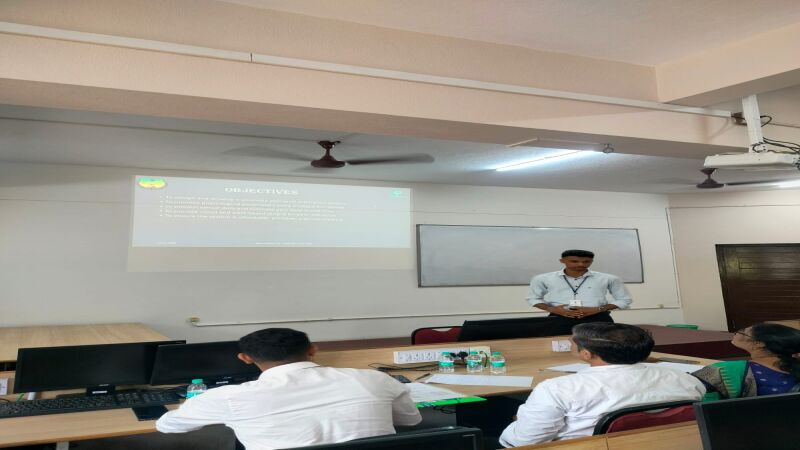
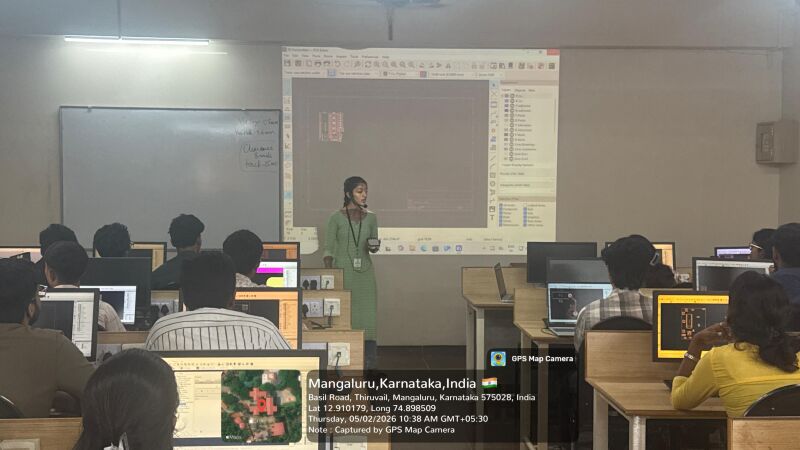
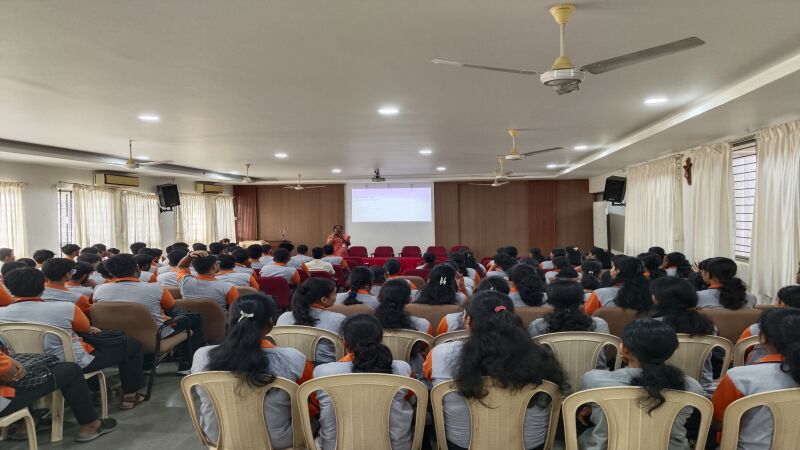
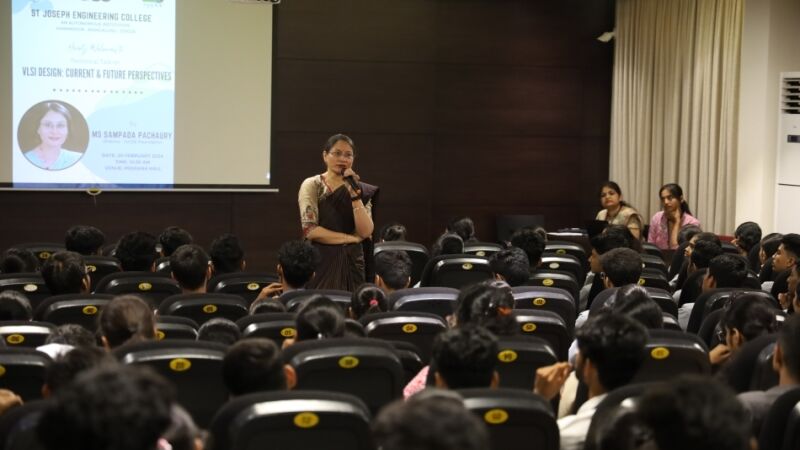
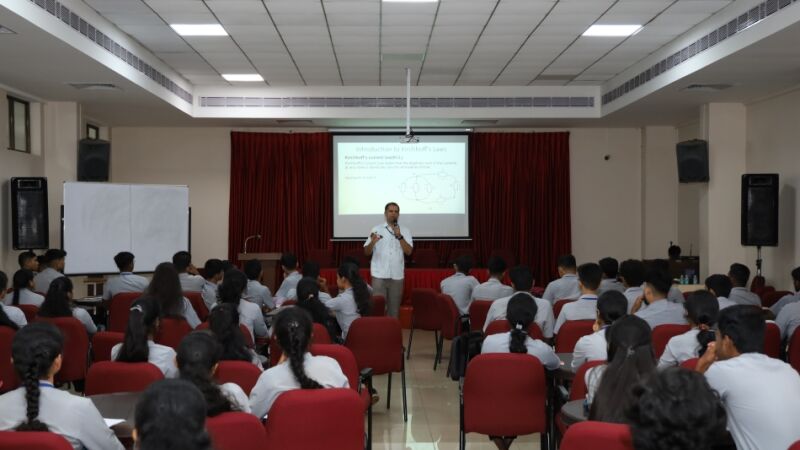
The department embraces modern pedagogies of engagement to create a conducive environment for teaching- learning. The curriculum is delivered through a right mixture of curricular, co-curricular and extra-curricular activities to ensure that the students are imbibed with the Graduate attributes that would aid in shaping successful careers.
The department embraces modern pedagogies of engagement to create a conducive environment for teaching- learning. The curriculum is delivered through a right mixture of curricular, co-curricular and extra-curricular activities to ensure that the students are imbibed with the Graduate attributes that would aid in shaping successful careers.
The Instructional Methods and Pedagogical Initiatives of the department
- Laboratory Demonstrations and Experimental-Based Learning Laboratory sessions and experimental demonstrations are regularly integrated into the curriculum to reinforce theoretical concepts through practical engagement.
- Project and Problem-Based Learning (P2BL) (Including Mini Projects) Students are continuously engaged in project and problem-based tasks that promote innovation, critical thinking, and application of technical knowledge.
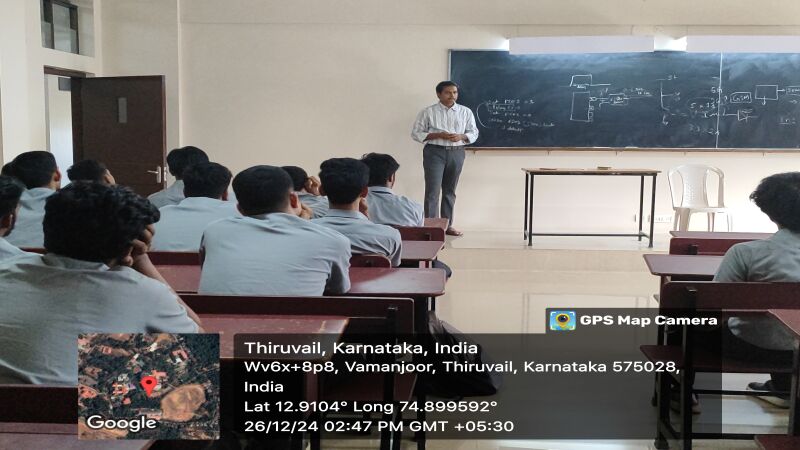
- Chalk and Talk (Traditional Board Lecturing) Traditional board-based lecturing remains an effective method for delivering structured content and encouraging interactive discussions, especially for mathematical based courses.
- Information and Communication Technology (ICT) Tools and Seamless Internet Access ICT tools and internet-enabled classrooms are consistently used to enhance teaching with multimedia content, online resources, and collaborative platforms.
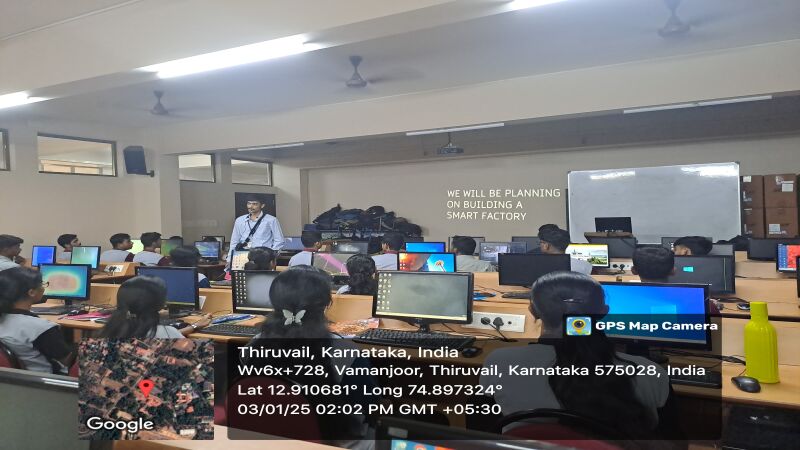
- Online Applications and Simulation Tools (e.g., Multisim Live, MATLAB Online, Cadence) Simulation tools are regularly employed to enable students to model, analyze, and visualize complex systems and design solutions in a virtual environment.
- Use of Learning Management Systems All core and elective courses are delivered through Learning Management Systems like Google Classroom and Canvas, enabling structured content delivery, assignment tracking, and active student engagement.
- Usage of Charts, Models and Visual Aids Visual aids such as models, charts, and diagrams are routinely used to improve comprehension of abstract and complex engineering concepts.
- Active Learning Strategies (Think-Pair-Share, One-Minute Paper, Brainstorming, Flipped Classrooms) Active learning techniques are embedded within classroom sessions to increase student participation, encourage reflection, and deepen understanding.
- Group Discussions and Peer Learning Structured group discussions and peer-led learning activities are regularly conducted to foster collaboration, knowledge exchange, and communication skills.
- Student Seminars and Presentations Students are encouraged to present seminars on technical topics, enabling them to explore beyond the curriculum and build confidence in public speaking.
- Case Studies Case-based discussions are adopted to help students relate engineering principles to real-world contexts, enhancing analytical and decision-making abilities.
- Virtual Labs Virtual lab platforms are actively used to complement physical laboratory sessions and provide remote access to experiments and simulations.
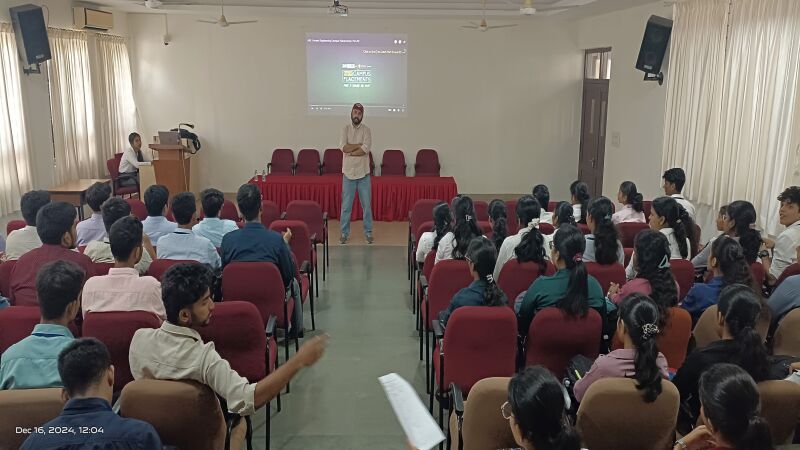
- Soft Skills and Aptitude Training (Including Mock Interviews) Training in soft skills and aptitude is provided through training vendors and mock interviews are conducted with the help of Industry partners and alumni, equipping students for placements and professional environments.
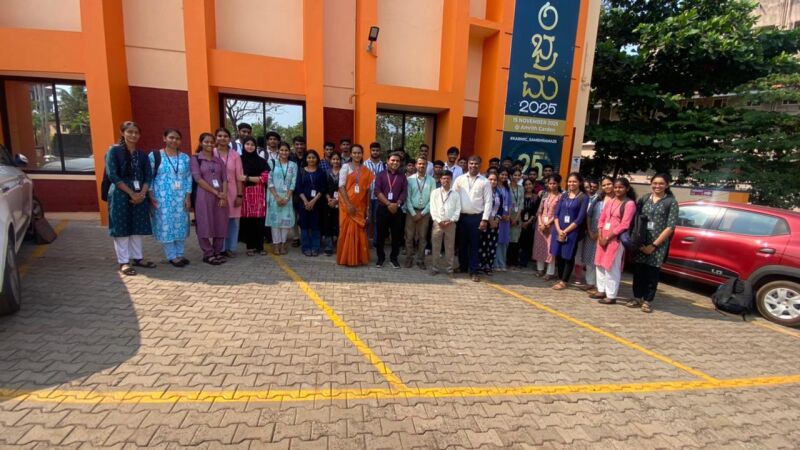
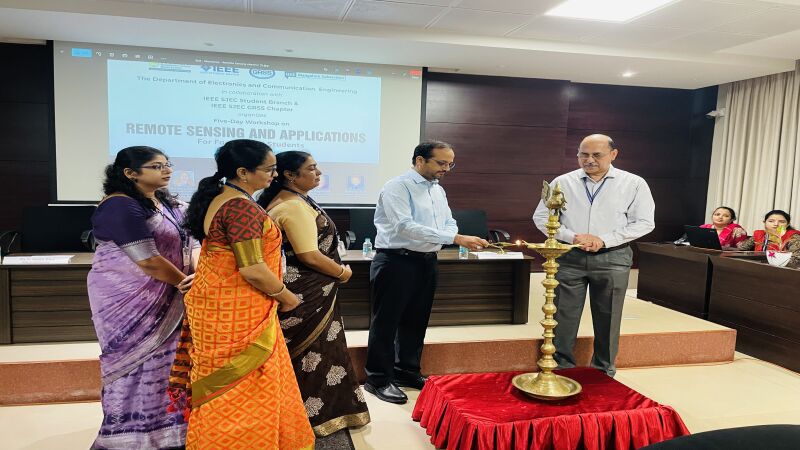
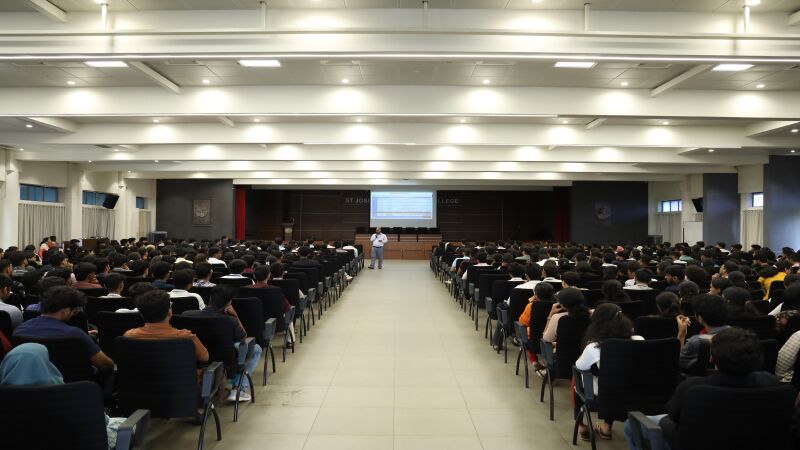
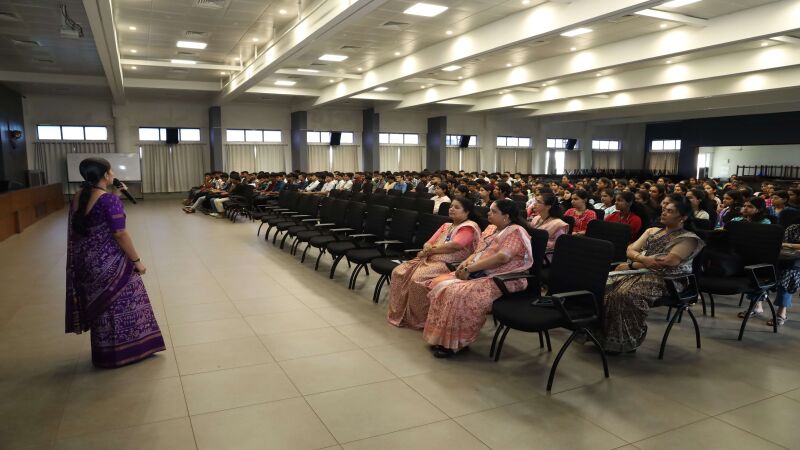
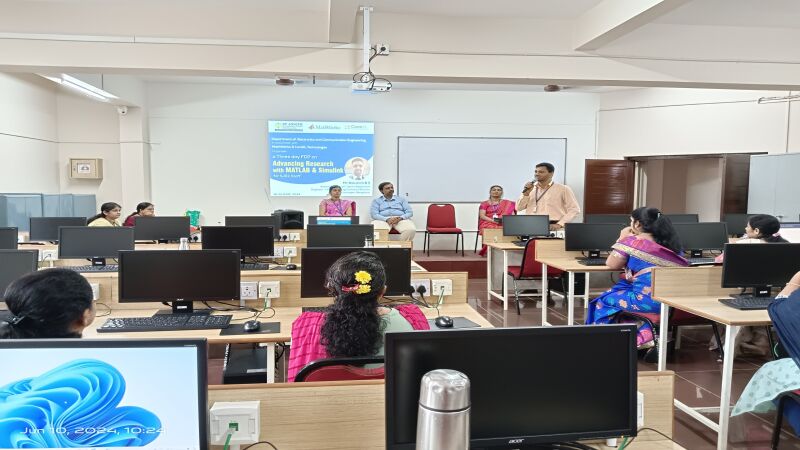
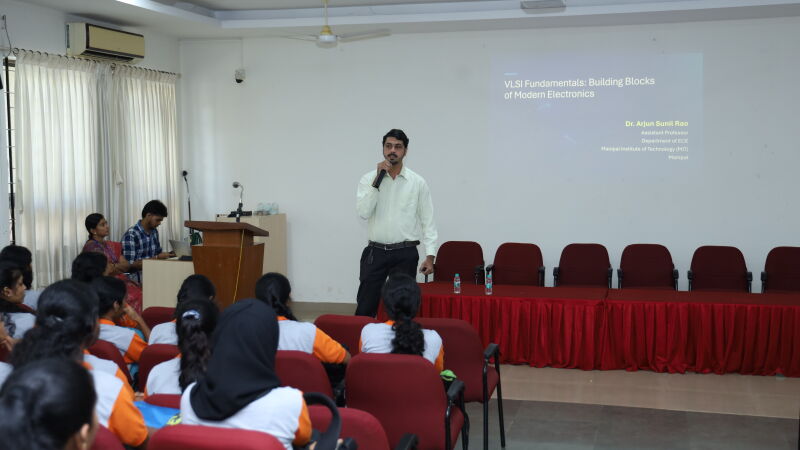
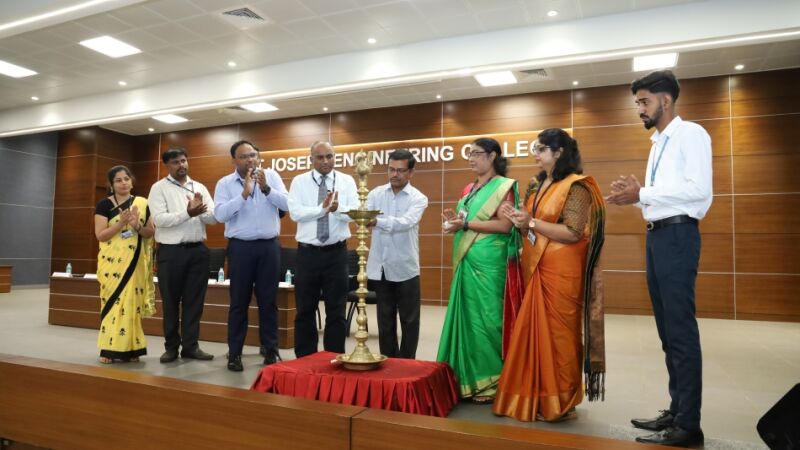
- Industry-Led Workshops and Seminars The department regularly organizes expert-led workshops and seminars to expose students to current trends, technologies, and industry practices.
- Adjunct Faculty Adjunct faculty with industry and academic expertise are engaged to enrich course delivery with practical insights and specialized knowledge.
- Industry/Research Internships Students are consistently encouraged and supported to take up internships that provide hands-on experience and exposure to industrial or research environments.
- Industrial Visits Industrial visits are organized periodically to help students understand practical applications of engineering concepts in real-time settings.
- Open Ended experiments Students are presented with open-ended problem statements that extend beyond standard lab experiments or programming tasks. They collaborate in teams to explore solutions and submit a comprehensive report documenting their approach and outcomes.
- Recorded Lectures and Educational YouTube Channels Faculty-developed recorded lectures and recommended educational videos are made available to support self-paced learning and revision.




Batch 2025-26 (Ongoing)
| Sl.No. | Name of the Student | USN | On/Off Campus Placement | Company Name |
| 1 | Adithya G Shenoy | 4SO22EC005 | on campus | Mirafra Technologies |
| 2 | Anvitha G Aithal | 4SO22EC015 | on campus | QSpiders |
| 3 | Arman | 4SO22EC016 | on campus | QSpiders |
| 4 | Channaveergouda Huttanagoudra | 4SO22EC029 | on campus | Infosys |
| 5 | Joshua Quinthino Albuquerque | 4SO22EC042 | on campus | Mirafra Technologies |
| 6 | Lekhna Shetty | 4SO22EC046 | on campus | LeadSquared |
| 7 | Lisha D S | 4SO22EC048 | on campus | Jyesta Corporate Entity |
| 8 | Lohith K S | 4SO22EC049 | on campus | Mirafra Technologies |
| 9 | Manan | 4SO22EC052 | on campus | Mirafra Technologies |
| 10 | Mansi Sujir | 4SO22EC054 | on campus | Infosys |
| 11 | Megha Vishnu Shanbhag | 4SO22EC056 | on campus | Mirafra Technologies |
| 12 | Muhammad Rabeez | 4SO22EC059 | on campus | Infosys |
| 13 | Nihaal Y K | 4SO22EC063 | on campus | EGDK |
| 14 | P Deeksha Shenoy | 4SO22EC066 | on campus | Jyesta Corporate Entity |
| 15 | P Vishwas Karanth | 4SO22EC067 | on campus | Karmic Semiconductor Pvt Ltd |
| 16 | Prathiksha S | 4SO22EC072 | on campus | Jyesta Corporate Entity |
| 17 | Prithvi | 4SO22EC075 | on campus | Karmic Semiconductor Pvt Ltd |
| 18 | Rahul Maddikeri | 4SO22EC076 | on campus | Mirafra Technologies |
| 19 | Rakesh Hikadi | 4SO22EC078 | on campus | Infosys |
| 20 | Ranjitha Shetty | 4SO22EC081 | on campus | Jyesta Corporate Entity |
| 21 | Sayeda Tehrim | 4SO22EC095 | on campus | Mirafra Technologies |
| 22 | Sharath S | 4SO22EC099 | on campus | Metrohm India Pvt Ltd |
| 23 | Shashank K | 4SO22EC101 | on campus | Jyesta Corporate Entity |
| 24 | Shreesha Kumar M G | 4SO22EC104 | on campus | Mirafra Technologies |
| 25 | Swastik Gurudev Bhandarkar | 4SO22EC113 | on campus | WPG Electronics India (P)Limited |
| 26 | Vignesh C Shet | 4SO22EC119 | on campus | Mirafra Technologies |
| 27 | Vijay M | 4SO22EC120 | on campus | Mirafra Technologies |
| 28 | Vinutha D | 4SO22EC124 | on campus | Karmic Semiconductor Pvt Ltd |
| 29 | Yashas K | 4SO22EC125 | on campus | Quality Austria Central Asia |
| 30 | Jonathan Ezekiels | 4SO22EC126 | on campus | Mirafra Technologies |
| 31 | Gowtham R | 4SO23EC402 | on campus | Metrohm India Pvt Ltd |
| 32 | Melwin Lobo | 4SO23EC405 | on campus | Metrohm India Pvt Ltd |
| 33 | Puneeth A | 4SO23EC406 | on campus | Evobi Automations Private Limited |
| 34 | Varna | 4SO23EC411 | on campus | Mirafra Technologies |
| 35 | Russel Vernon Gonsalves | 4SO22EC087 | off campus | Anglo Eastern |
| 36 | Shaaron Dias | 4SO22EC096 | off campus | Anglo Eastern |
Batch 2024-25
| Sl.No. | Name of the Student | USN | On/Off Capus Placement | Company Name |
| 1 | Aashish Manuel Noronha | 4SO21EC003 | on campus | Brevera technologies |
| 2 | Abhilash C V | 4SO21EC004 | on campus | Pentagon space pvt. ltd |
| 3 | Abhishek B. H. | 4SO21EC005 | on campus | Rinex technologies private limited |
| 4 | Aditya S. Achar | 4SO21EC006 | on campus | Rinex technologies private limited |
| 5 | Akarshan V H | 4SO21EC007 | on campus | Evobi automations pvt ltd |
| 6 | Alex Rojan | 4SO21EC008 | on campus | Mirafra technologies |
| 7 | Ashok Pius DSa | 4SO21EC012 | on campus | Mirafra technologies |
| 8 | Avinash | 4SO21EC013 | off campus | Mister Light Electrical Insulations |
| 9 | B Vikas | 4SO21EC014 | on campus | Blackfrog technologies |
| 10 | Brinda | 4SO21EC015 | on campus | Bosch automotive electronics india private limited |
| 11 | Dafny Treeza Dlima | 4SO21EC017 | on campus | Glowtouch technologies private limited |
| 12 | Deepak N H | 4SO21EC018 | on campus | Yazaki india |
| 13 | Deevith Hegde | 4SO21EC019 | on campus | Global e-softsys |
| 14 | Dhyan Rao | 4SO21EC021 | on campus | Yazaki india |
| 15 | Divya Lavita Dsa | 4SO21EC022 | off campus | Mym global solutions |
| 16 | Durga Swasthik Shetty | 4SO21EC023 | off campus | Sv ideas engineering services private limited |
| 17 | Eden Fernandes | 4SO21EC024 | on campus | Seg automotive |
| 18 | Gowrish M N | 4SO21EC027 | on campus | Palle technologies |
| 19 | Havala P N | 4SO21EC030 | on campus | Mirafra technologies |
| 20 | Jason Linus Rodrigues | 4SO21EC035 | on campus | Mirafra technologies |
| 21 | Joan Sebastian | 4SO21EC037 | off campus | Samprada software technologies |
| 22 | Jyothika K J | 4SO21EC039 | on campus | Yazaki india |
| 23 | K Anusha Prabhu | 4SO21EC040 | on campus | Bosch automotive electronics india private limited |
| 24 | Keerthana C Shetty | 4SO21EC042 | on campus | Infosys |
| 25 | Khushi Prakash Yadiyal | 4SO21EC043 | on campus | Rinex technologies private limited |
| 26 | Khushi Shetty | 4SO21EC044 | on campus | Sophrosyne semiconductor |
| 27 | Lanish Abhishek Pinto | 4SO21EC046 | on campus | Rinex technologies private limited |
| 28 | Lanvil Dsa | 4SO21EC047 | off campus | Exponent energy |
| 29 | Loyed Steeven Dias | 4SO21EC050 | on campus | Infosys |
| 30 | M Ranjith Rai | 4SO21EC051 | on campus | Brevera technologies |
| 31 | Mahanth Priya H | 4SO21EC053 | on campus | Light mechanics pvt ltd. |
| 32 | Mahee U | 4SO21EC054 | on campus | Palle technologies |
| 33 | Maneeth K H | 4SO21EC055 | on campus | Light mechanics pvt ltd. |
| 34 | Manish | 4SO21EC056 | on campus | Evobi automations pvt ltd |
| 35 | Melanie Lyan Dsouza | 4SO21EC058 | on campus | Infosys |
| 36 | Nihal N. S. | 4SO21EC062 | on campus | Mirafra technologies |
| 37 | Nithin Kumar S I | 4SO21EC063 | on campus | Global e-softsys |
| 38 | Omkar Bhat | 4SO21EC065 | on campus | Mirafra technologies |
| 39 | Pratheesh S Poojary | 4SO21EC070 | on campus | Rialto enterprises |
| 40 | Prathik P Shetty | 4SO21EC071 | on campus | Prerana engineering works |
| 41 | Pratiksha Padmanabha Shetty | 4SO21EC072 | on campus | Mirafra technologies |
| 42 | Prerana P | 4SO21EC073 | on campus | Kvp business solutions pvt ltd |
| 43 | Rakshith | 4SO21EC076 | on campus | Sophrosyne semiconductor |
| 44 | Ratnesh Keshava Kunder | 4SO21EC077 | on campus | Yazaki india |
| 45 | Rickson D'Souza | 4SO21EC079 | on campus | [24]7.ai |
| 46 | S. Sindhushree | 4SO21EC081 | on campus | Brevera technologies |
| 47 | Sahaj Shetty | 4SO21EC082 | on campus | Light mechanics pvt ltd. |
| 48 | Sanjay K R | 4SO21EC088 | on campus | Light mechanics pvt ltd. |
| 49 | Sarvika S | 4SO21EC089 | on campus | Solaredge |
| 50 | Shama M | 4SO21EC090 | on campus | Mirafra technologies |
| 51 | Shama Shivanand | 4SO21EC091 | on campus | Kyndryl |
| 52 | Sharan Rai | 4SO21EC092 | on campus | Kyndryl |
| 53 | Sheline K V | 4SO21EC094 | on campus | Yazaki india |
| 54 | Shravan V K | 4SO21EC095 | off campus | Zilliot |
| 55 | Shreyas SH | 4SO21EC100 | on campus | Light mechanics pvt ltd. |
| 56 | Sinchana B R | 4SO21EC102 | on campus | Mirafra technologies |
| 57 | Sinchana S Rai | 4SO21EC104 | on campus | Yazaki india |
| 58 | Sindhu Bannikal | 4SO21EC105 | on campus | Palle Technologies |
| 59 | Soumya Gond | 4SO21EC107 | on campus | Glowlogics solutions |
| 60 | Sudarshan Kumar M | 4SO21EC108 | on campus | Infosys |
| 61 | Sujan S Salian | 4SO21EC109 | on campus | Light mechanics pvt ltd. |
| 62 | Sweekrithi K S | 4SO21EC112 | on campus | Sri shasha prayathi technologies pvt. ltd. |
| 63 | Varun Kamath | 4SO21EC118 | on campus | Kvp business solutions |
| 64 | Vijeth K Gowda | 4SO21EC120 | on campus | Infosys |
| 65 | Vineeth K P | 4SO21EC122 | on campus | Egdk india private limited |
| 66 | Mohammed Fuzail | 4SO21EC125 | on campus | Kvp business solutions pvt ltd |
| 67 | Anupam Balakrishna Shetty | 4SO21EC126 | on campus | Hourglass research |
| 68 | Deekshith Rajan | 4SO21EC128 | on campus | Arrow electronics |
| 69 | Jithesh | 4SO22EC404 | on campus | Cape electric |
| 70 | Ranjith R | 4SO22EC408 | on campus | Mirafra technologies |
| 71 | Sukesh | 4SO22EC410 | on campus | Windcare india private limited |
Batch 2023-2024
| Sl.No. | Name of the Student | USN | On/Off Campus Placement | Company Name |
| 1 | Abhinav Sudesh | 4SO20EC004 | on campus | Yazaki |
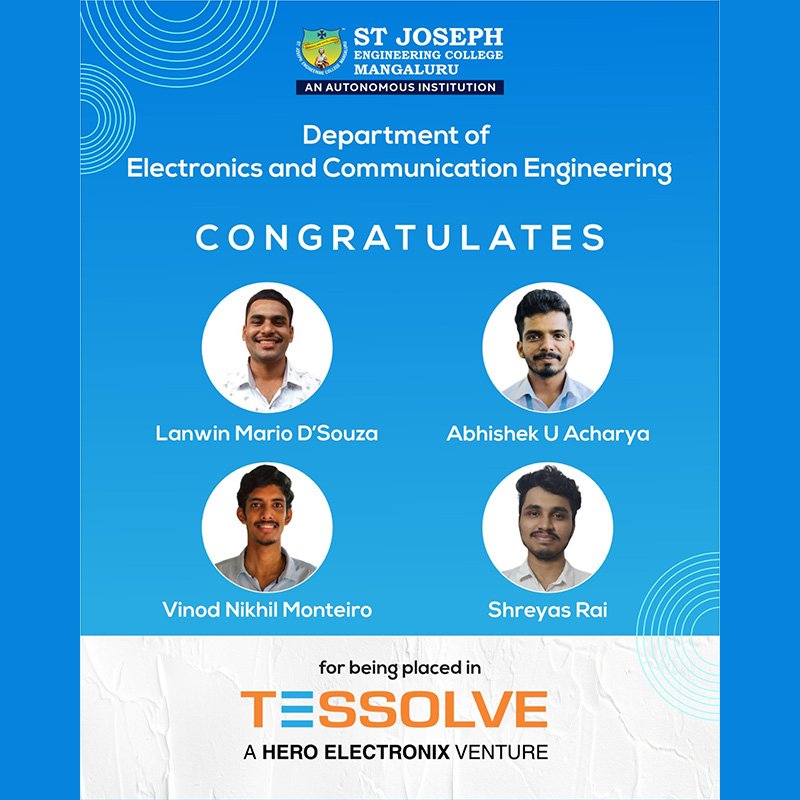
| 2 | Abhishek U Acharya | 4SO20EC005 | on campus | Tessolve |
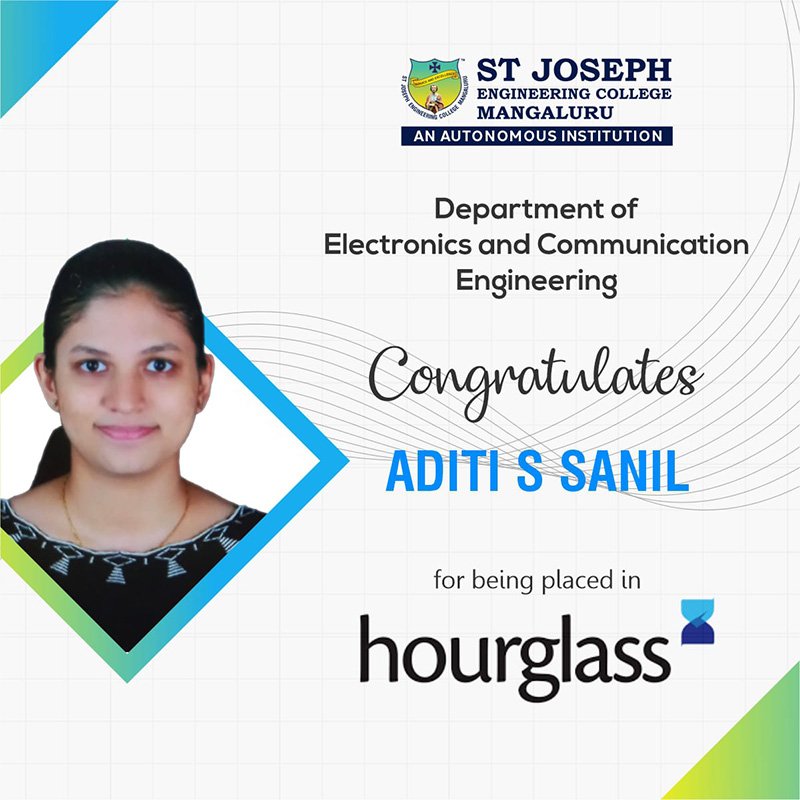
| 3 | Aditi S Sanil | 4SO20EC006 | on campus | Hourglass |
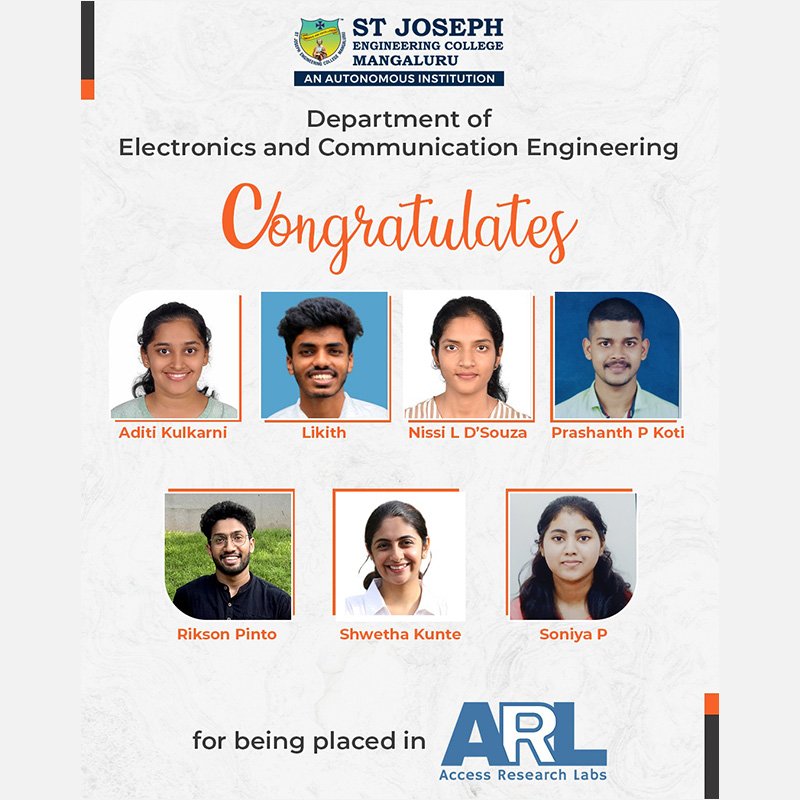
| 4 | Aditi Kulkarni | 4SO20EC007 | on campus | ARL |
| 5 | Ajay George M A | 4SO20EC009 | on campus | Cape electric |
| 6 | Akshatha | 4SO20EC011 | on campus | Kodnest |
| 7 | Anagha J Rao | 4SO20EC014 | on campus | Glow touch |
| 8 | Anagha suvarna | 4SO20EC015 | on campus | Surya software |
| 9 | Ananya Aithal | 4SO20EC016 | on campus | Bosch |
| 10 | Ananya N | 4SO20EC017 | on campus | Pentagon space |
| 11 | Anusha M J | 4SO20EC019 | on campus | Teachnook |
| 12 | Anushree G Maralihalli | 4SO20EC020 | on campus | Siemens |
| 13 | Anushree N Jain | 4SO20EC021 | on campus | Teachnook |
| 14 | Ashlyn Elvira Dsilva | 4SO20EC023 | on campus | Siemens |
| 15 | Chaithra K Devadiga | 4SO20EC025 | on campus | X-workz |
| 16 | Deeksha Rai K | 4SO20EC026 | on campus | Glowtouch technologies |
| 17 | Deekshith D | 4SO20EC027 | off campus | Petrocon |
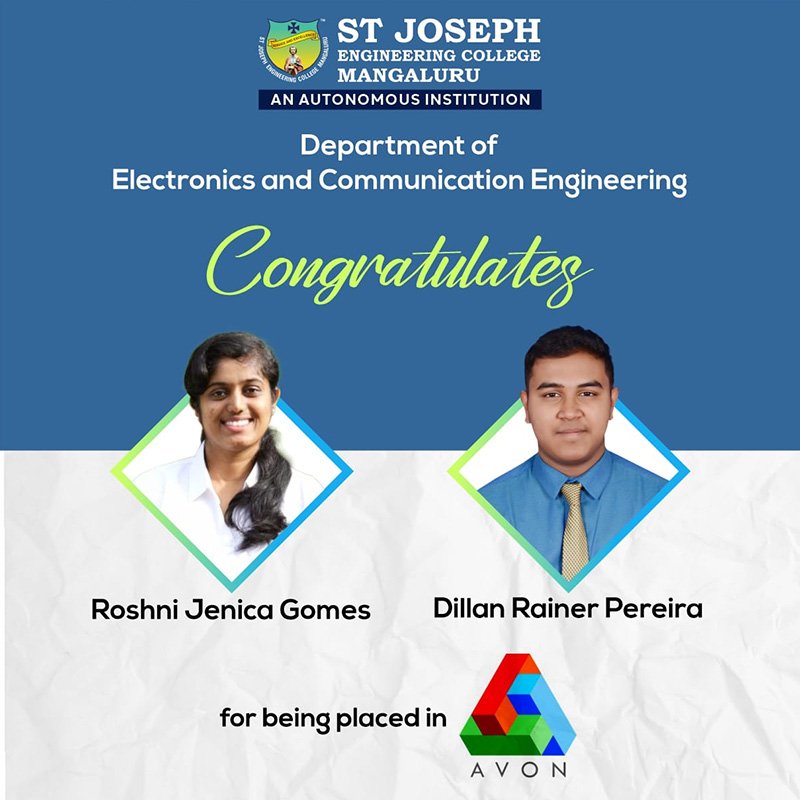
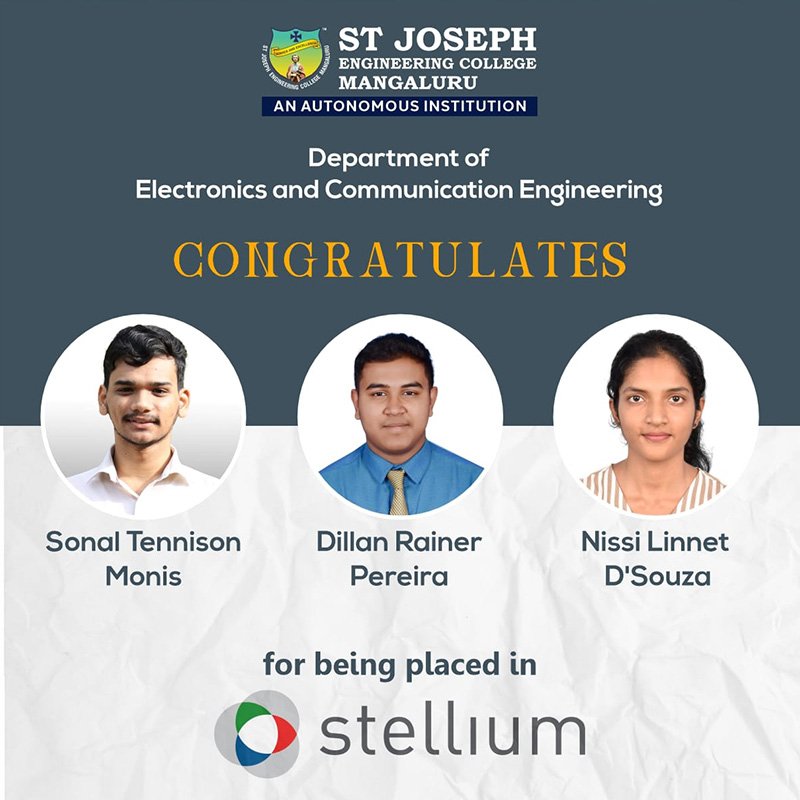
| 18 | Dillan Rainer Pereira | 4SO20EC029 | on campus | Sophrosyne semiconductor |
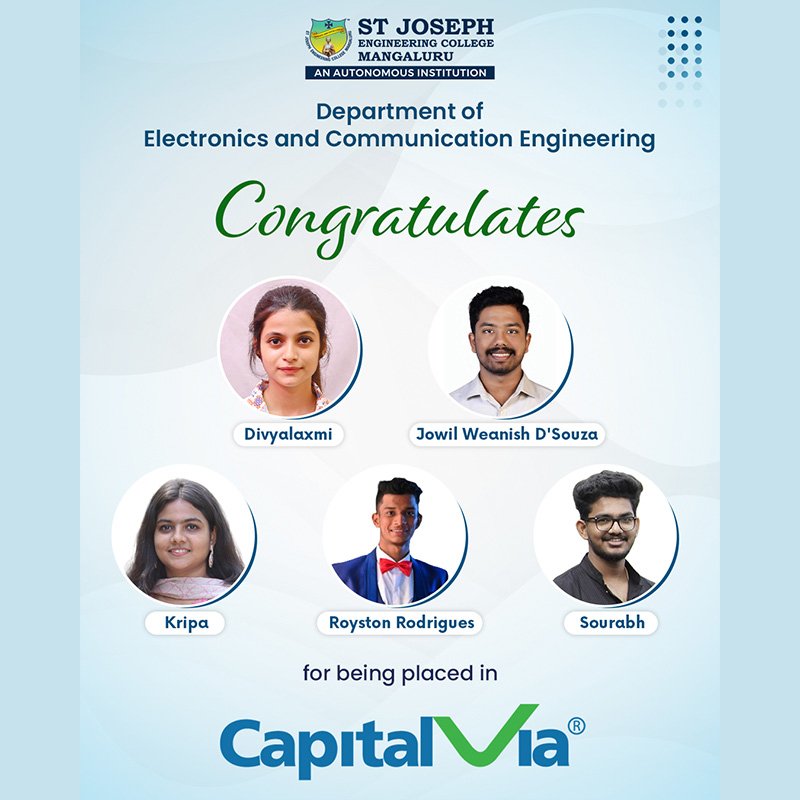
| 19 | Divyalaxmi | 4SO20EC030 | on campus | Capital via |
| 20 | Gagan Surya Kumaar S | 4SO20EC032 | on campus | Cape electric |
| 21 | Gawrav G Salian | 4SO20EC033 | off campus | ABB Global |
| 22 | Hitha H Shetty | 4SO20EC034 | on campus | Mirafra technologies |
| 23 | Hrithika C M | 4SO20EC035 | on campus | Teachnook |
| 24 | Jowil Weanish Dsouza | 4SO20EC037 | off campus | Techsharingb pvt ltd |
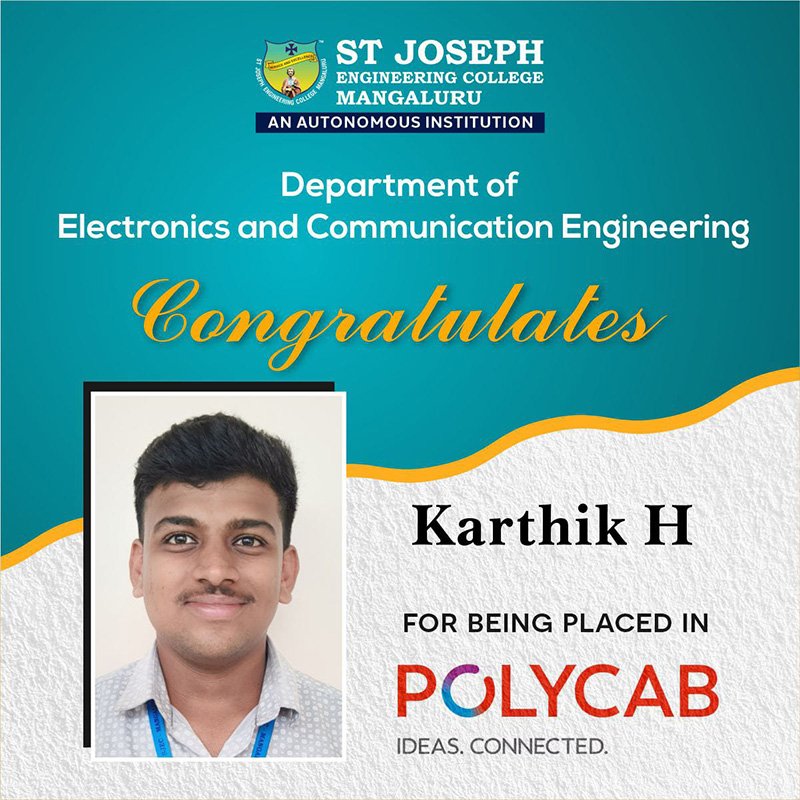
| 25 | Karthik H | 4SO20EC038 | on campus | Polycab |
| 26 | Kripa | 4SO20EC041 | on campus | Siemens |
| 27 | Krisha Dafney Martis | 4SO20EC042 | on campus | Rinex |
| 28 | Lanwin Mario Dsouza | 4SO20EC044 | on campus | Mirafra technologies |
| 29 | Leethesh | 4SO20EC045 | on campus | Mirafra technologies |
| 30 | Leslie Kiran Rodrigues | 4SO20EC047 | off campus | Techsharingb pvt ltd |
| 31 | Likith | 4SO20EC048 | on campus | ARL |
| 32 | Lloyd Monis | 4SO20EC049 | on campus | Cape electric |
| 33 | Mahammad Shabeer | 4SO20EC050 | on campus | Pentagon space |
| 34 | Manish Rai K | 4SO20EC051 | on campus | Rexnord electronics & controls limited |
| 35 | Mohammed Akhil | 4SO20EC054 | off campus | Glow touch technologies |
| 36 | Mohammed Sahal Mohammed Sadik | 4SO20EC055 | on campus | Global e-softsys |
| 37 | Muhammad Thasneem | 4SO20EC057 | on campus | Rexnord electronics & controls limited |
| 38 | Nandeesh Vasanth Patgar | 4SO20EC058 | on campus | Kodnest |
| 39 | Neha M S | 4SO20EC059 | on campus | Siemens |
| 40 | Nikshep Sathish Rai | 4SO20EC060 | off campus | MSC crewing services pvt ltd |
| 41 | Nissi Linnet Dsouza | 4SO20EC061 | on campus | Stellium |
| 42 | Nuha Kadeeja Sayeed | 4SO20EC062 | on campus | Siemens |
| 43 | Poojitha | 4SO20EC064 | on campus | Sophrosyne semiconductor |
| 44 | Aldino J Fernandes | 4SO19EC010 | on campus | Kodnest |
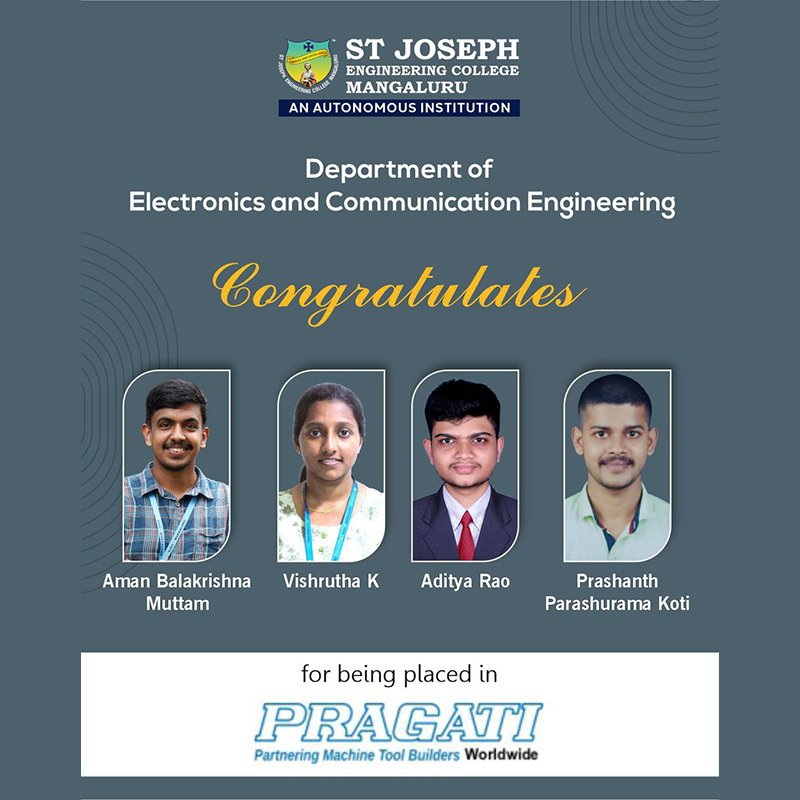
| 45 | Prashanth Parashurama Koti | 4SO20EC066 | on campus | Prerana |
| 46 | Preetham K | 4SO20EC067 | on campus | Cape electric |
| 47 | Preethesh S Rao | 4SO20EC068 | on campus | Skillwinner |
| 48 | Preethika | 4SO20EC069 | on campus | Palle technologies |
| 49 | Priyanka Divakar Naik | 4SO20EC070 | on campus | Visteon |
| 50 | Puneeth R | 4SO20EC071 | off campus | KARMIC |
| 51 | Rahul Shankar Chapolekar | 4SO20EC072 | off campus | Bharat electronics |
| 52 | Rashmitha | 4SO20EC073 | off campus | Atria power |
| 53 | Rathan P A | 4SO20EC074 | on campus | Teachnook |
| 54 | Reshma Cardoza | 4SO20EC075 | on campus | Mirafra technologies |
| 55 | Revanth A | 4SO20EC076 | on campus | Mirafra technologies |
| 56 | Rikson Pinto | 4SO20EC077 | on campus | Kodnest |
| 57 | Robin R | 4SO20EC078 | off campus | Petrocon |
| 58 | Roshni Jenica Gomes | 4SO20EC079 | on campus | Glow touch |
| 59 | Royston Rodrigues | 4SO20EC080 | on campus | Teachnook |
| 60 | Sahana H Kanchan | 4SO20EC081 | on campus | Cape electric |
| 61 | Samarth S Devadiga | 4SO20EC082 | on campus | Sakthi auto component |
| 62 | Sean Francis Dante | 4SO20EC083 | on campus | Mirafra technologies |
| 63 | Sharanprakash R | 4SO20EC086 | off campus | KARMIC |
| 64 | Sharon S Perumayan | 4SO20EC087 | off campus | TeleIndia Total Telecom Solutions |
| 65 | Shravan | 4SO20EC088 | on campus | KARMIC design |
| 66 | Shreya Lokeshwar Molkod | 4SO20EC090 | on campus | Siemens |
| 67 | Shreyas | 4SO20EC091 | on campus | Mirafra technologies |
| 68 | Shreyas Rai | 4SO20EC092 | on campus | Tessolve |
| 69 | Shriraksha | 4SO20EC093 | on campus | Palle technologies |
| 70 | Shwetha Kunte | 4SO20EC094 | on campus | Bosch |
| 71 | Sinchana | 4SO20EC095 | on campus | Palle technologies |
| 72 | Sonal J Ail | 4SO20EC097 | on campus | Mirafra technologies |
| 73 | Sonal Tennison Monis | 4SO20EC098 | on campus | 7 edge |
| 74 | Soniya P | 4SO20EC099 | on campus | ARL |
| 75 | Sourabh | 4SO20EC100 | on campus | Capital via |
| 76 | Sunidhi M Shastry | 4SO20EC101 | on campus | Intellipaat |
| 77 | Surakshith K | 4SO20EC102 | on campus | Apmosys |
| 78 | Swaroop V Gaonkar | 4SO20EC103 | on campus | Skillwinner |
| 79 | Swathi Rai M | 4SO20EC104 | on campus | Global E-soft |
| 80 | Swithi K Shetty | 4SO20EC105 | on campus | Karmic design pvt ltd |
| 81 | Vaishnav N | 4SO20EC107 | on campus | Cape electric |
| 82 | Varshith B S | 4SO20EC109 | on campus | Cape electric |
| 83 | Vian Deepak Fernandes | 4SO20EC110 | on campus | Cape electric |
| 84 | Vignesh D | 4SO20EC111 | on campus | Kodnest |
| 85 | Vikhyath D K | 4SO20EC112 | on campus | Karmic design pvt ltd |
| 86 | Vinod Nikhil Monteiro | 4SO20EC113 | on campus | Mirafra technologies |
| 87 | Vinol Arun Dsouza | 4SO20EC114 | on campus | Systemian technologies |
| 88 | Vishrutha K | 4SO20EC115 | on campus | Mirafra technologies |
| 89 | Ambika | 4SO21EC400 | on campus | Teachnook |
| 90 | Ankith Sanil | 4SO21EC401 | off campus | Amphenol |
| 91 | Karthik S Acharya | 4SO21EC404 | off campus | Ambit semiconductor pvt. ltd. |
| 92 | Malleshappa Sangappa Dolli | 4SO21EC405 | off campus | Wehark solution |
| 93 | Prabhu Damodar Gopal Maya | 4SO21EC407 | on campus | Teachnook |
| 94 | Priyanka | 4SO21EC408 | on campus | Bosch |
| 95 | Sona S | 4SO21EC410 | on campus | Siemens technology |
| 96 | Vihar S V | 4SO21EC412 | on campus | Sakthi auto component |
Batch 2022-2023
| Sl.No. | Name of the Student | USN | On/Off Campus Placement | Company Name |
| 1 | A Spoorthi Rai | 4SO19EC001 | on campus | Cape electric |
| 2 | Aaron Antony Valerian DCosta | 4SO19EC002 | on campus | Intellipaat software solutions pvt. ltd. |
| 3 | Ahisam Sheikh | 4SO19EC004 | on campus | Cape electric |
| 4 | Aishwarya | 4SO19EC005 | on campus | Park controls & communications pvt ltd |
| 5 | Akanksha J Anchan | 4SO19EC006 | on campus | Stelluim consulting india pvt ltd |
| 6 | Aksha | 4SO19EC008 | on campus | Comviva technologies ltd |
| 7 | Amulya DSouza | 4SO19EC012 | on campus | Comviva technologies ltd |
| 8 | Ananya K P | 4SO19EC013 | on campus | Cape electric |
| 9 | Anvith Amin | 4SO19EC014 | on campus | ARL |
| 10 | Arliya Marin Mathew | 4SO19EC017 | on campus | Codeyoung |
| 11 | Arul Thomas Victor Rebello | 4SO19EC018 | on campus | Propertpistol.com |
| 12 | Ashitha Naik | 4SO19EC019 | on campus | Codeyoung |
| 13 | Ashna B Kotian | 4SO19EC020 | off campus | Biocon Biologics |
| 14 | Ashwini P V | 4SO19EC021 | on campus | Comviva technologies ltd |
| 15 | Ashwith K Y | 4SO19EC022 | on campus | RC labs |
| 17 | Athul S Nayak | 4SO19EC023 | on campus | Global e-softsys |
| 18 | Athul V Gopal | 4SO19EC024 | on campus | Cape electric |
| 20 | Bhargavi Pai | 4SO19EC025 | on campus | MResult services pvt ltd |
| 21 | Bhavish Poojary | 4SO19EC026 | on campus | Cape electric |
| 22 | Brian Mathew | 4SO19EC027 | on campus | Novigo solutions pvt ltd |
| 23 | Brijesh T Kottary | 4SO19EC028 | off campus | Spectrum industries |
| 24 | Chandana P S | 4SO19EC029 | off campus | HRdotcom |
| 25 | Deepak Prabhu | 4SO19EC031 | on campus | Comviva technologies ltd |
| 26 | Dhanya | 4SO19EC033 | on campus | Signoff semiconductors |
| 27 | Emmanuel Pravilesh Fernandes | 4SO19EC034 | on campus | Tessolve |
| 28 | Guru Prasad Mayya | 4SO19EC035 | on campus | Tessolve |
| 29 | Hanson Mervin Pinto | 4SO19EC036 | on campus | Academor |
| 30 | Ishika | 4SO19EC037 | on campus | Cape electric |
| 31 | Jason Lynel Braggs | 4SO19EC039 | on campus | Cadence design systems pvt. ltd |
| 32 | Jenisha Maria D Souza | 4SO19EC041 | on campus | Glow touch |
| 33 | Joslia Melisha Monteiro | 4SO19EC043 | on campus | Codeyoung |
| 34 | Jyothika K | 4SO19EC044 | on campus | Flowserve india controls pvt limited |
| 35 | Karthik | 4SO19EC046 | on campus | Tessolve |
| 36 | Karthik K C | 4SO19EC047 | on campus | Brevera technologies |
| 37 | Keerthi Rohith Gatty | 4SO19EC048 | on campus | Glow touch |
| 38 | Lanvin Samuel Pereira | 4SO19EC049 | on campus | RC labs |
| 39 | Lloyd Chris Passanha | 4SO19EC050 | on campus | Intellipaat software solutions pvt. ltd. |
| 40 | Lokanath Rajesh Prabhu | 4SO19EC051 | off campus | Pace wisdom solutions pvt ltd |
| 41 | M Bhavith Adyanthaya | 4SO19EC052 | on campus | Global e-softsys |
| 42 | Manvitha | 4SO19EC053 | on campus | Stelluim consulting india pvt ltd |
| 43 | Megha Salian | 4SO19EC054 | on campus | Glow touch |
| 44 | Meghana B | 4SO19EC055 | on campus | Comviva technologies ltd |
| 45 | Meghana R | 4SO19EC056 | on campus | SEG automotive |
| 46 | Milton Noel Valder | 4SO19EC057 | on campus | Systemian technologies |
| 47 | Misika | 4SO19EC058 | on campus | ARL |
| 48 | Mohammed Tahir | 4SO19EC059 | on campus | Cape electric |
| 49 | Monisha Xavier Lopies | 4SO19EC060 | on campus | Rittal private limited |
| 50 | Muhammad Kaif M S | 4SO19EC061 | on campus | Ducom |
| 51 | Namratha | 4SO19EC062 | off campus | Codeyoung |
| 52 | Navya M | 4SO19EC063 | on campus | Tekworks |
| 53 | Neha | 4SO19EC064 | on campus | Academor |
| 54 | Niveditha | 4SO19EC065 | off campus | Brevera technologies |
| 55 | Pooja Shetty | 4SO19EC066 | on campus | Vioneer india pvt limited (magna) |
| 56 | Pranam K S | 4SO19EC067 | off campus | Advanced software power possibility |
| 57 | Prathviraj | 4SO19EC068 | on campus | Karmic design pvt limited |
| 58 | Preethika Sequeira | 4SO19EC069 | on campus | Ethnus consultancy services private limited |
| 59 | Rahul N Shettigar | 4SO19EC070 | on campus | Acemicromatic manufacturing intelligence |
| 60 | Rakshith Kotyan | 4SO19EC071 | on campus | Karmic design pvt limited |
| 61 | Rakshith Mogaveera | 4SO19EC072 | on campus | Cape electric |
| 62 | Rian Archie Fernandes | 4SO19EC073 | on campus | Tekworks |
| 63 | Rishab | 4SO19EC074 | on campus | Tekworks |
| 64 | Saiprasad U R | 4SO19EC077 | on campus | Global esoftsys mysore |
| 65 | Samyak Chandra | 4SO19EC080 | on campus | Comviva technologies ltd |
| 66 | Sandesh Urs K P | 4SO19EC081 | on campus | TATA (TCSL) |
| 67 | Sannidhi | 4SO19EC083 | on campus | Q spiders |
| 68 | Sathwik D Amin | 4SO19EC086 | on campus | Karmic design pvt limited |
| 69 | Sayed Mohammad Arshad | 4SO19EC087 | on campus | Cape electric |
| 70 | Shalom Crasta | 4SO19EC088 | on campus | ARL |
| 71 | Shodhan N Shetty | 4SO19EC091 | on campus | Comviva technologies ltd |
| 72 | Shreenidhi | 4SO19EC092 | on campus | Karmic design pvt limited |
| 73 | Shreyas Merwin Karkada | 4SO19EC094 | on campus | Vioneer india pvt limited (magna) |
| 74 | Shrihari B S | 4SO19EC095 | on campus | Karmic design pvt limited |
| 75 | Stephiya Lobo | 4SO19EC096 | on campus | Stelluim consulting india pvt ltd |
| 76 | Suhan | 4SO19EC097 | on campus | Karmic design pvt limited |
| 77 | Sumith | 4SO19EC099 | on campus | Rinex technologies pvt ltd |
| 78 | Sushan | 4SO19EC100 | on campus | TATA(TCSL) |
| 79 | Swasthik | 4SO19EC101 | on campus | Karmic design pvt limited |
| 80 | Swati Antaragangi | 4SO19EC102 | off campus | DCX Systems Ltd, Raneal Advance System, Aerospace and defence Sector |
| 81 | Thashwin C S | 4SO19EC103 | on campus | Vtech intergrated solutions |
| 82 | Thejasvi | 4SO19EC104 | on campus | Karmic design pvt limited |
| 83 | Varsha | 4SO19EC105 | on campus | Invenger |
| 84 | Varshini Pujar | 4SO19EC106 | on campus | ARL |
| 85 | Vignesh Pai | 4SO19EC108 | on campus | Codeyoung |
| 86 | Vishnu P | 4SO19EC110 | on campus | Codeyoung |
| 87 | Bharath | 4SO20EC400 | on campus | Pentagon space |
| 88 | Janardana K R | 4SO20EC401 | off campus | VTech Intergrated solutions |
| 89 | Nachiketh R | 4SO20EC404 | on campus | Ukshakthi |
| 90 | Sandeep Prabhu | 4SO20EC406 | on campus | Pentagon space |
Batch 2021-2022
| Sl.No | Name of the Employer | No of Students Placed |
|---|---|---|
| 1 | SAP | 1 |
| 2 | VMWare | 3 |
| 3 | Novigo Solution | 5 |
| 4 | Robosoft Technoogies | 4 |
| 5 | GainInsights | 3 |
| 6 | Brevera Technologies | 2 |
| 7 | TCS | 18 |
| 8 | Wipro Talent Next | 7 |
| 9 | Wipro NTH | 6 |
| 10 | Winwire | 3 |
| 11 | Hexaware | 5 |
| 12 | Global E-Softsys | 1 |
| 13 | SSI | 6 |
| 14 | Persistent | 6 |
| 15 | Cognizant | 19 |
| 16 | Zensar | 5 |
| 17 | Infosys | 13 |
| 18 | Tech Mahindra | 1 |
| 19 | SYX Services | 3 |
| 20 | Evobi Automations | 2 |
| 21 | Vrize | 5 |
| 22 | Cognitive Cloud | 7 |
| 23 | Harman Connected Services | 2 |
| 24 | Palle Technologies | 5 |
| 25 | CoreEl Technlogies | 1 |
| 26 | BYJU's | 1 |
| 27 | Harman Kardon | 6 |
| 28 | Clarivate Analytics | 2 |
| 29 | Maverix | 4 |
| 30 | Sonata Software | 1 |
| 31 | CGI | 3 |
| 32 | Tymtix Technologies | 1 |
| 33 | ITC Infotech | 1 |
| 34 | Teleperformence | 2 |
| 35 | Invenger Technologies | 1 |
| 36 | Grifeo | 1 |
| 37 | Narayan Health | 2 |
| 38 | Karmic Design | 8 |
| 39 | Cape Electric | 2 |
| 40 | QSpider | 9 |
| 41 | Qualitest | 4 |
| 42 | Pentagon Space CSR | 2 |
| 43 | Accord Global Technology Solutions | 1 |
| 44 | Upskillz EduTech Pvt Ltd | 6 |
| 45 | Empulse Global | 1 |
Batch 2020-2021
| Sl.No | Name of the Employer | No of Students Placed |
|---|---|---|
| 1 | Robert Bosch India Limited,Bengaluru | 1 |
| 2 | Cognizant | 2 |
| 3 | Lam Research | 1 |
| 4 | Harman connected services ,Bengalurus | 1 |
| 5 | Brevera Technologies Pvt Ltd | 2 |
| 6 | Infosys | 5 |
| 7 | Akamai Technologies | 1 |
| 8 | SEW EURODRIVE | 1 |
| 9 | SSI Staffing Private Limited | 1 |
| 10 | Technologies Global Pt. Ltd | 1 |
| 11 | HARMAN Connected Services Corporation India Pvt Ltd | 1 |
| 12 | SOLAREDGE India Pvt Ltd | 1 |
| 13 | iOPEXTechnologies | 1 |
| 14 | Hinduja Global Solutions | 1 |
| 15 | Power Drive Engineers | 1 |
| 16 | Tech Mahindra/td> | 1 |
| 17 | Mindtree | 1 |
Batch 2019-2020
| Sl.No | Name of the Employer | No of Students Placed |
|---|---|---|
| 1 | Lam Research, India pvt Ltd | 3 |
| 2 | Infosys | 1 |
| 3 | AkzoNobel | 1 |
| 4 | Windmoller & Hoilscher India Pvt. Ltd | 1 |
| 5 | Alimak Service Dubai, United Arab Emirates | 1 |
| 6 | Pozibility Technologies Pvt. Ltd. | 1 |
| 7 | Tessolve | 1 |
| 8 | Bosch Rexroth | 1 |
| 9 | Bosch Limited | 3 |
| 10 | Rexroth Bosch (Mivin Technologies Pvt Ltd) | 1 |
| 11 | Diya Systems | 3 |
| 12 | DXC Technology | 5 |
| 13 | Cognizant Technology Solutions India Pvt Ltd | 2 |
| 14 | [24]7 | 2 |
| 15 | Amazon India Pvt Ltd | 2 |
| 16 | Analytic Quotient | 1 |
| 17 | Birlasoft | 1 |
| 18 | Infosys | 1 |
Batch 2018-2019
| Sl.No | Name of the Employer | No of Students Placed |
|---|---|---|
| 1 | ITC Infotech, Bangalore | 2 |
| 2 | Brevera Technologies Private Limited | 1 |
| 3 | LTI-Larsen & Toubro Infotech | 1 |
| 4 | Robosoft Technologies, India | 1 |
| 5 | BOSCH Ltd | 1 |
| 6 | SAP consultant at TCS, Bangalore | 1 |
| 7 | SLK Software Services Pvt Ltd | 1 |
| 8 | TVM Signalling and Transportation Systems Private Limited | 4 |
| 9 | [24]7 | 1 |
| 10 | JSW Cement Limited | 2 |
| 11 | TE Connectivity Services India Pvt. Ltd. | 1 |
| 12 | Infosys | 5 |
| 13 | Cognizant Technology Solutions India Pvt Ltd | 1 |
| 14 | Axiom Aerials | 1 |
| 15 | Enventure Engineering LLP | 1 |
| 16 | JSW Cement Limited, Mumbai | 1 |
| 17 | TCS | 1 |
| 18 | Accenture | 1 |
| 19 | Precision IT | 1 |
| 20 | IBM | 1 |
| 21 | ABB | 1 |
| 22 | Axxonet System Technologies | 1 |
Batch 2017-2018
| Sl.No | Name of the Employer | No of Students Placed |
|---|---|---|
| 1 | Birlasoft (India) Limited | 1 |
| 2 | Tata Elxsi | 1 |
| 3 | 24[7] | 2 |
| 1 | Capgemini Technology Sevices India Limited | 1 |
| 1 | LTI-Larsen & Toubro Infotech | 3 |
| 1 | Trescon Global Business Solutions Pvt Ltd | 1 |
| 1 | Tessolve Semiconductor Pvt.Ltd. | 3 |
| 1 | Magnasoft Consulting India Pvt. Ltd | 3 |
| 1 | Win World India Future Group | 1 |
| 1 | Robosft Technologies Pvt. Ltd. | 1 |
| 1 | Switchgear And Control Technics Pvt.Ltd. | 2 |
| 1 | Kreatio Software Pvt.Ld. | 1 |
| 1 | Birlasoft (India) Limited | 1 |
| 1 | Kreatio Software Pvt.Ld. | 1 |
| 1 | Infosys | 1 |
| 1 | Qpiders Software Testing Training Institute | 1 |
| 1 | Schneider Electric India Pvt.Ltd. | 1 |
| 1 | Tata Elxsi. | 1 |
| 1 | Automotive Axles Limited | 1 |
| 1 | Alstom Transpor India Limited | 1 |
| 1 | SLV Power Private limitd | 1 |
| 1 | BASF pvt ltd | 1 |
2017 Batch
| YEAR | TOTAL NO. OF STUDENTS PASSED OUT | NO . OF STUDENTS PLACED |
|---|---|---|
| 1 | Societe Generale | 1 |
| 2 | Global Esoftsys | 1 |
| 3 | HPe | 1 |
| 4 | Mphasis | 1 |
| 5 | VMWare | 1 |
| 6 | QSpiders | 1 |
| 7 | Mindtree | 2 |
| 8 | IBM | 2 |
| 9 | Accord Software | 2 |
| 10 | Smart DV | 2 |
| 11 | Citrix | 2 |
| 12 | Firmnxt - Microland | 3 |
| 13 | Karmic Design | 3 |
| 14 | Hinduja Global Solutions | 5 |
| 15 | ITC Infotech | 6 |
| 16 | Mindlance Technologies | 8 |
| 17 | Robosoft Technologies | 12 |
| 18 | L&T Infotech | 18 |
| 19 | Tech Mahindra | 20 |
| Total | 91 | |
2016 Batch
| YEAR | TOTAL NO. OF STUDENTS PASSED OUT | NO . OF STUDENTS PLACED |
|---|---|---|
| 1 | THE MANIPAL GROUP | 1 |
| 2 | SEVENTH SENSE | 1 |
| 3 | KARMIC | 1 |
| 4 | CADENCE | 1 |
| 5 | AMAZON | 1 |
| 6 | TCS (Off Campus) | 1 |
| 7 | FACE | 1 |
| 8 | ITC INFOTECH | 2 |
| 9 | ANALYTICS QUOTIENT | 2 |
| 10 | MINDTREE | 2 |
| 11 | MPHASIS | 2 |
| 12 | HPE | 2 |
| 13 | INFOVIEW TECHNOLOGIES | 3 |
| 14 | MPHASIS | 3 |
| 15 | HCL TALENT CARE | 3 |
| 16 | GLOBAL E SOFTSYS | 4 |
| 17 | PC TECHNOLOGY | 4 |
| 18 | UST GLOBAL | 6 |
| 19 | LnT INFOTECH | 8 |
| 20 | IBM | 9 |
| 21 | TECH MAHINDRA | 11 |
| 22 | VDART SOFTWARE SERVICES | 16 |
| 23 | TCH | 17 |
| Total | 100 | |
2015 Batch
| YEAR | TOTAL NO. OF STUDENTS PASSED OUT | NO . OF STUDENTS PLACED |
|---|---|---|
| 1 | Unisys | 1 |
| 2 | Indian Army | 1 |
| 3 | L&T Infotech | 1 |
| 4 | Vee Technologies | 1 |
| 5 | Cadence | 1 |
| 6 | Ethnus Consultancy Services | 1 |
| 7 | Novigo Solutions | 1 |
| 8 | Indian Navy | 1 |
| 9 | HCL | 1 |
| 10 | Vortex Engineering | 1 |
| 11 | Yahoo | 1 |
| 12 | Sankalp Semiconductor | 2 |
| 13 | Aricent | 2 |
| 14 | Pravruthi (Job Fair) | 2 |
| 15 | L&T Technologies | 2 |
| 16 | Microsoft IGTSC | 2 |
| 17 | HP | 3 |
| 18 | Mphasis | 3 |
| 19 | NTT Data | 3 |
| 20 | Karmic | 3 |
| 21 | Tessolve Semiconductors | 3 |
| 22 | Sonata Software | 4 |
| 23 | CMC Ltd | 4 |
| 24 | Global E Softsys | 5 |
| 25 | IBM | 6 |
| 26 | Cognizant | 6 |
| 27 | ITC Infotech | 9 |
| 28 | Tech Mahindra | 15 |
| 29 | Unitelworks Wireless Solutions | 27 |
| Total | 112 | |
Course Highlights
Ranked the best among ECE programs in the region, this course blends academic depth with the practical knowledge required of Electronics and Communication Engineering professionals.
Duration
4 Years | 8 Semesters
Eligibility Criteria
-
The Requirement: You must have completed 10+2/PUC (or equivalent) with Physics and Mathematics as core subjects. You also need one elective, Chemistry, Biology, Computer Science, or Electronics, with a minimum score of 45% (40% for SC/ST & OBC candidates from Karnataka). This eligibility standard is consistent across reputable electrical and communication engineering programs.
-
Diploma pass with minimum 45% aggregate (5th & 6th sem) eligible for B.E. 3rd semester lateral entry; 40% for SC/ST/OBC Karnataka candidates
-
Entrance Criteria: Admission is granted based on your performance and qualifying rank in the KCET, COMEDK UGET, or JEE Main examinations.
Admission Process

Online Enquiry

Entrance Examination

Application Submission

Counselling & Merit Selection

Document Verification

Fee Payment
Online Enquiry
Entrance Examination
Application Submission
Counselling & Merit Selection
Document Verification
Fee Payment
Why Choose This Institution for ECE Engineering?
Why Is It Suitable for You?
SJEC is known for its discipline, academic quality and student-centred learning culture, making it a trusted destination for B.E in Electronics and Communication Engineering studies.
Experiential Learning
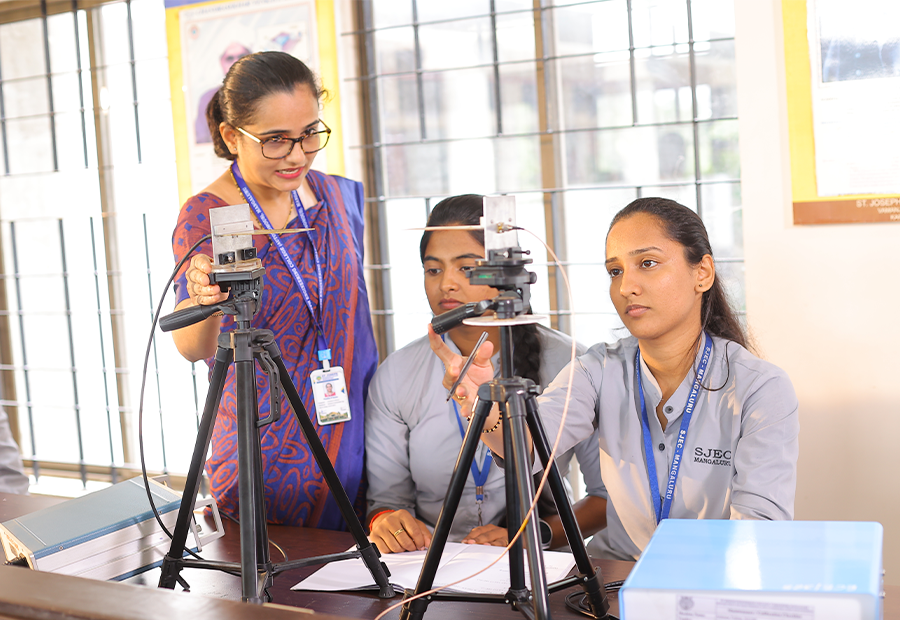
Theory is the starting point, not the destination. Students gain direct experience through internships, lab-based projects, and expert-led sessions in active fields of Electronics and Communication Engineering.
Resources
We provide access to modern laboratories and advanced simulation tools to ensure your technical development in E&C engineering remains up to date and relevant.
Career Assistance
The Placement Cell, along with a faculty mentor, offers professional advice crucial to finding your way in the Electronics and Communication Engineering industry.
Your Mentors for Success
The experienced faculty members will provide both academic support and technical guidance throughout the program.
Testimonials
Student Success Stories
Most of our alums attribute their educational experience with us as the stepping stone to success in Semiconductor, VLSI, Telecommunications, Electronics Design, and AI-ML-related career opportunities that characterise the Electronics and Communication Engineering environment today.

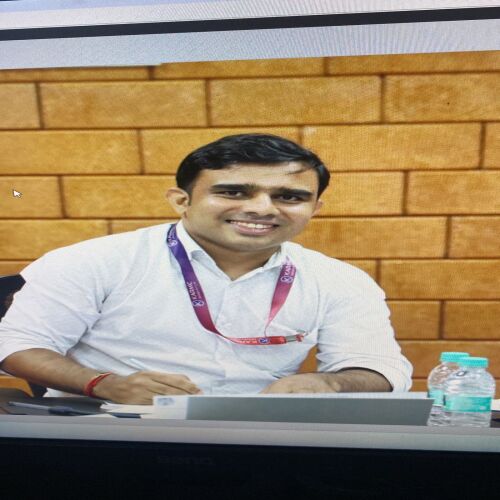
"Studying Electronics and Communication Engineering at SJEC provided strong technical knowledge and practical exposure that prepared me well for industry challenges."

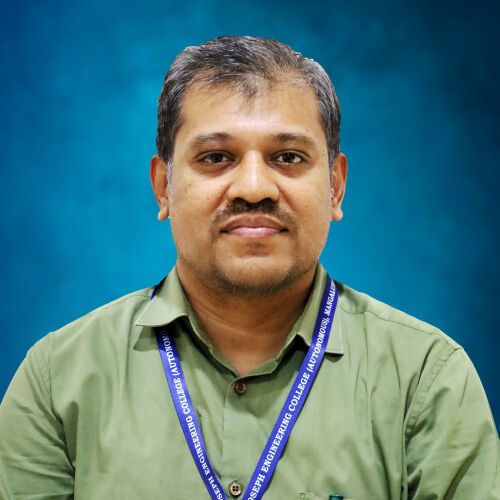
"My college journey helped shape me into a confident professional through academic learning, cultural experiences, and constant support from faculty and staff."

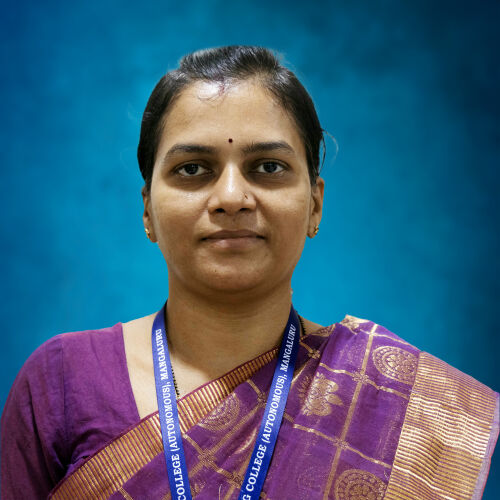
"The EEE program at SJEC laid the foundation for my successful career by helping me develop strong technical skills and real-world exposure."

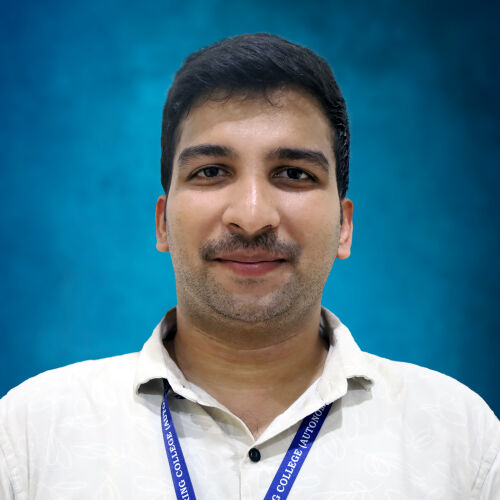
"The EEE program at SJEC shaped my career. Strong faculty support and industry-focused training helped me begin my professional journey through campus placement."
Head of Department
Dr Dayakshini
Professor & HOD
I am an Academician with over 25 years of teaching/research experience and an active researcher in Biomedical Engineering. Passionate about nurturing young minds, I strive to provide students with a strong academic foundation while encouraging self-learning and lifelong learning. I am equally committed to mentoring students for successful placements and higher education opportunities at premier institutions.
B.E, M.Tech, M.I.S.T.E, MIEEE. Ph.D
dayakshini@sjec.ac.in
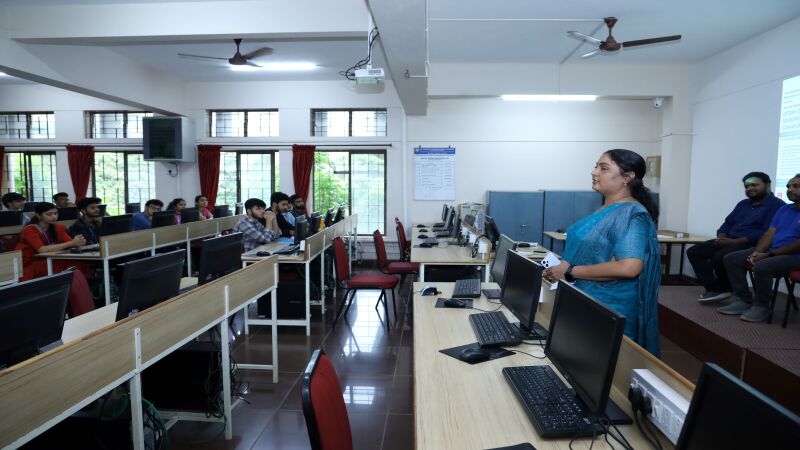
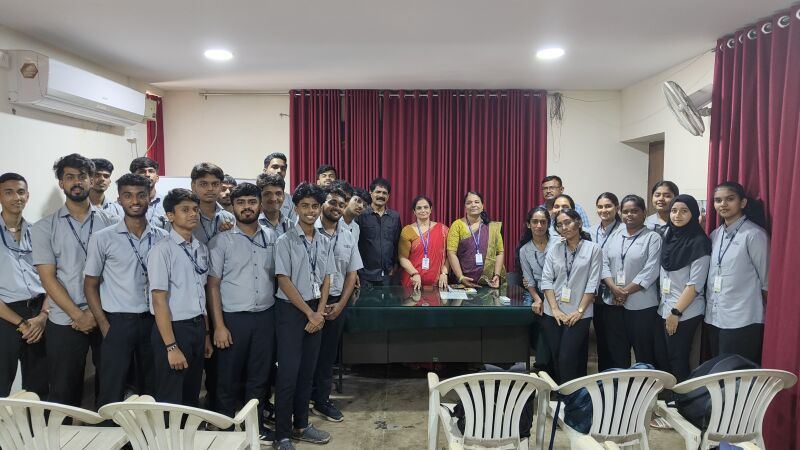
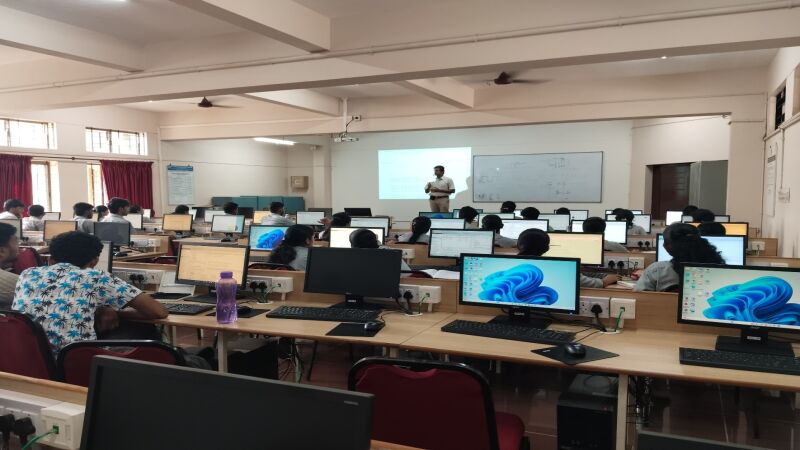
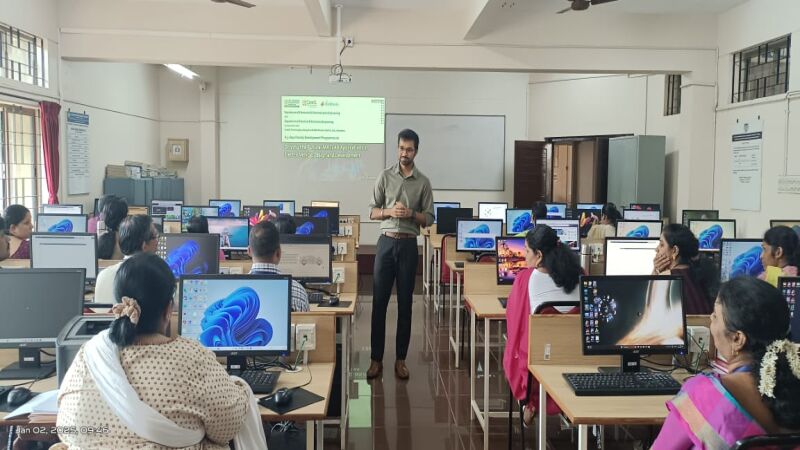

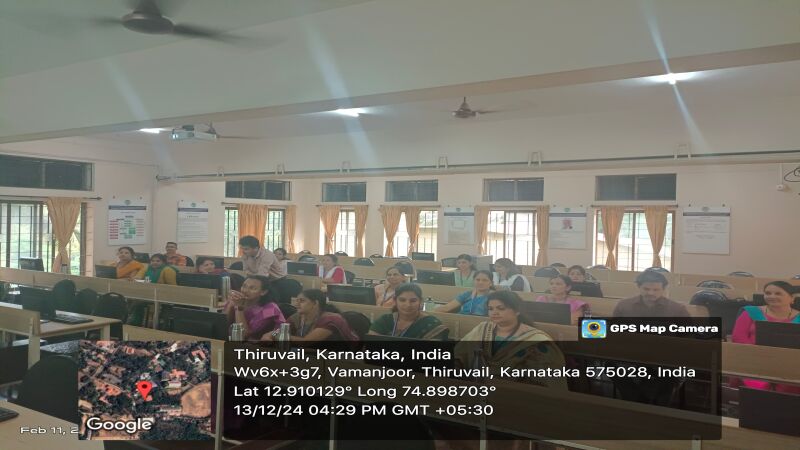
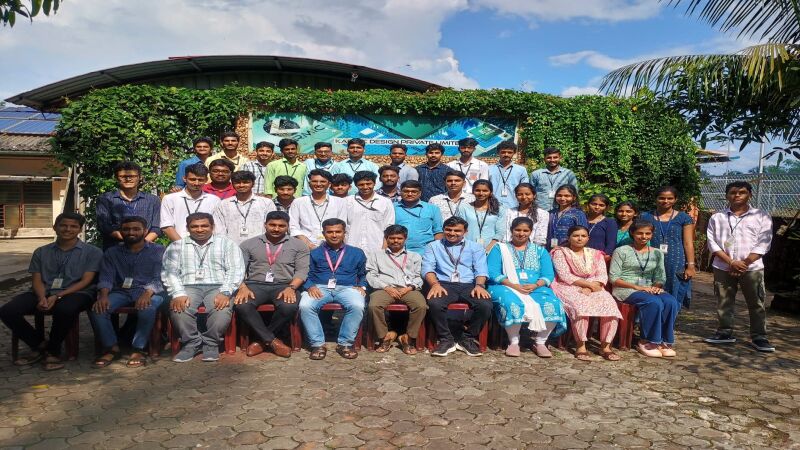
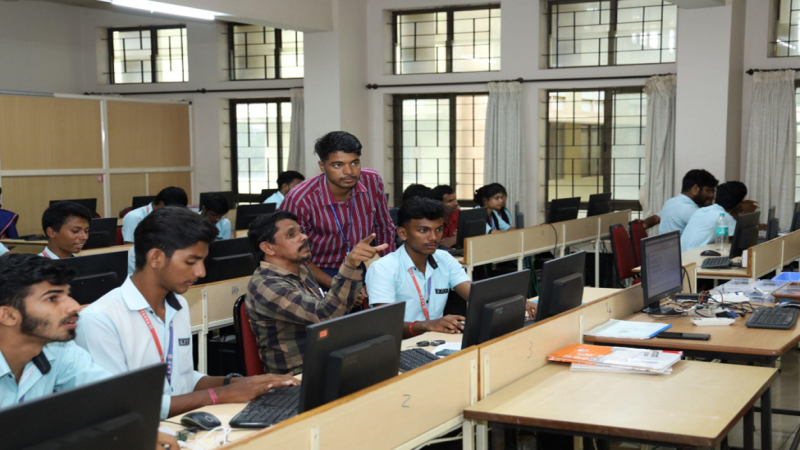
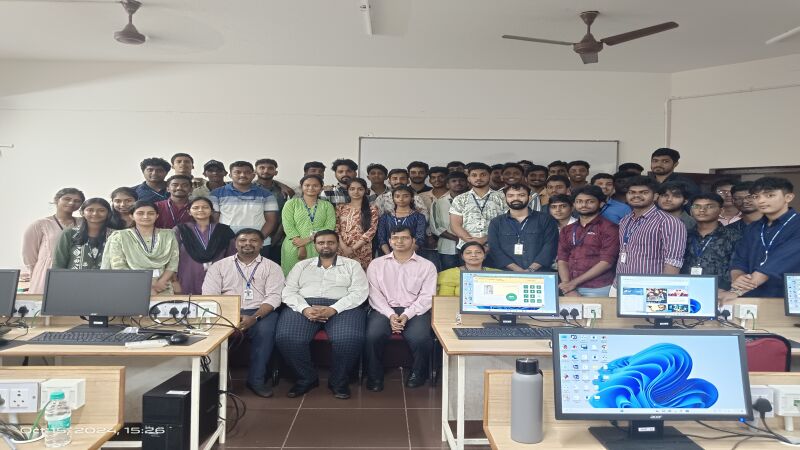
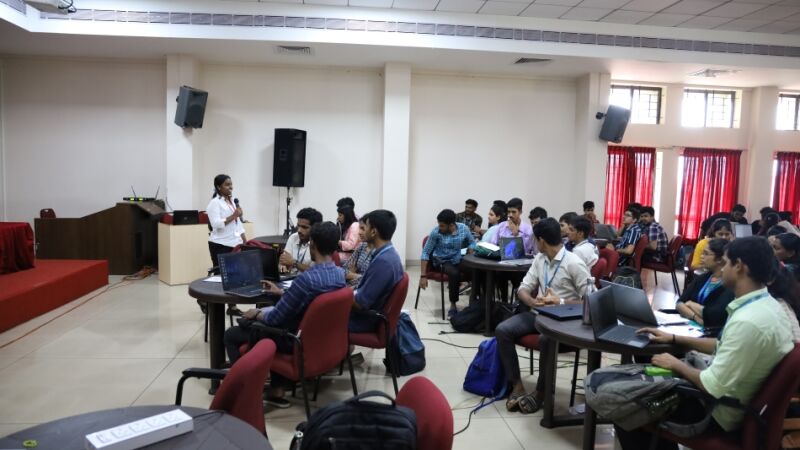
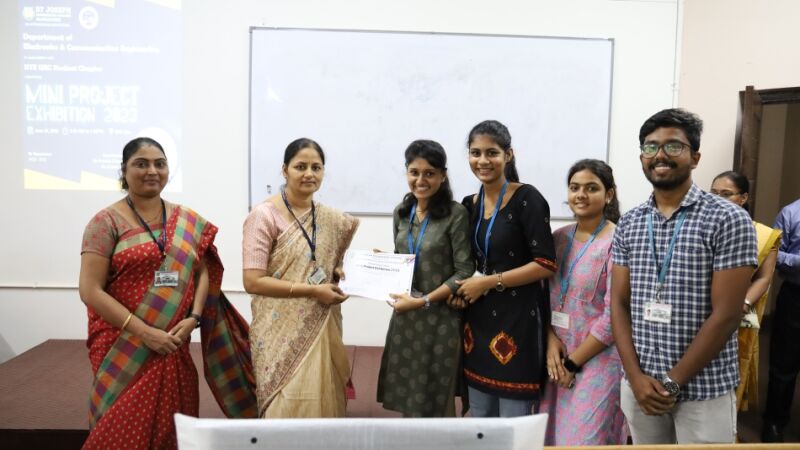
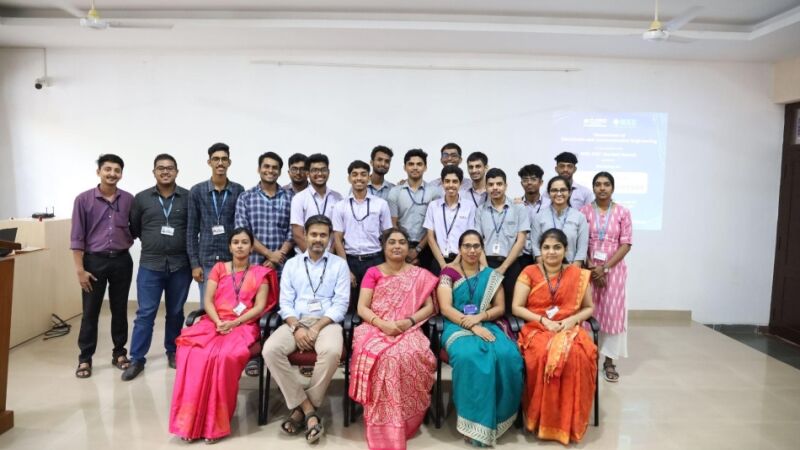
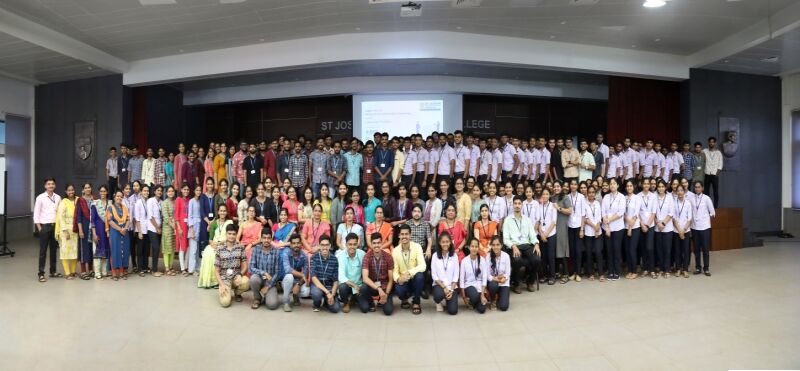
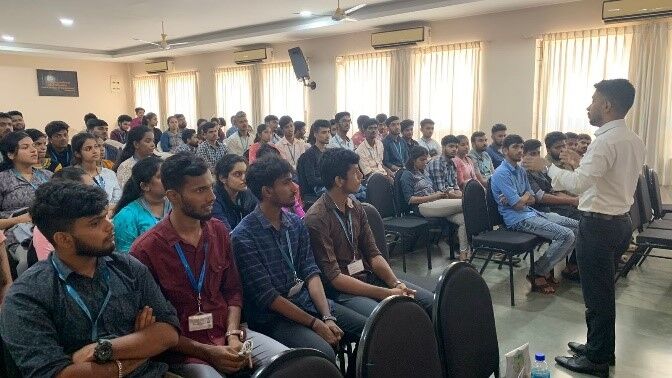
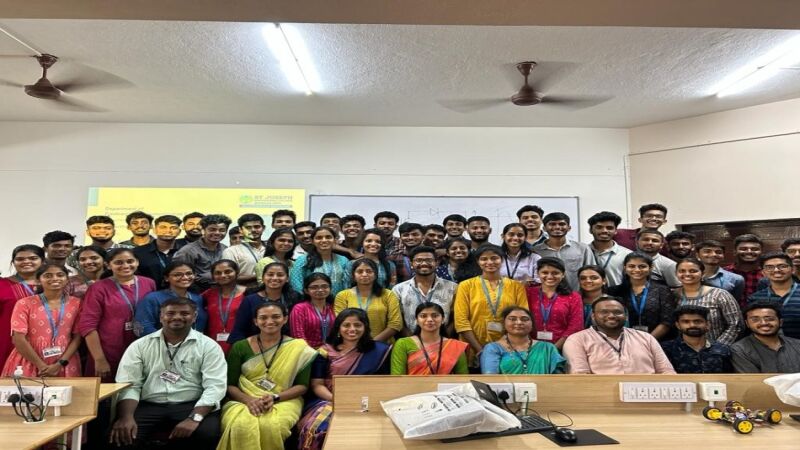
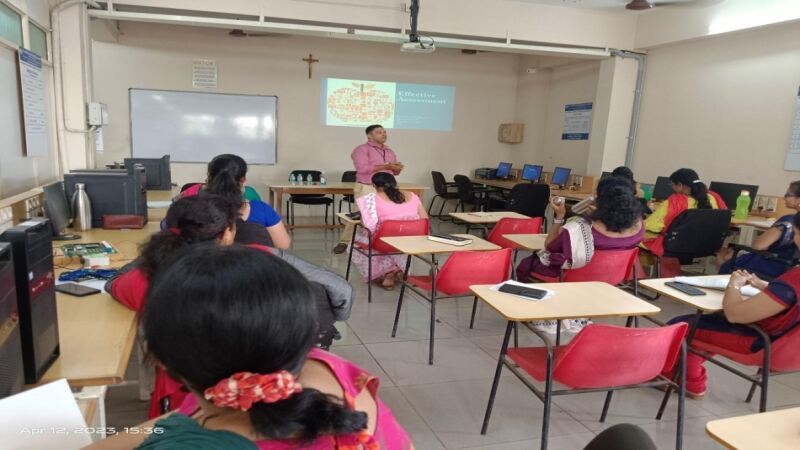
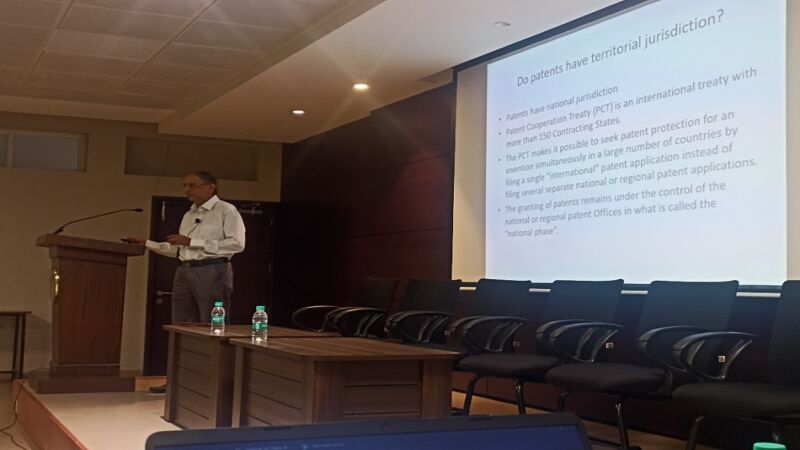
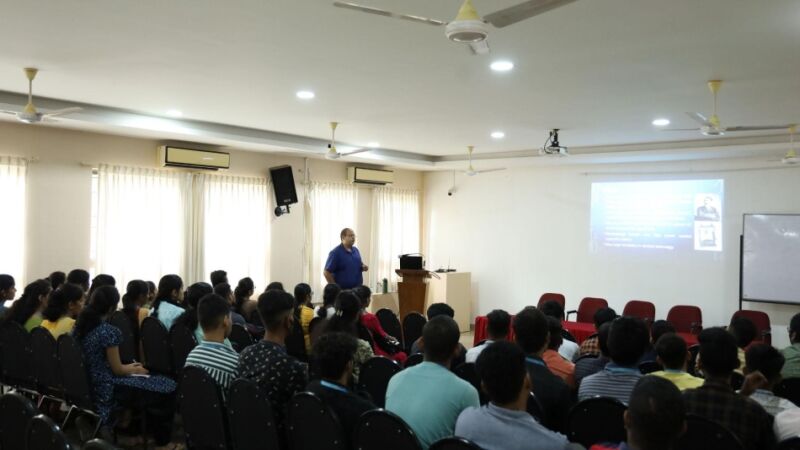
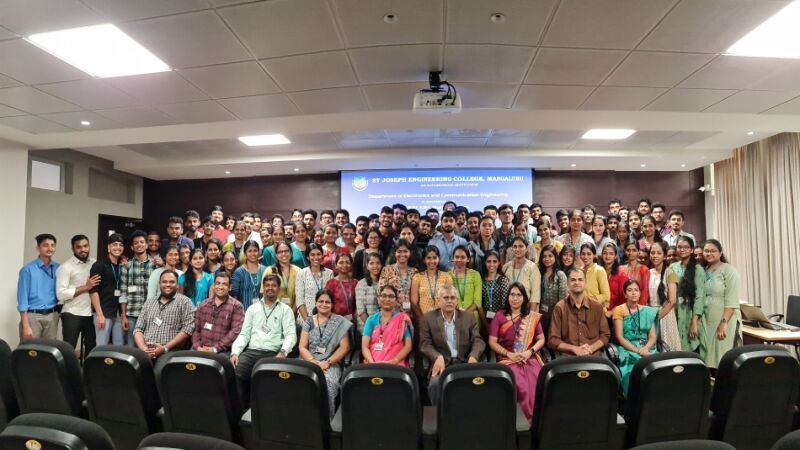
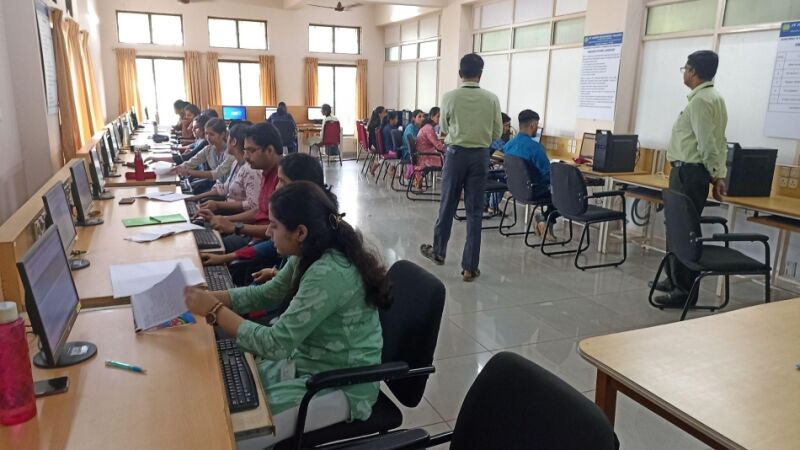

Department of Electronics & Communication Engineering Labs
|
Name of the lab |
Major Equipments /Facilities |
|
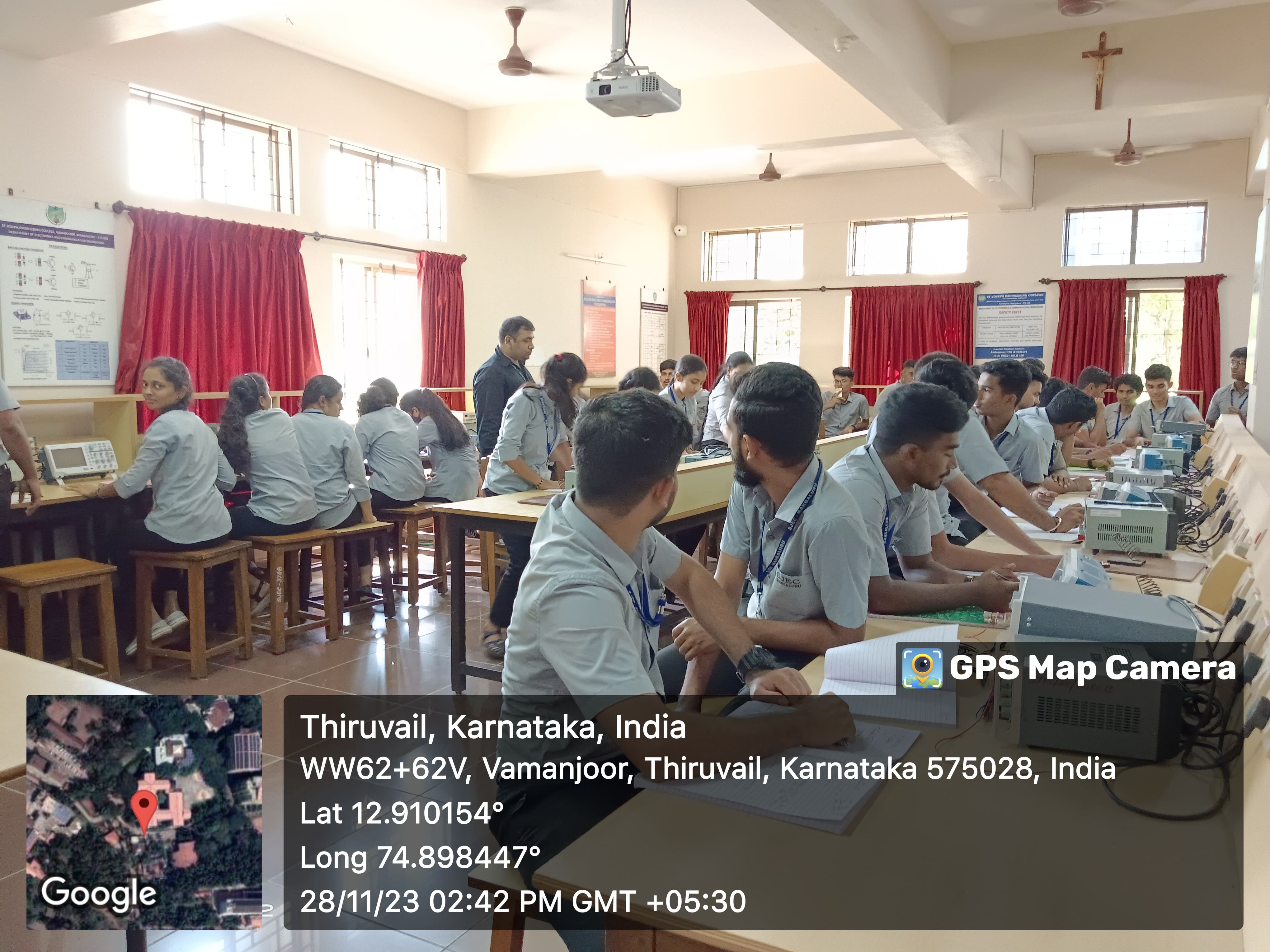
Analog Circuits Lab/ Analog Communication Lab |
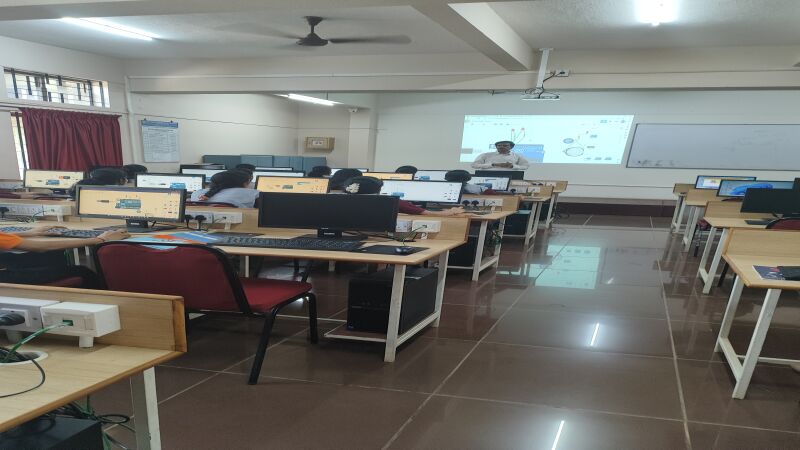
Digital Storage Oscilloscopes (DSO),100MHz, 60MHz 2+16 Channel MSO, Signal Generators(2MHz), Arbitrary Function Generator(25MHz), Fixed Power Supply(+/- 15V), Variable Power Supply(0 – 32V), Power Supply(5V), Analog IC Tester, Decade R,L,C boxes, DSBSC Kits, Frequency Mixer Kits, Pulse Position Modulator & Demodulator kit, SSB system Trainer kit, Pulse Width Modulator & Demodulator kit, Digital Multimeters, Desktop Computers(Intel i7,8 GB RAM,500 GB HDD,240 GB SSD, Windows 10), MATLAB R2026 Software, NI Multisim 14.2 Software, LCD Projector, Printer |
|
Name of the lab |
Major Equipments/Facilities |
|
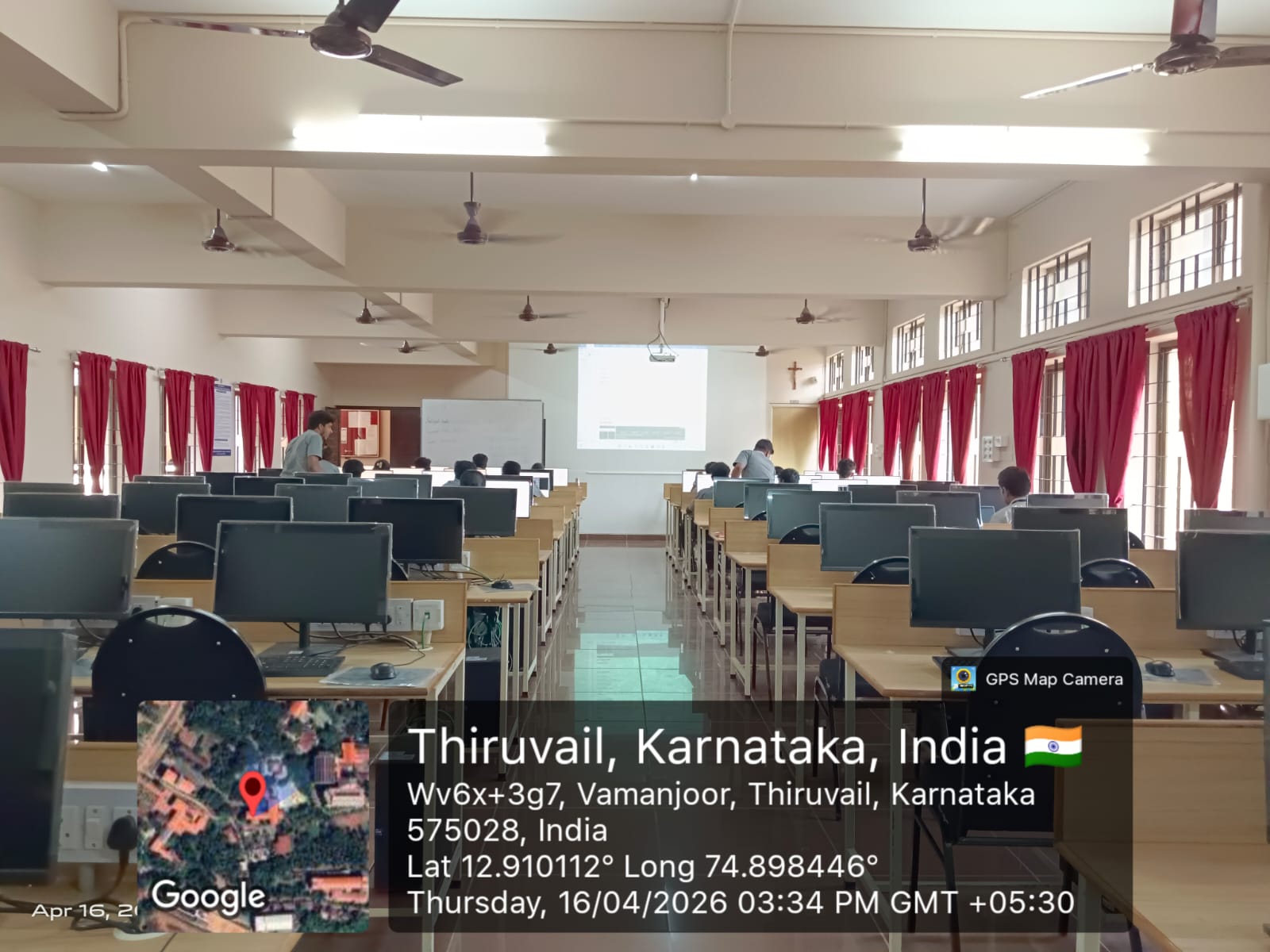
Digital Design Simulation Lab/Tessolve Lab |
Desktop Computers(Intel i5,16 GB RAM,512 GB SSD, Windows 11), NI Multisim 14.2 Software, LCD Projector, Printer, LG-Lite ATE with Universal Load Boards |
|
Name of the lab |
Major Equipments/Facilities |
|
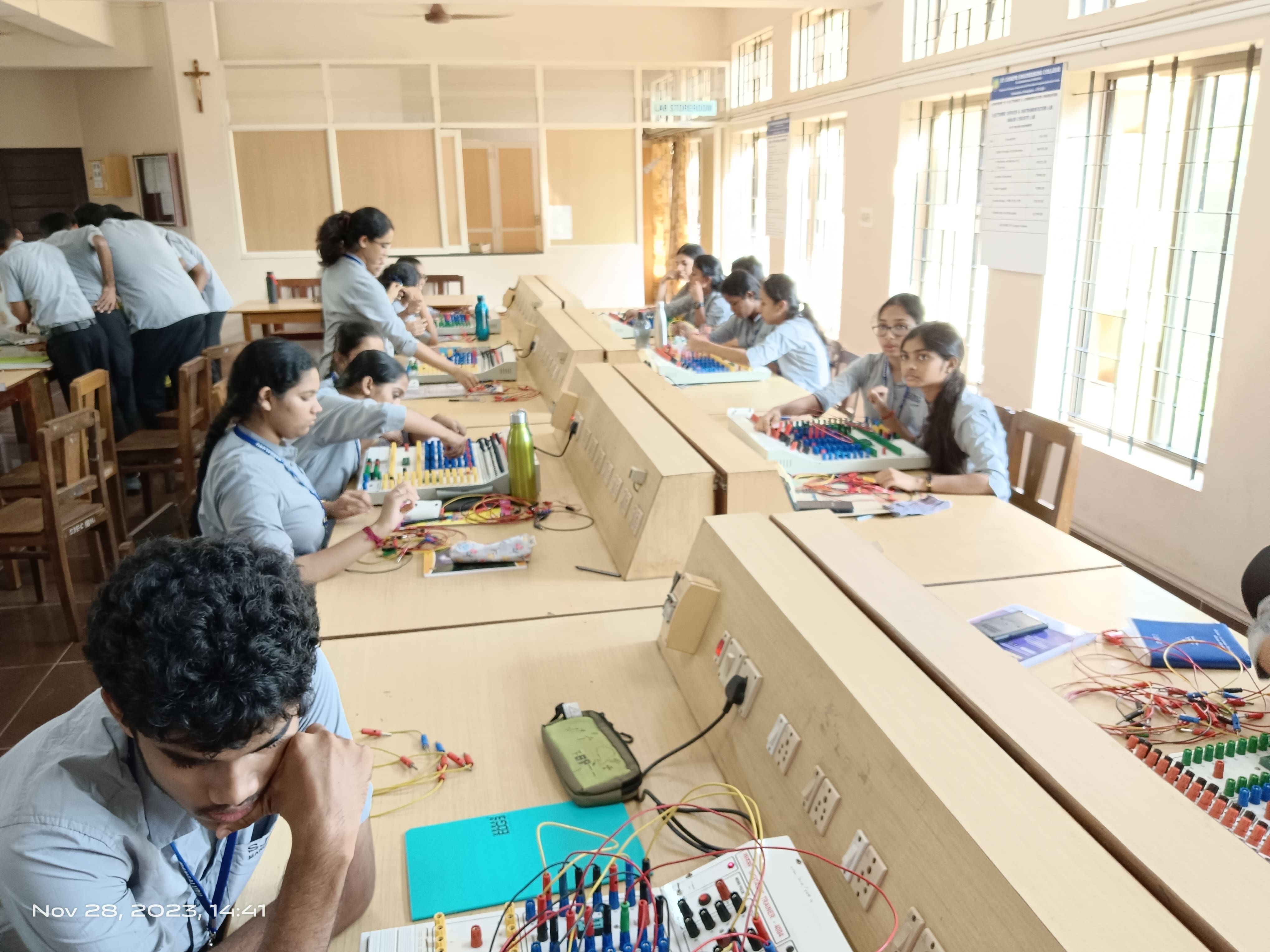
Digital Design Lab / Project Lab-I |
Digital Trainer Kits, Digital IC Tester, Digital Multimeter, MSP 430 Lunch Box Kits, 8051 Microcontroller Trainer Kits, LCD Display Module, 7 Segment Display Module, LED Display Module, ADC Interfacing Module, DAC Interfacing Module, HEX Keypad Interfacing Module, Toggle Switch Interfacing Module, Stepper motor Interfacing Module, DC Motor Interfacing Module |
|
Name of the lab |
Major Equipments/Facilities |
|
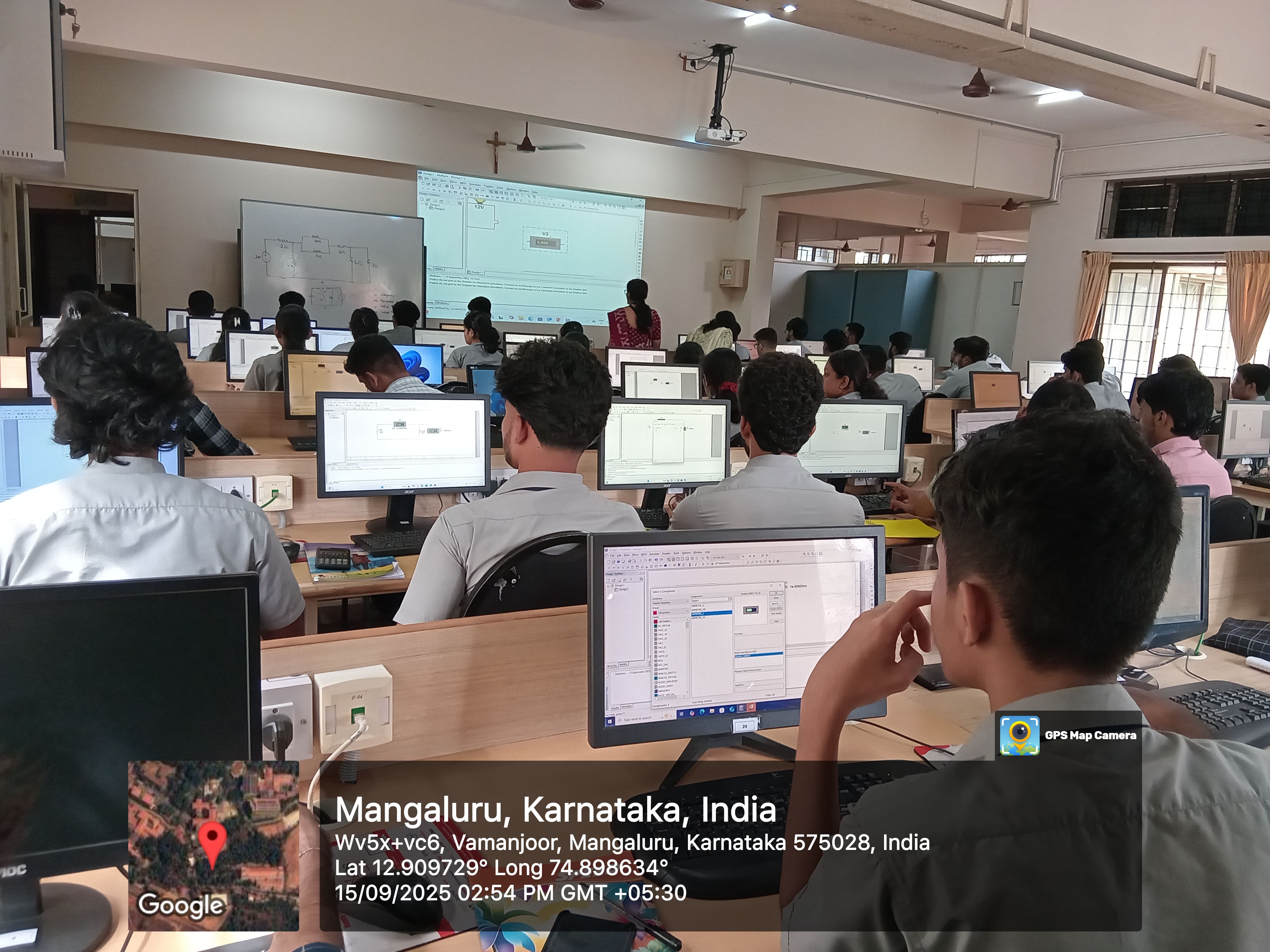
CMOS VLSI Lab/ Project Lab-II |
Cadence VLSI Design Tool, Dell T-440 Tower Server, Intel Xeon 16 GB-8 GB RDIMM,2TB HDD, Desktop Computers (Intel i5,8 GB/16 GB RAM,500 GB HDD,512 GB SSD, Red hat/Windows 11), LCD Projector, Printer, Embedded Starter Kit, Embedded C Kit, PIC Starter Kit PIC C Kit, ARM Kit, RTOS Learner Kit, RFID-Arm Project Kit, RFID 8051 Project Kit, ARM Version 2, EVAT Kit, MATLAB R2026 software |
|
Name of the lab |
Major Equipments/Facilities |
|
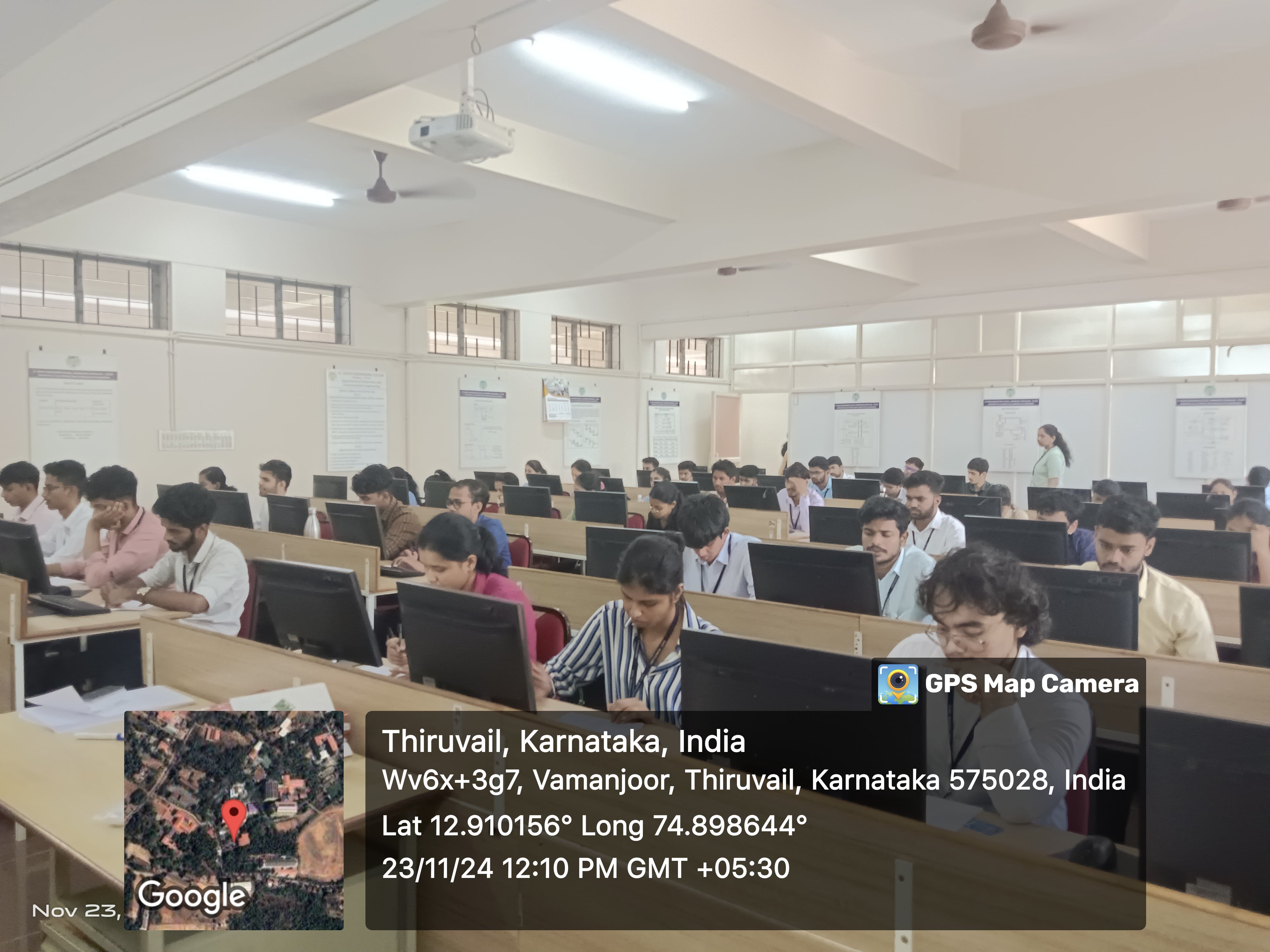
Digital Signal/ Image Processing Lab |
MATLAB R2026 software, Desktop Computers (Intel i5 11th Gen,16 GB RAM,1 TB HDD,512 GB SSD, Windows 11), DSP TMS320C674810MAP L138L LCDK kits, DSK-6713 kits with Code Composer Studio, LCD Projector, Printer, PA Amplifier set BTA 550 |
|
Name of the lab |
Major Equipments/Facilities |
|
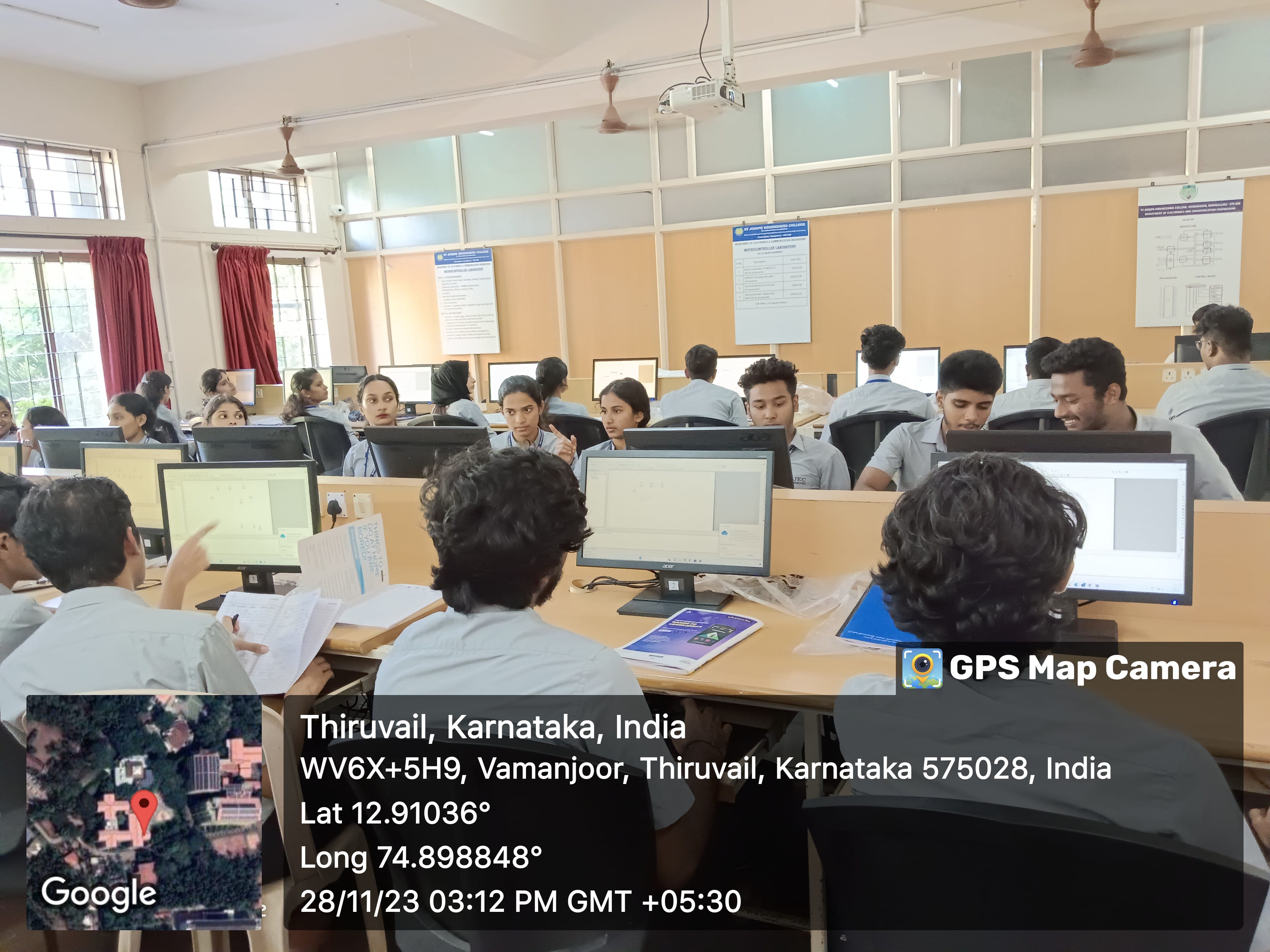
Digital Design Using Verilog HDL Lab/ Arm Processor and Microcontroller Lab |
Xilinx Vivado software 2018.2, Nexys 4 DDR-Artix-7 FPGA Boards, MATLAB R2026 software, Keil µ-vision 5 Software, Desktop Computers (Intel i5 11th Gen,16 GB RAM,1 TB HDD,512 GB SSD, Windows 11), Analog Discovery Kits, TIVA TM4C123G Based Starter kits, ARM CORTEX-M3 LPC1768 Trainer Kits & Accessories, Pattern Generator/ Logic Analyzer Kits and Interface Cards, Hardware Description Language Kits, LCD Projector, Printer |
|
Name of the lab |
Major Equipments/Facilities |
|
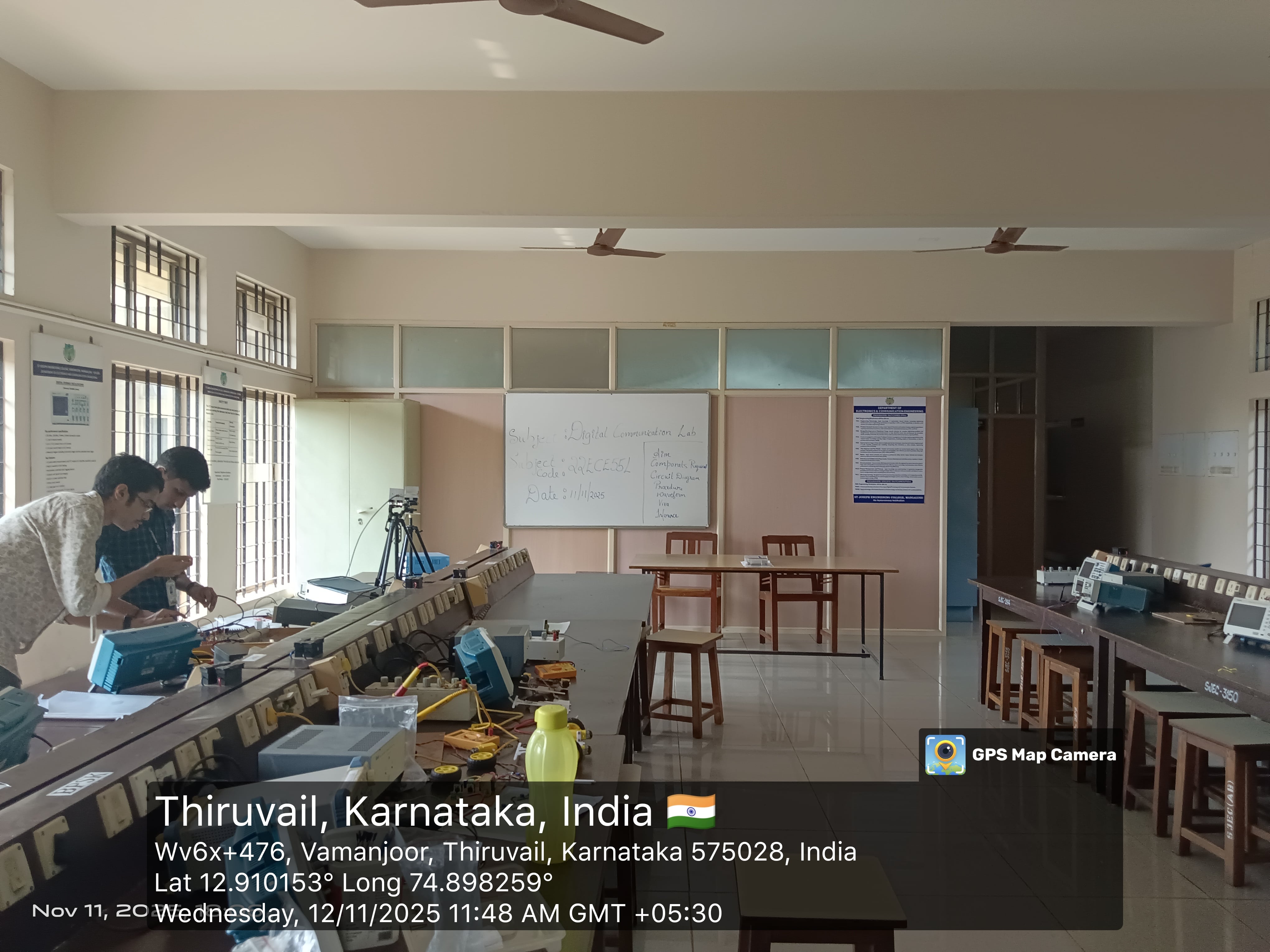
Digital Communication Lab |
Microwave Test Bench Setups, Micro Strip Setups, Advanced Communication Kits, Optical Fiber Kits, Analog Communication Kits, Digital Storage Oscilloscopes (DSO) 100MHz, Digital Dual AFO, Analog & Digital AFO, Dual Power Supplies (+/- 15V), Variable Power Supplies, Decade R, C boxes, Analog IC Tester, LCR Meter Digital Multimeter |
|
Name of the lab |
Major Equipments/Facilities |
|
Computer Communication Networks Lab/Network Theory Lab |
Desktop Computers (Intel i5,8 GB RAM,1 TB HDD, Fedora/Windows 11), NS3 Software, GNU C-Compiler MATLAB R2026, NI Multisim Software 14.2, LCD Projector, Printer |

|
Name of the lab |
Major Equipments/Facilities |
|
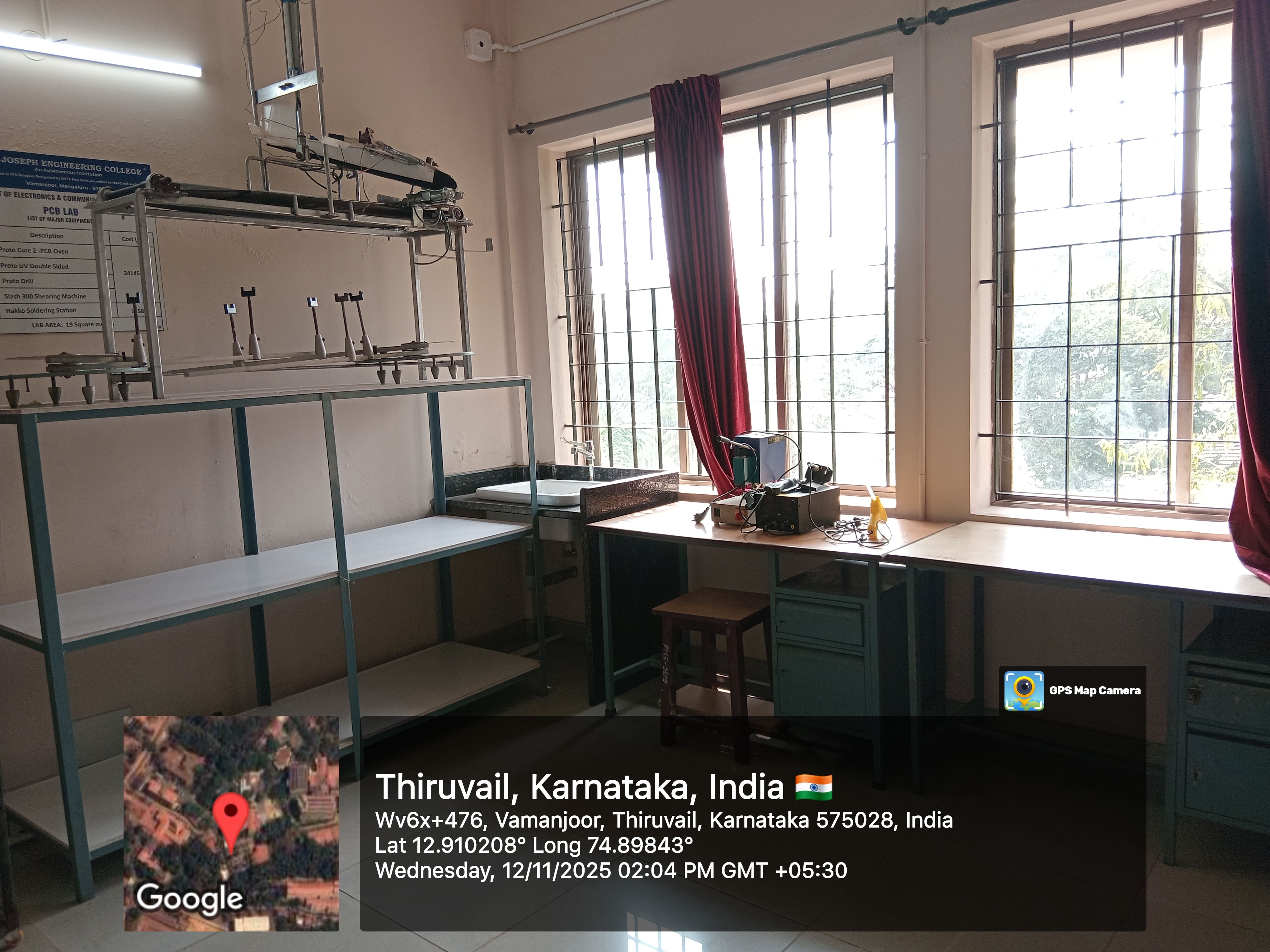
PCB lab |
Soldering station, Proto contact PCB artwork film maker, Proto cure 2 -PCB Oven, Proto Resist Dip Coating machine, Proto UV double sided, Proto Etch, Proto Drill, Slash 300 shearing machine, RTM 10 rolar tinning machine, Proto Dye Iron Box, Saik 220v, 909D+Soldering Station + Hot Air Gun+ DC Power Supply Multi-Function Set with its Accessories |
|
Name of the lab |
Major Equipments/Facilities |
|
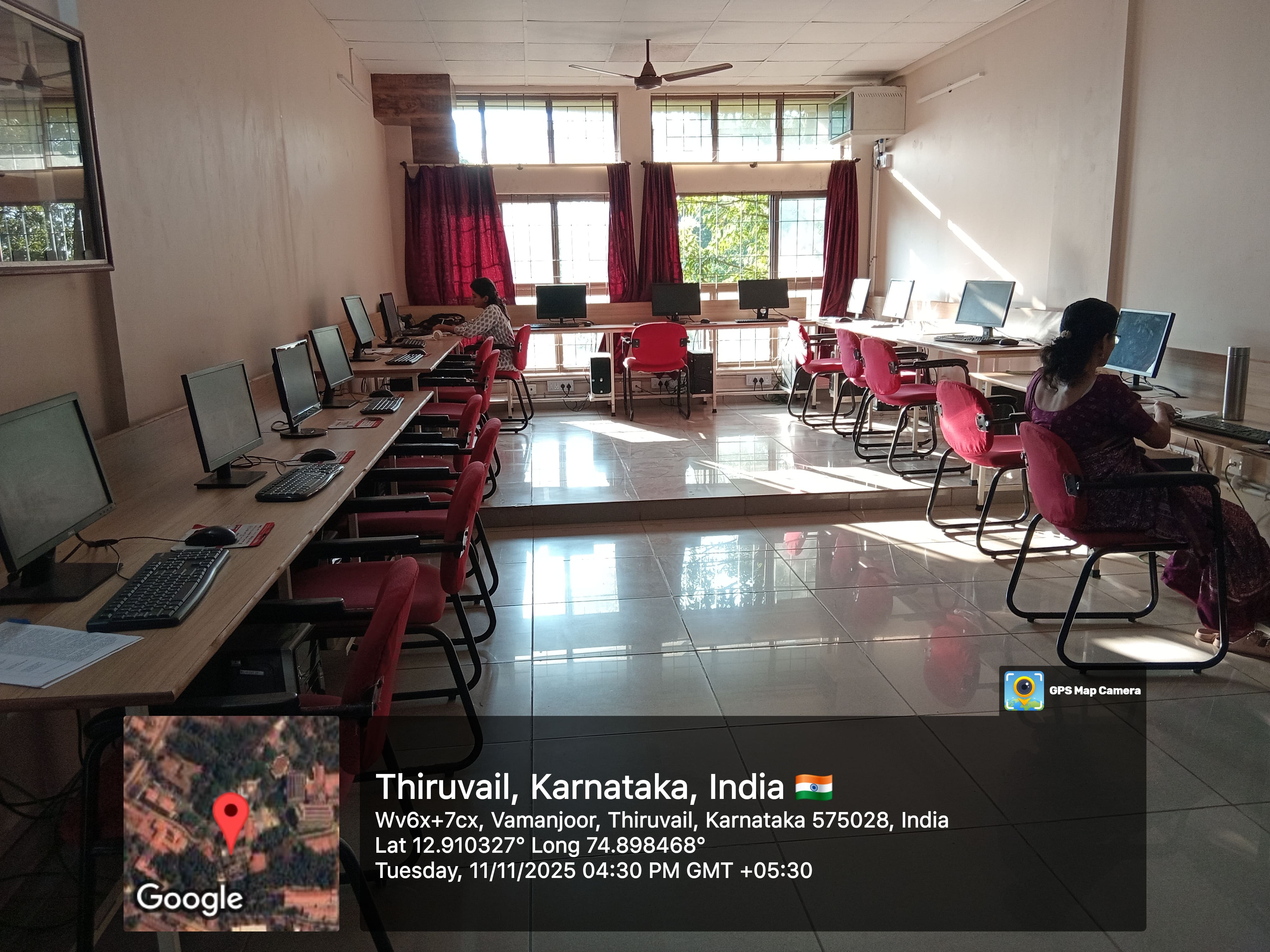
Research Centre |
Xilinx artix-7 FPGA AC701 Evaluation kit, FPGA Development Board -Zed board, Zynq-7000 ARM, ZYBO Z7 Zynq -7010 ARM/FPGA SoCPlatform+SDSoC, Analog Discovery Kit, Dell Power edge T20 Tower server, Intel Xeon E3-1225V3 16 GB RAM, 2 TB x 2 HDD,Windows 11 Desktop Computers (Intel i7,16 GB RAM,1 TB Harddisk,512 GB SSD, Windows 11), RSoft OptSIM v 2020-9 Software, MATLAB R2026 software, PmodWiFi, Bluetooth, GPS Receiver Interface, Rees 52 Raspberry Pi Touch Screen (3.5 inch), Sony ICD-UX560F Digital Voice Recorder with inbuilt USB, Sony Headphone with Microphone, NI Multisim Software 14.2 |
|
Name of the lab |
Major Equipments/Facilities |
|
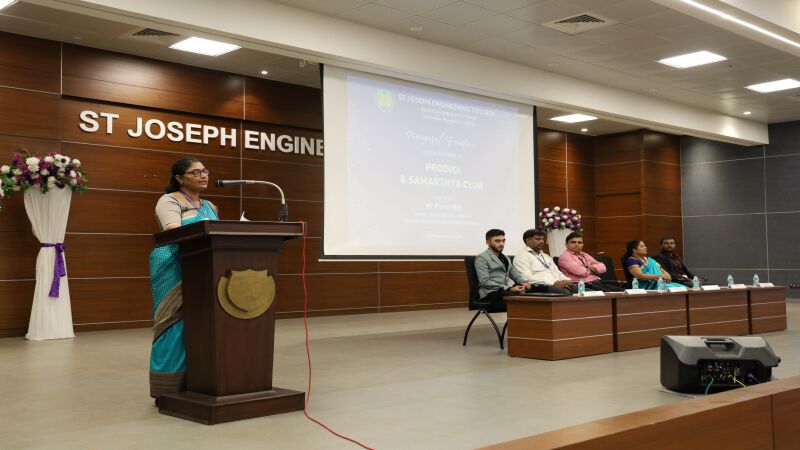
Bio Medical Electronics Lab/ Samarthya club |
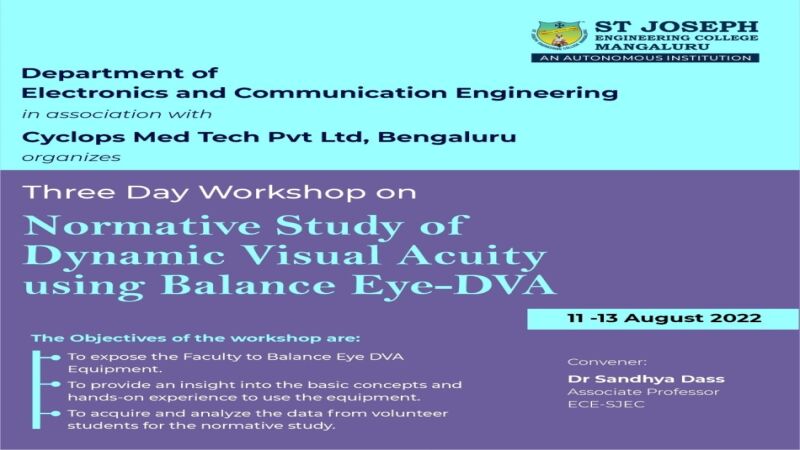
Balance Eye- Balance Assessment System, Dell Precision Tower 3630, Intel Xeon E-2124,16GB, DDR4, Memory 256 GB SSD, 2 TB HDD, Windows 11, AD8232 ECG Sensor with cable & Electrodes, EMG muscle Signal Sensor V3 with cable & Electrodes, Pulse Sensor XD-58C, High Torque Metal Gear Standard Digital Servo, Nema23 Stepper Motor with Gearbox, Arduino UNo R3 Board and Accessories Raspberry PI 3B+based Media Center-Smart TV kit fully assembled, LCD DISP 16*2 with 12C, GSM Module SIM900A, OLED Display, ESP8266/1, L298N Motor Driver Module, Motors Medium, Glue Gun 07, Soldering Iron, Micro strip, Soldering Stand, ATMEGA328 UNO Board with cable, Stepper Motors, Digital Multimeters |
2026-27
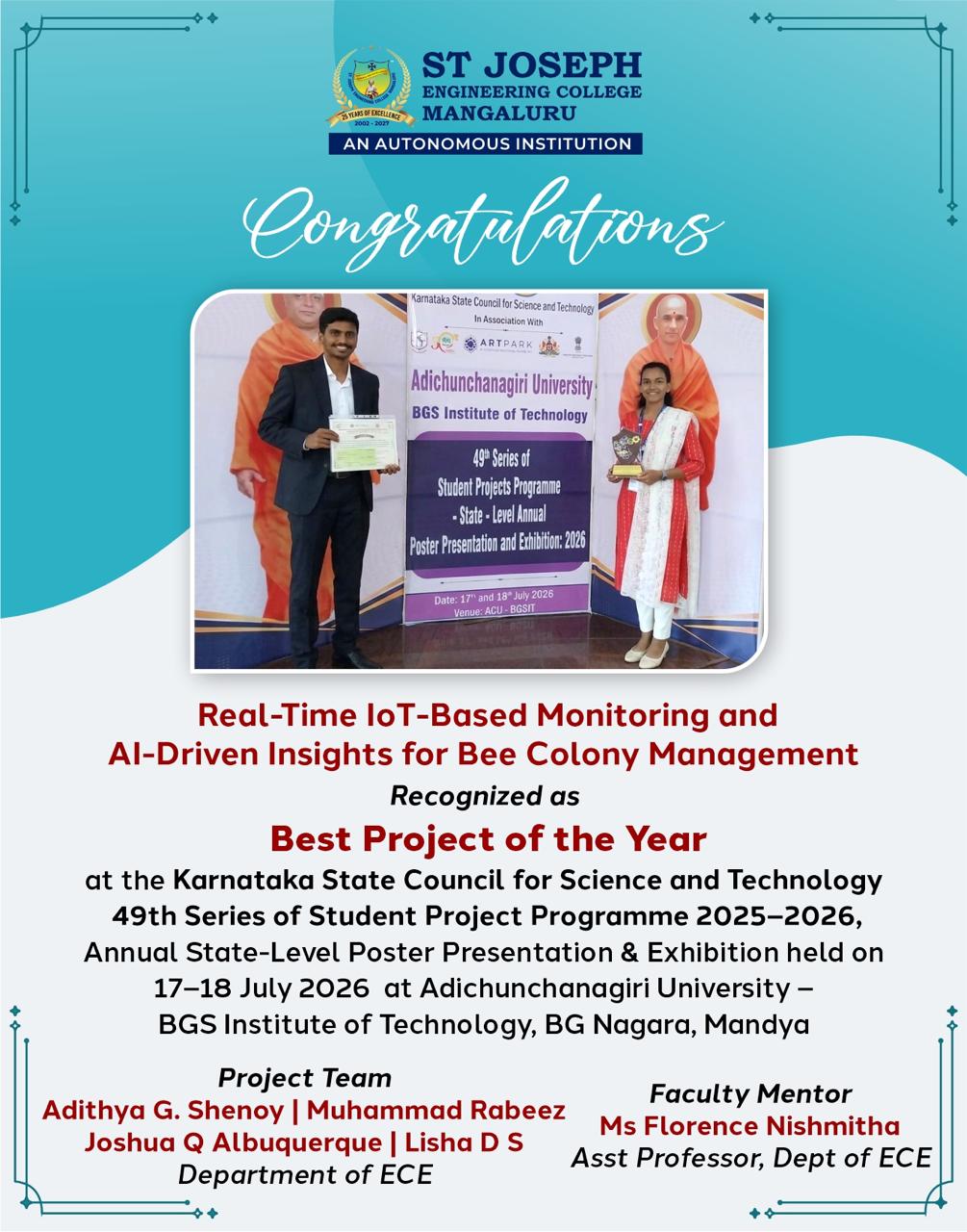
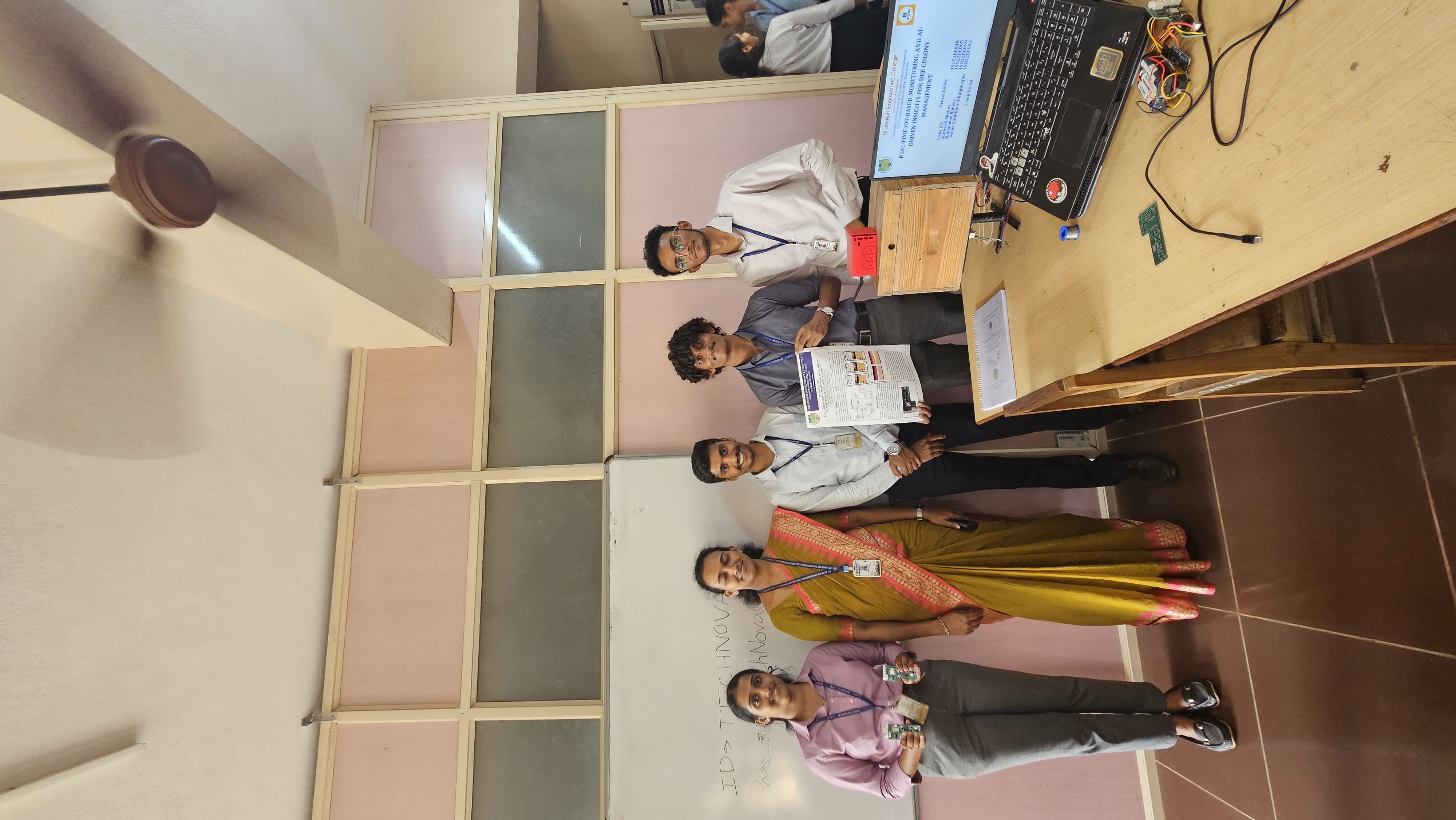
Mr Adithya G Shenoy, Muhammed Rabeez, Joshua Q Albuquerque and Ms Lisha D S of ECE won the Best project of the year for the project titled “Real Time IoT Based Monitoring and AI driven Insights for Bee Colony Management at the Karnataka State Council for Science and Technology 49th Series of Student Project Programme 2025-26, Annual State Level Poster Presentation & Exhibition held on 17-18 July 2026 at Adichunchanagiri University-BGS Institute of Technology, BG Nagara, Mandya.
2025-26
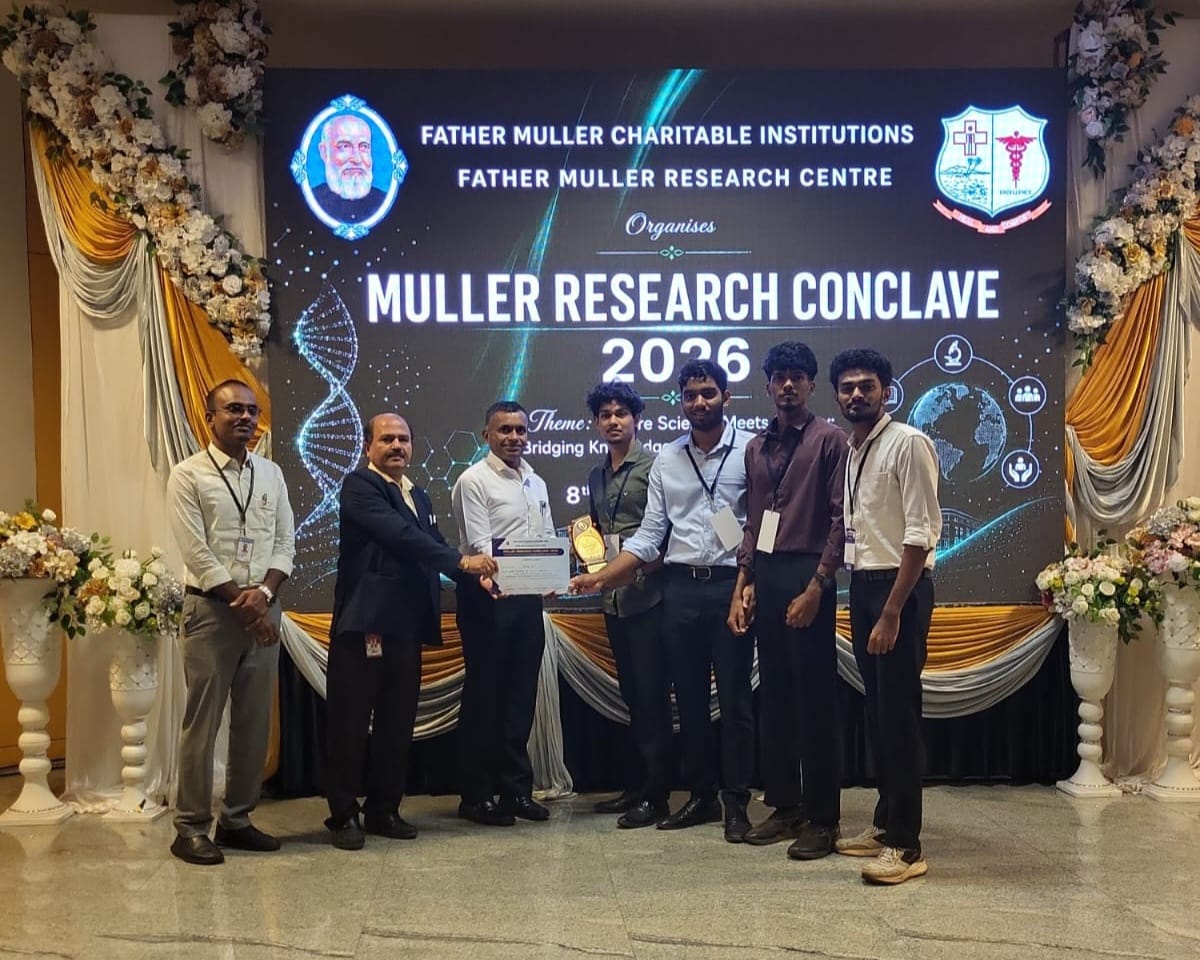
Mr Reeve Jayson Saldanha, Mr Yashas G , Mr Sachit Naik, Mr Shreyas R Bangera of ECE have won Second Place in “Muller Medithon 4.0” for the project titled “Development of Auditory Assistive Device with AI based Noise Suppression and Environment Classification”, organised by Father Muller Research Centre as part of Muller Research Conclave on 13 June 2026.
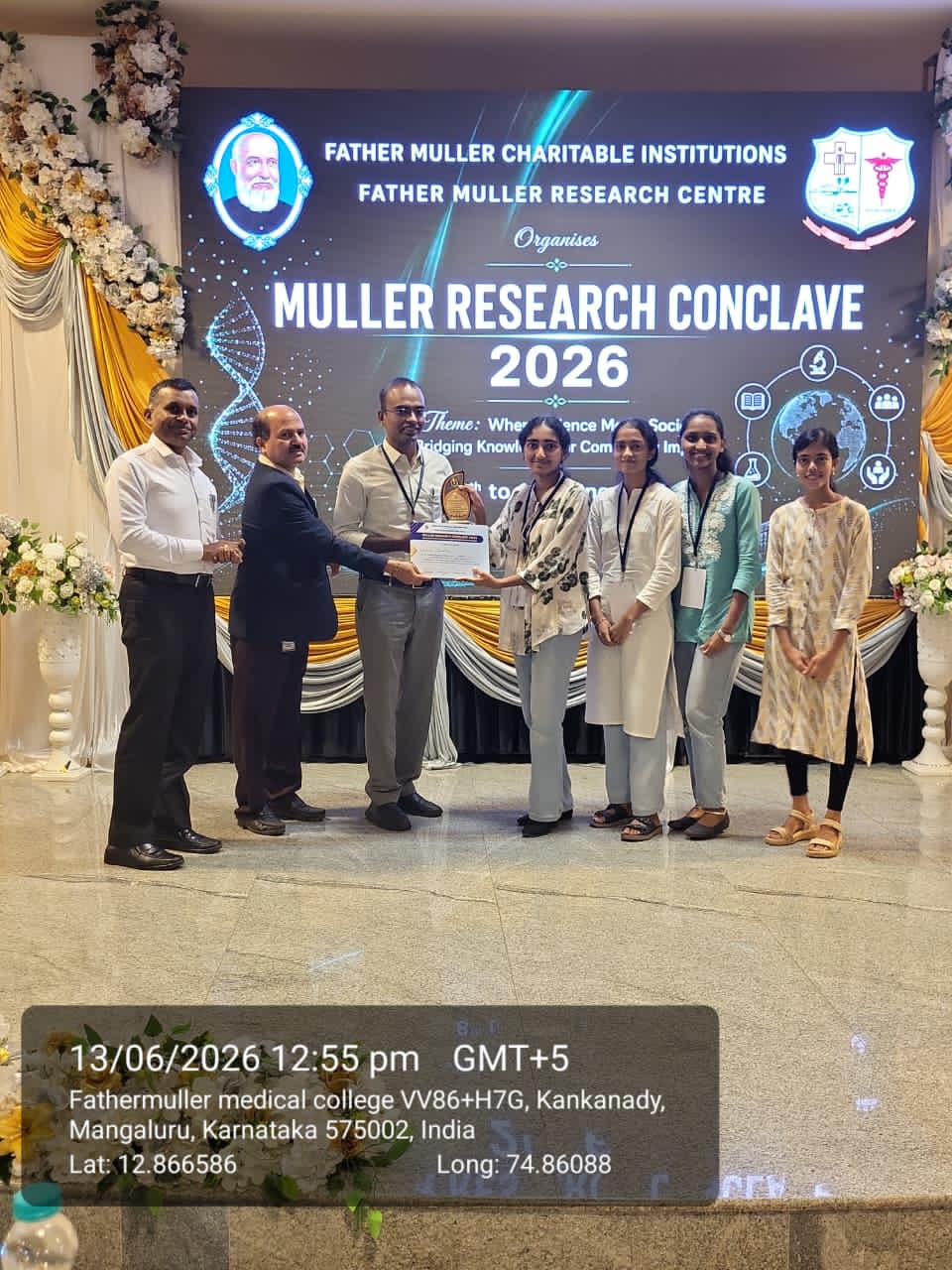
Ms Adithi G Amin, Ms Dillen Susan Lobo, Ms Josviea P V, Ms A V Lavanya of ECE have won Third Place in “Muller Medithon 4.0” for the project titled “Near Infrared Spectroscopy based Embedded System for Non invasive Blood Glucose Estimation”, organised by Father Muller Research Centre as part of Muller Research Conclave on 13 June 2026.
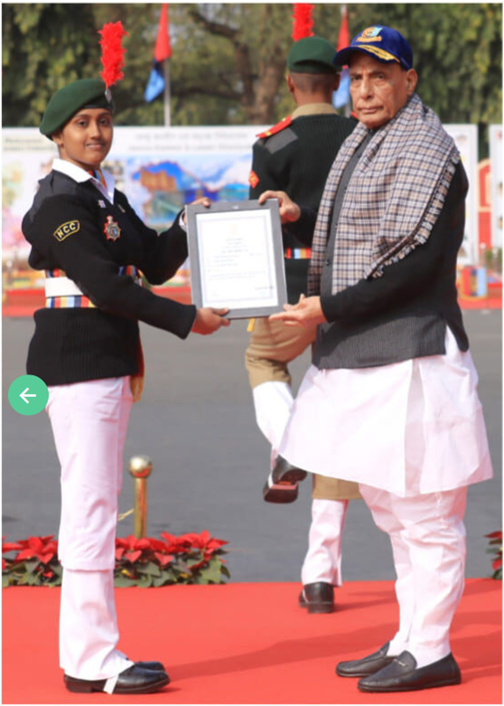
PO Cadet Lisha D Suvarna 6 Kar Naval Unit NCC (IV Year-ECE) Received the Raksha Mantri Commendation at the RDC 2026 camp, New Delhi, from the Honourable Defence Minister Shri Rajnath Singh on 24 Jan 2026. She is the only NCC navy Cadet and one among 6 NCC cadets from all over India to receive the highest award in NCC during this year.

Ms Kannika D Ambekallu Mr Pratheek Moras Ms Larissa Agnes Rego
Selected for the prestigious OMLP Internship at GE HealthCare in the Core Hardware profile from the batch of 2027. The 2-month internship offers a monthly stipend of INR 25,000.
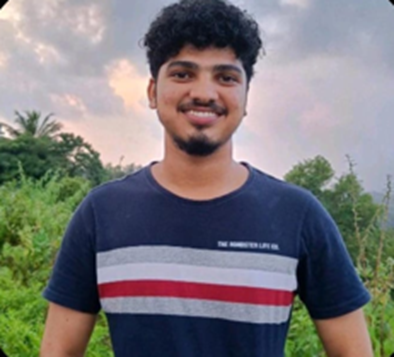
Mr Shrijesh Kumar Received Vidhyanidhee IEEE Bangalore Section Scholarship of Rs 10,000.
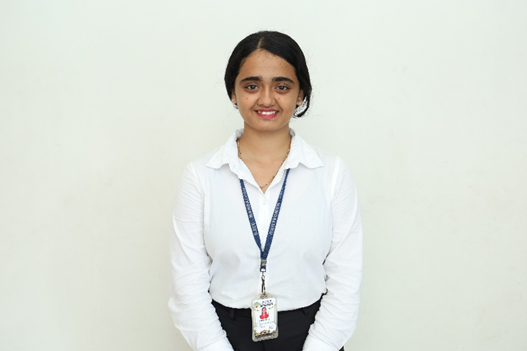
Ms Lekhana Shetty Member of Team SJEC AERO that secured overall first prize under MICRO CLASS in the 10th SAEINDIA Southern Section Drone Development Challenge-2025. Team also received Best Technical Presentation-Second Prize in the same category.
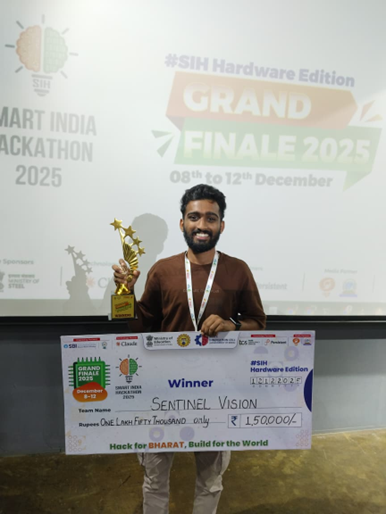
Mr Christopher Inas Laindav Member of Team Sentinel Vision that secured the first position at the National level Smart India Hackathon (SIH) 2025 and received a cash prize of ₹1,50,000.
2024-25
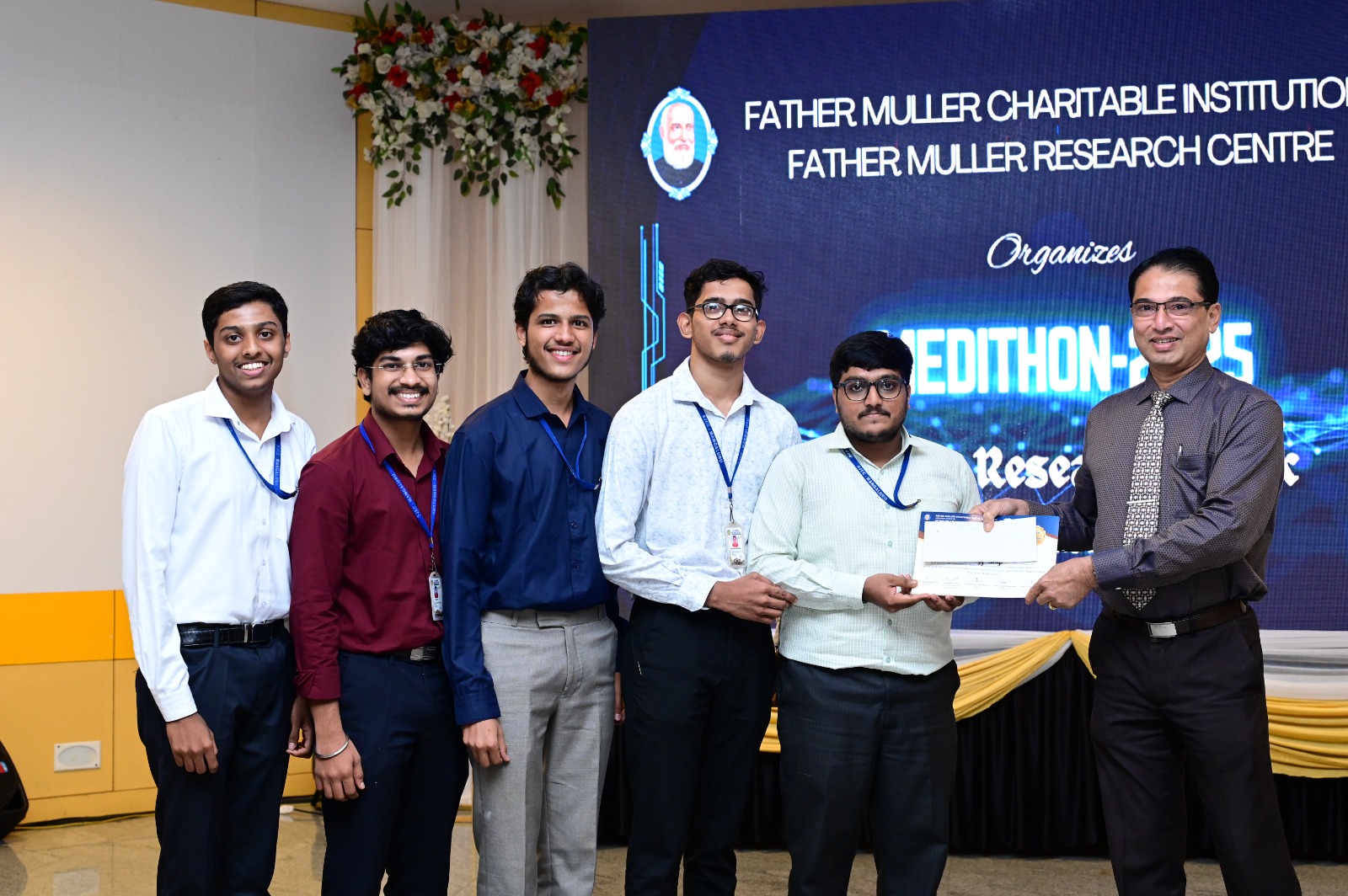
Mr Shreesha Kumar MG, Mr.Shashank B, Mr. Rahul T P , Mr. P Vishwas Karanth, Mr.Swasthik G Bhandarker of III year ECE under the guidance of Ms Nandini Maninarayana Assistant Professor department of ECE and Dr Ishwara Keerthi C Spine Surgeon, KMC Hospital Mangaluru has won second place for their work titled “Pediscope” in Muller Medithon -3.0-An interdisciplinary Ideathon conducted on 14 June 2025 organised by Fr Muller Charitable Institute, Mangaluru.
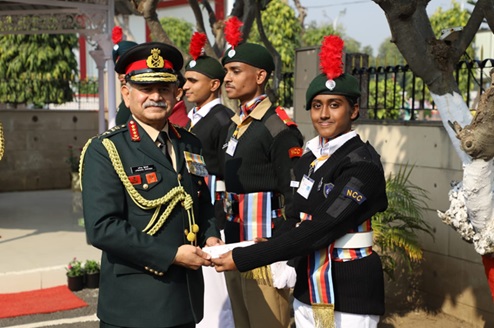
Ms. Lisha D. S., III Year ECE, participated in the prestigious Republic Day Camp 2025 as Best Cadet-Navy (Sw) from the Karnataka and Goa Directorate at DG NCC Camp, Carlappa Ground, Delhi (Dec 31, 2024 – Jan 31, 2025). She received the Best Briefer award for Flag Area from Chief of the Army Staff, General Upendra Dwivedi.
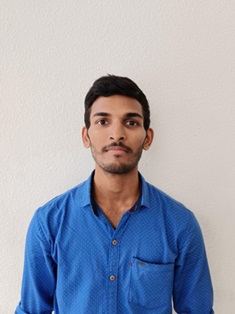
Mr Shravan V K has secured First Place in ROBOWARS (15 KG) held during graVITas'24 from 27-29 September 2024 at Vellore Institute of Technology, Vellore.
Ms Kushi Salian excelled in Sports:
-
First place in weightlifting in the Inter Collegiate VTU state level competition held at AIET on 12 November 2024.
-
Third place in Hammer Throw in Karnataka State Junior & U-23 Athletic Meet organized by Mysuru District Athletic Association on 14-17 September 2024.
-
Fifth place in the hammer throw in Karnataka state senior athletic meet 2024 held at Bangalore.
-
Sixth place in the hammer throw in Karnataka State Olympics 2025 held at Udupi.
-
Fourth place in VTU state netball tournament 2024 held at Bangalore.
-
II Runner up in VTU State Level Shuttle Badminton Tournament 2024 held at Mandya.
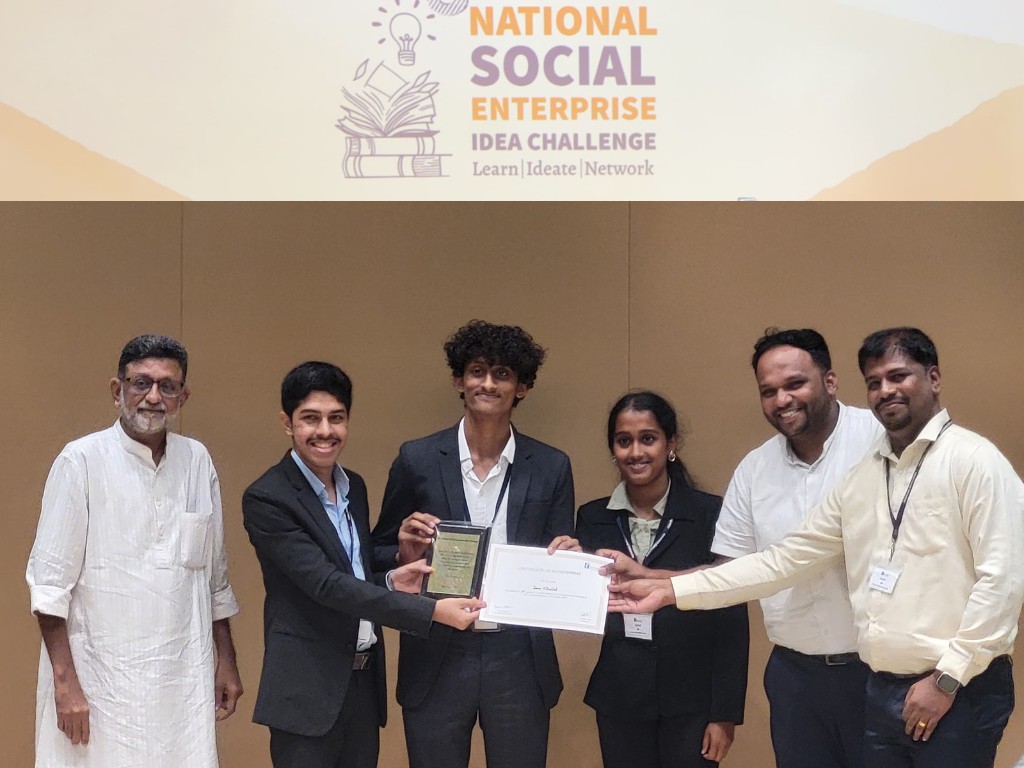
Mr. Joshua Quinthino Albuquerque and Ms. Lisha D. S. of ECE, part of interdisciplinary Team Hivelink, won a cash prize of ₹70,000 at the 8th National Social Enterprise Idea Challenge held at Azim Premji University, Bengaluru from 17-18 October 2024, guided by Mr. Glenson Toney and Dr. Aldrin Claytus Vaz.
Prerana P, Simone D'Souza, Sinchana B. R., and Sweekrithi K. S. of team Aikhya presented their project on developing an AI model for predicting health risks in pregnant women and secured a spot among the top 15 teams in the grand finale held from 17–18 October 2024 at Azim Premji University, Bengaluru, under the guidance of Mr. Glenson Toney and Dr Aldrin Claytus Vaz.
2023-24
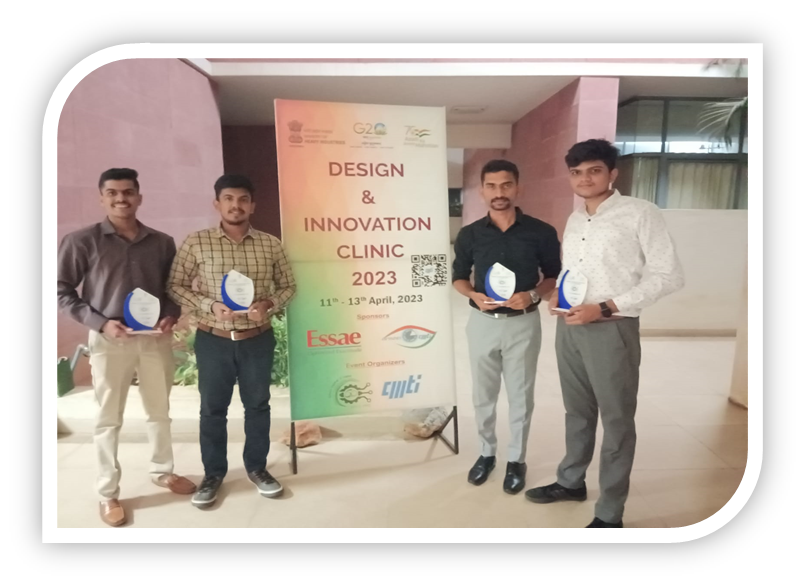
Aditya Rao, Gagan Surya Kumaar S, Aman Balakrishna Muttum, Sathwik A Bangera guided by Mr Glenson Toney, Assistant Professor, ECE received a Grant of Rs 1.67 Lakhs from CMTI for the project titled “An Autonomous Agricultural Machinery for Enhancing Plant Disease Detection and Real Time Analysis”
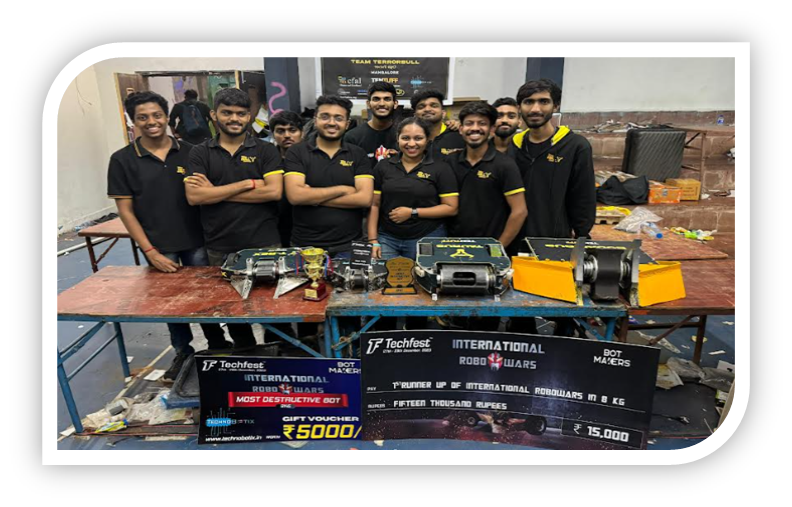
P Vishwas Karanth and Shashank B of II Year ECE secured Second place in Robowars at Tech-Fest, IIT Bombay on December 2023.
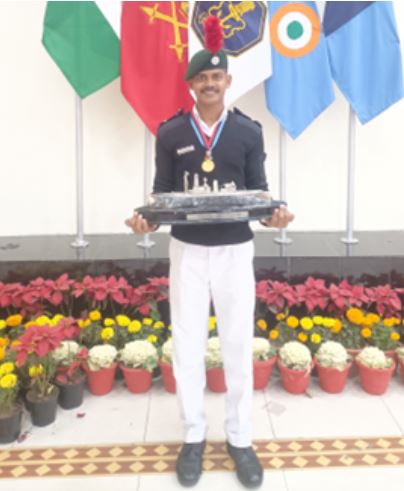
Cdt. Capt. Prashanth Parashurama Koti (3 rd Year Student) is one among the 3 cadets from Karnataka to get selected for RDC 2023 in ship modelling category. He has represented Karnataka and Goa Directorate in Delhi and won the Gold Medal in Powered Ship Model, VIP Model and awarded Admiral Nanda Trophy, also known as Silver Ship in Ship Modeling.
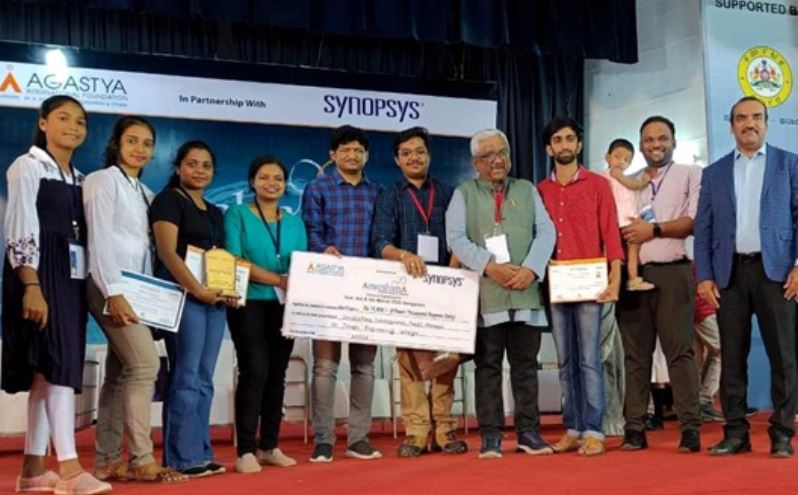
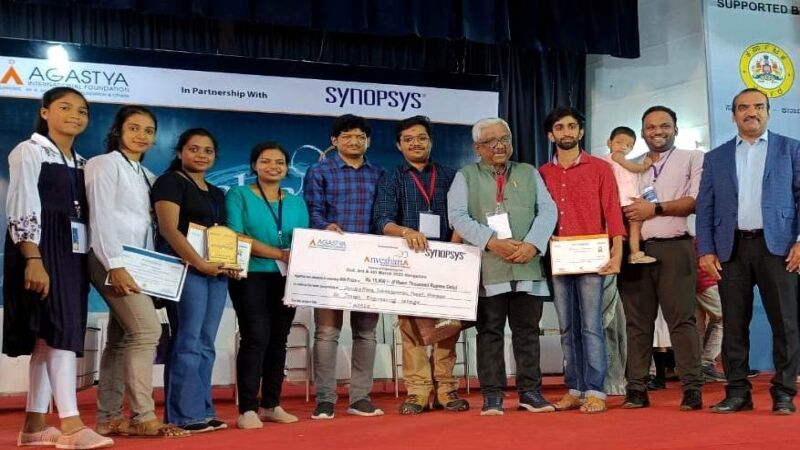
“Amie, a health tracking mobile application for pregnant women” being developed by Ms A Spoorthi, Ms Ishika, Ms Jenisha D’Souza and Mr Jeethesh D’Souza (4 th Year Students) has won fourth place in the finale of Anveshana 2023, a south India level project competition organized by Synopsys and Agasthya foundation.
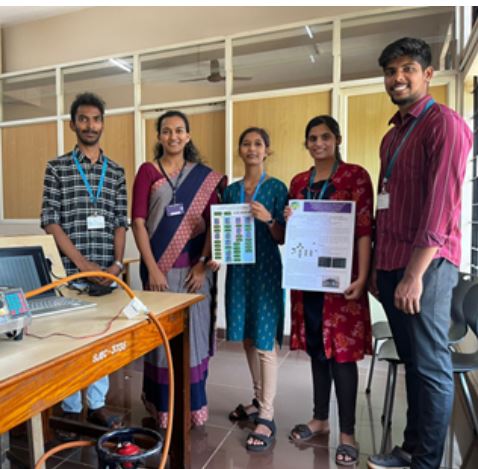
Sannidhi, Melroy Shawn Sequeira, Thejasvi and Nikhil T A (4 th year students) under the Guidance of Ms Florence Nishmitha secured 1 st Place in the I2 Connect Project Exhibition-2023 for their UG project titled “DEVELOPING AN IOT-BASED REAL TIME KITCHEN MONITORING AND AUTOMATION SYSTEM FOR IMPROVED EFFICIENCY AND SAFETY” Organized by the IEEE MSS, Hosted by JNNCE-IEEE Student Branch held on 29/05/2023.
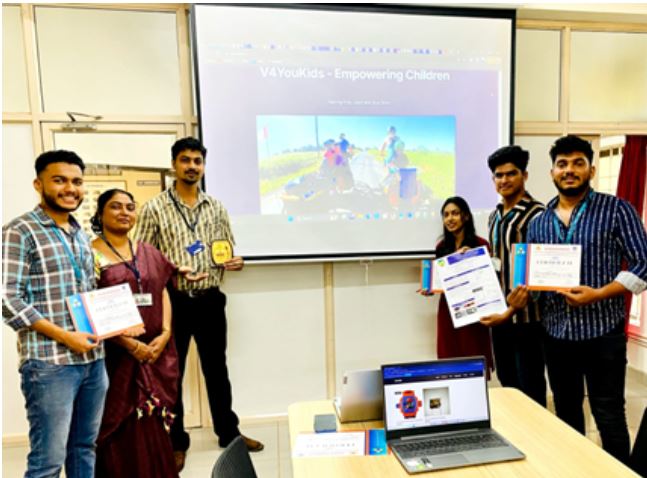
Akash OM, Arliya Mathew, Arul Thomas, Sumith Hegde (4 th year students) under the Guidance of Dr Arjun Sunil Rao secured 2 nd Place for the paper IOT BASED CHILD SAFETY WEARABLE DEVICE at JNANASANGAMA 2023 at VCET, Puttur on 05/05/203.
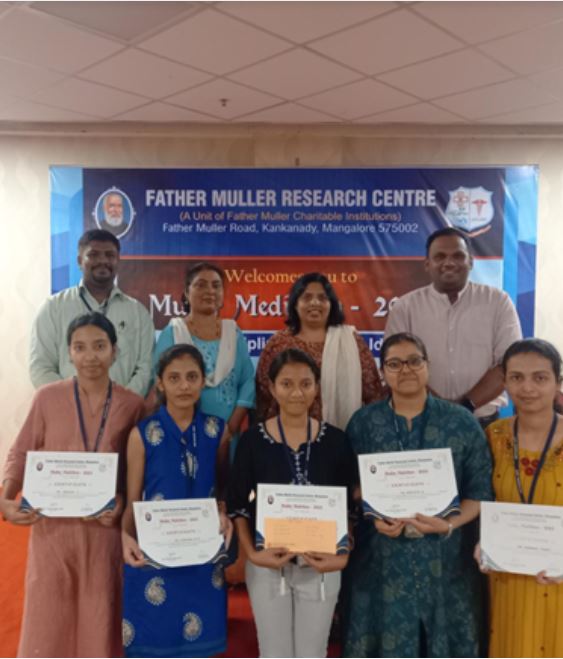
Team Aikhya, Ms Sinchana Gowda, Ms Pramitha D’Souza, Ms Prerana, Ms Simone & Ms Sweekrithi (2 nd Year Students) under the Guidance of Mr Glenson Toney & Mr Aldrin Claytus Vaz, won 3 rd Place at Medithon-2023, organised by FMMC, Mangalore on 10/03/2023.
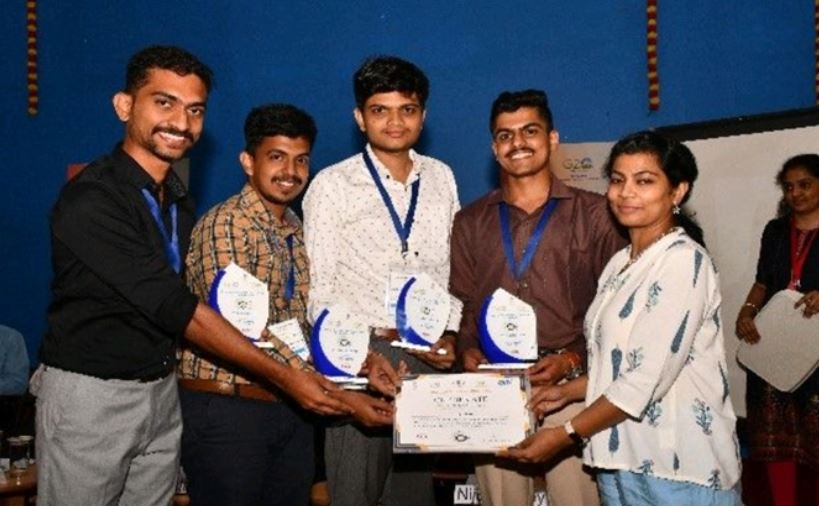
Team Vriddhi, Mr Gagan Surya Kumaar S, Mr Aditya Rao & Mr Aman Balakrishna Muttam (3 rd Year Students) under the Guidance of Mr Glenson Toney , won 3 rd Runner-Up at Design & Innovation Clinic-2023, organised by Central Manufacturing Technology Institute, Bengaluru during 11-13 April 2023.
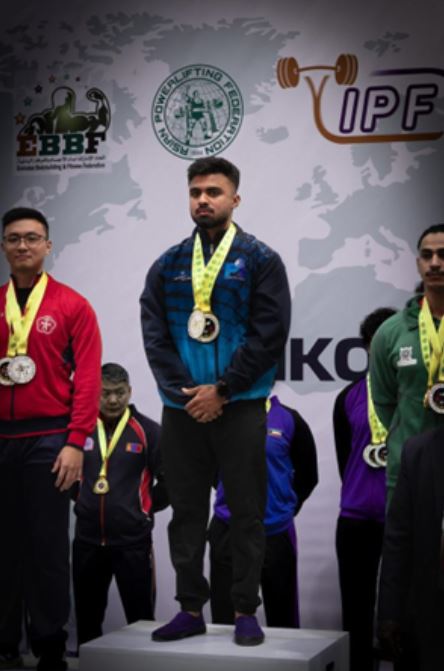
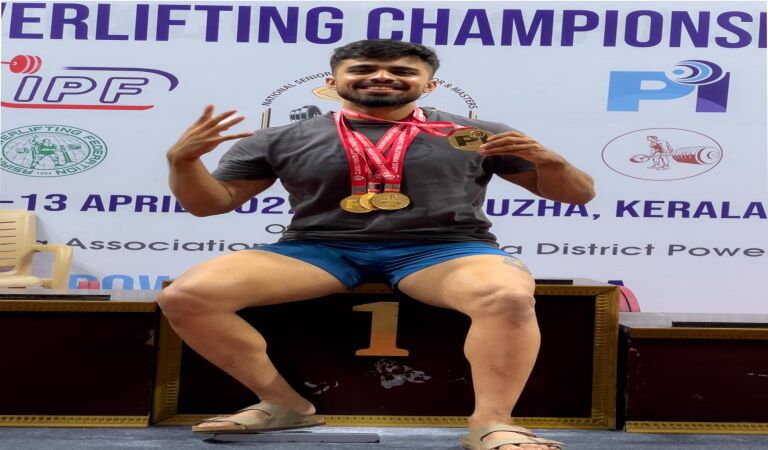
Aren Joy Fernandes (4 th Year Student) has secured First Place in 74kg-Junior in the Asian Men’s Classic Power Lifting Championship-2022 and created World Record in the same category held at Dubai, UAE during 01-07 December 2022.
2025-26
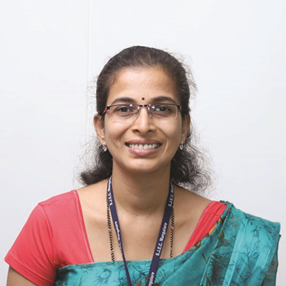
Dr Shama B N has published 2 Patents titled "A System and Method for Dynamic Posture Correction in Home-Based Breast Cancer Rehabilitation" and "A System and Method for Predicting Customer Churn Using Pattern Recognition and Live Interaction Module".
Ms Nandini Maninaraya participated in the training program on Advanced Java Full Stack conducted by TalentNext-Wipro Certified Faculty Program from 9 February 2026 to 20 February 2026.
2024-25
Dr Shama B N was awarded Ph.D for the thesis “Development of an Efficient Signal Processing Algorithm for Radiation Dose Reduction in Pediatric Computed Tomography”, guided by Dr Savitha H M, Professor, ECE, SJEC Vamanjoor
Dr Shama B N has published 2 Patents titled "AI powered Detection of sarcasm in digital conversations" and "AI Powered Bike Air Bag System Using Machine Learning Algorithms".
Mr Glenson Toney, Assistant Professor, ECE has Published a Journal Article in Engineered Science, Q1, ES Publisher on 25 January 2025 Titled “Optimal Headlamp Adjustment for Vehicles through Slip Angle and Stiffness Analysis using Dynamic Vehicle Model”.
Ms Jayalakshmi K P Assistant Professor, ECE and Dr Dayakshini , HOD- ECE has Published a Journal Article in IEEE Access, Q1, on 31 March 2025 Titled “A Comprehensive Survey on Coverage Path Planning for Mobile Robots in Dynamic Environments”.
Ms Jayalakshmi K P Assistant Professor, ECE and Dr Dayakshini , HOD- ECE has Published a Journal Article in IEEE Access, Q1, on 10 June 2025 Titled “Adaptive Spanning Tree-Based Coverage Path Planning for Autonomous Mobile Robots in Dynamic Environments”.

Dr Jennifer C Saldanha Assistant Professor, ECE has Published a Journal Article in Yugoslav Journal of Operations Research, Q1, Faculty of Operational Sciences Publisher on April 2025 Titled “Integrating Multiclass Classifiers For Enhanced Acute Lymphoblast Leukemia Detection: A Comparative Study”.
Dr Jennifer C Saldanha Proposal for DEIAB Local Activities is Accepted for the grant of $1000 from IEEE GRSS DEIAB.
Dr Jennifer C SaldanhaProposal for chapter activities was selected and approved a grant of $2400 from IEEE GRSS in June 2025.

Dr Rohan Pinto Professor-ECE has Published a Journal Article in IEEE Computer Architecture Letters, Q2 , IEEE Publisher in January 2025 Titled “High-Performance Winograd Based Accelerator Architecture for Convolutional Neural Network”.
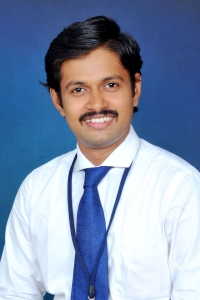
Mr P.C. Vijay Ganesh, Assistant Professor, ECE received the Best Paper Award for the paper titled “Low Power Single Cycle RISC V Processor for Biomedical Applications” at the 2024 IEEE International Conference on Distributed Computing, VLSI, Electrical Circuits and Robotics (DISCOVER), Mangalore, India, 2024.
2023-2024
Jennifer Charlotte Saldanha, Assistant Professor, ECE Department was awarded the PhD for her thesis titled “Analysis of Speech for Voice Pathology Detection and Severity Measurement” by Visvesvaraya Technological University, Belagavi in March 2024.
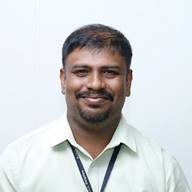
Dr Aldrin Claytus Vaz, Assistant Professor, ECE Department was awarded the PhD for his thesis titled “Performance Improvement of Visible Light Communication System using Advanced Coding Techniques” by Manipal Academy of Higher Education, Manipal in March 2024.
Mr Glenson Toney, Assistant Professor, ECE Dept. received the Best Paper Award for the paper titled “A Novel Lane Detection Approach for Vehicle Adaptive headlamps” at the International Conference on Advances in Smart Sensor, Signal Processing & Communication Technology- (ICASSCT 2024) held at Goa University, Goa on March 2024.

Ms Nandini Maninarayana, Assistant Professor, ECE Department has successfully completed Digital Skills Readiness Program and has been awarded as“Wipro Certified Faculty”. She is also recognized as a mentor for Project Based Learning in Java Full Stack. Successfully Completed TalentNext Project” on “Cloud Computing with Big Data” during December 2023 - March 2024

Dr Roshan R Naik et.al., Associate Professor, ECE has Published a Journal Article in IEEE Access, Q1, Science Direct on 11 June, 2023 Titled “Feature-based
Registration Framework for Pedicle Screw Trajectory Registration between Multimodal Images”.
Frequently Asked Questions
Electrical Engineering is primarily concerned with power generation, power transmission, and high-voltage systems, whereas Electronics and Communication Engineering (ECE) focuses on intelligent systems and control technologies. An example of this is in a wind-turbine system, where the Electrical Engineers are in charge of the generator and power distribution, and the E&C engineering is in charge of the sensor, microcontrollers and wireless communication sub-systems that detect and control functions. This distinction is clearly seen in the curriculum offered by SJEC.
Indeed. At SJEC engineering college in mangalore, students pursuing Electronics and Communication Engineering gain practical experience as part of the academic system. The curriculum includes internships to ensure that students can work in corporate settings, solve practical engineering problems, and understand how industries operate before graduating.
Yes, students who have pursued Electronics and Communication Engineering from SJEC are always backed by rigorous training in technical skills in electronics and IT through the organised Campus to Corporate training programme, while at the same time acquiring the necessary professional skills, including communication and interview skills. This comprehensive training prepares students to take jobs at well-known corporations such as Bosch, Intel, and other technological giants.
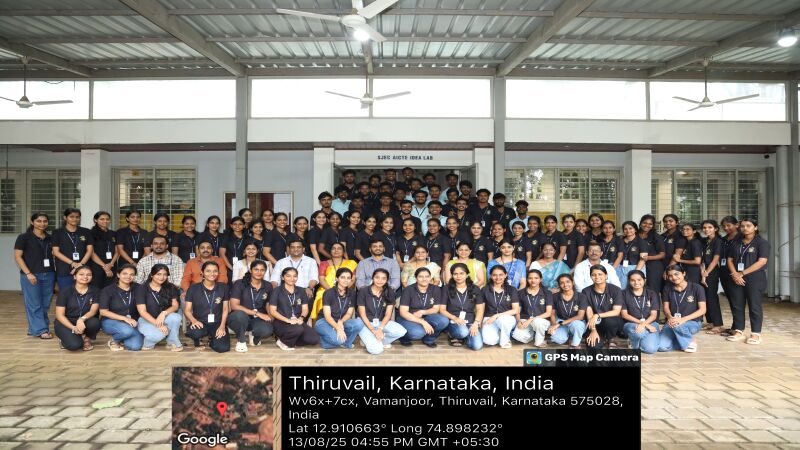
SJEC supports entrepreneurship by providing access to SJEC-STEP (Science and Technology Entrepreneurs Park) and AICTE IDEA Lab. These centres help students to develop ideas into working electronic models. Students are able to transform academic projects into startup ventures with the help of mentorship and innovation support.
Yes. The E&C Engineering Programme is accredited by the National Board of Accreditation (NBA), a mark of high-quality academic engineering training. Moreover, the institution has an NAAC A + rating. These accolades ensure that the degree meets both national and international academic requirements, enabling global employment and further education.
