The Department of Electronics and Communication Engineering organized “ElectroLink 4.0 – Path to Proficiency,” a structured academic and skill-enhancement boot camp for III and V Semester ECE students. The programme was designed to strengthen students’ academic foundations, practical skills, problem-solving abilities, and awareness of various academic and career development opportunities.
Orientation Programme for III Semester ECE Students:
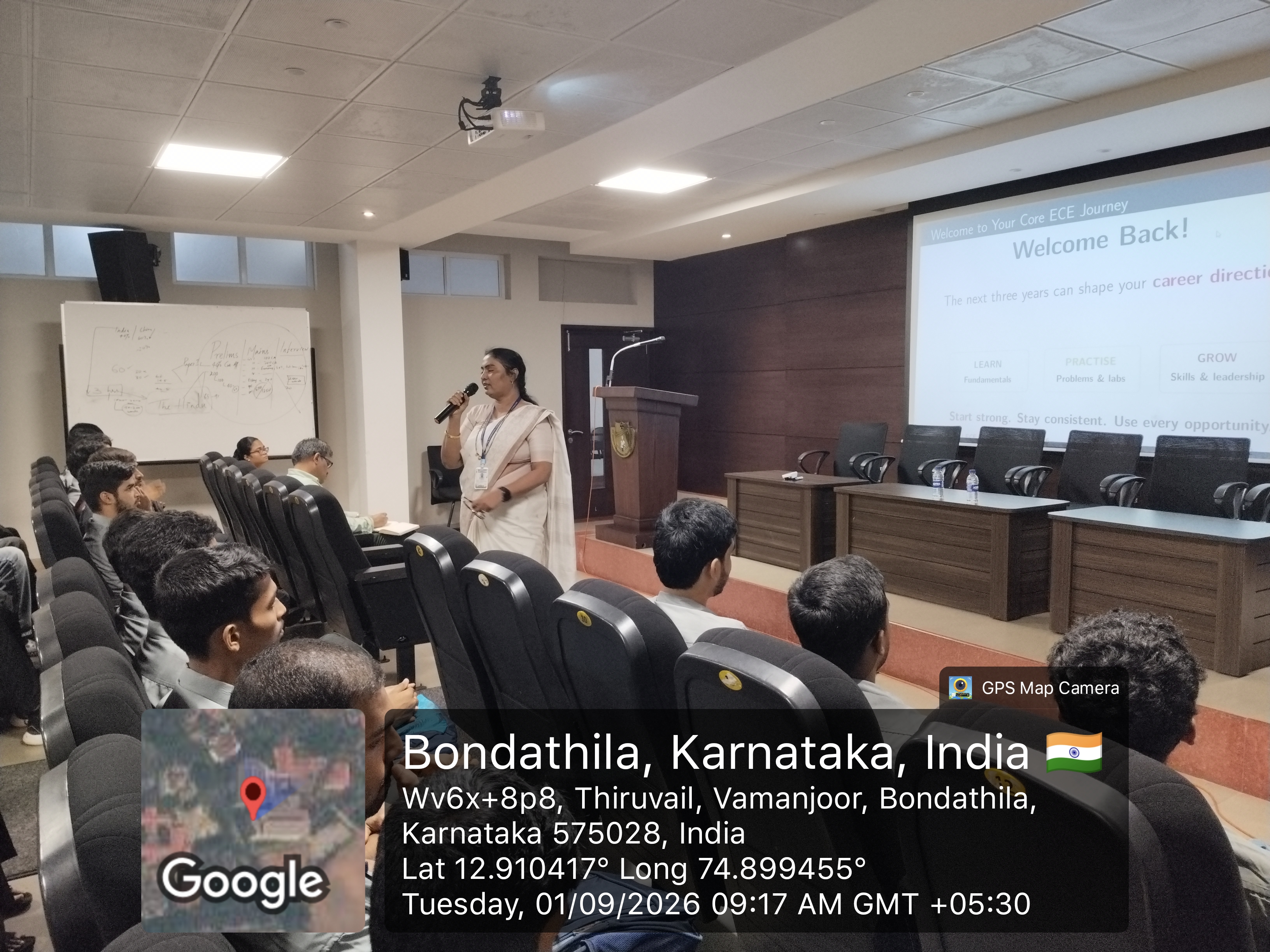
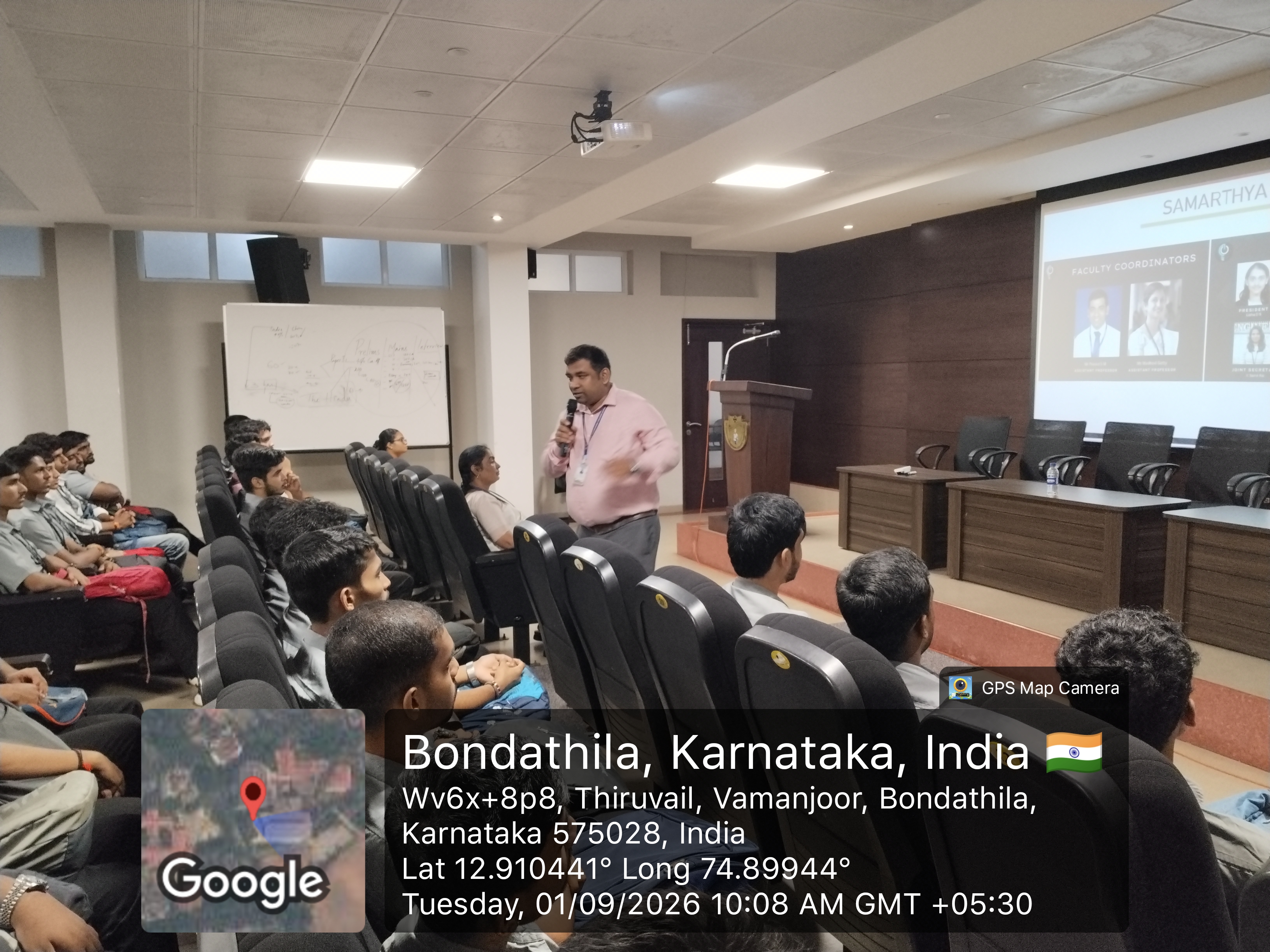
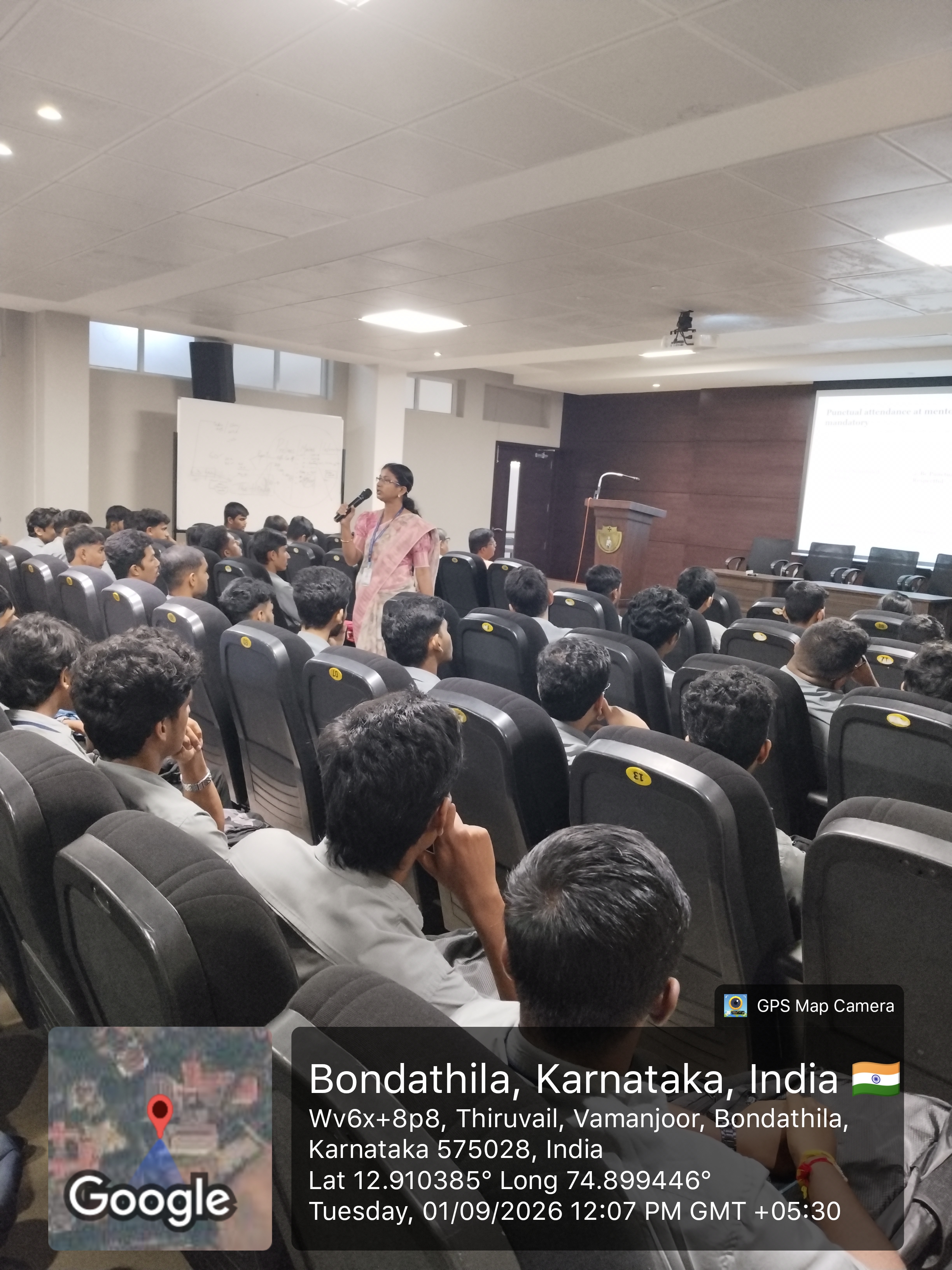
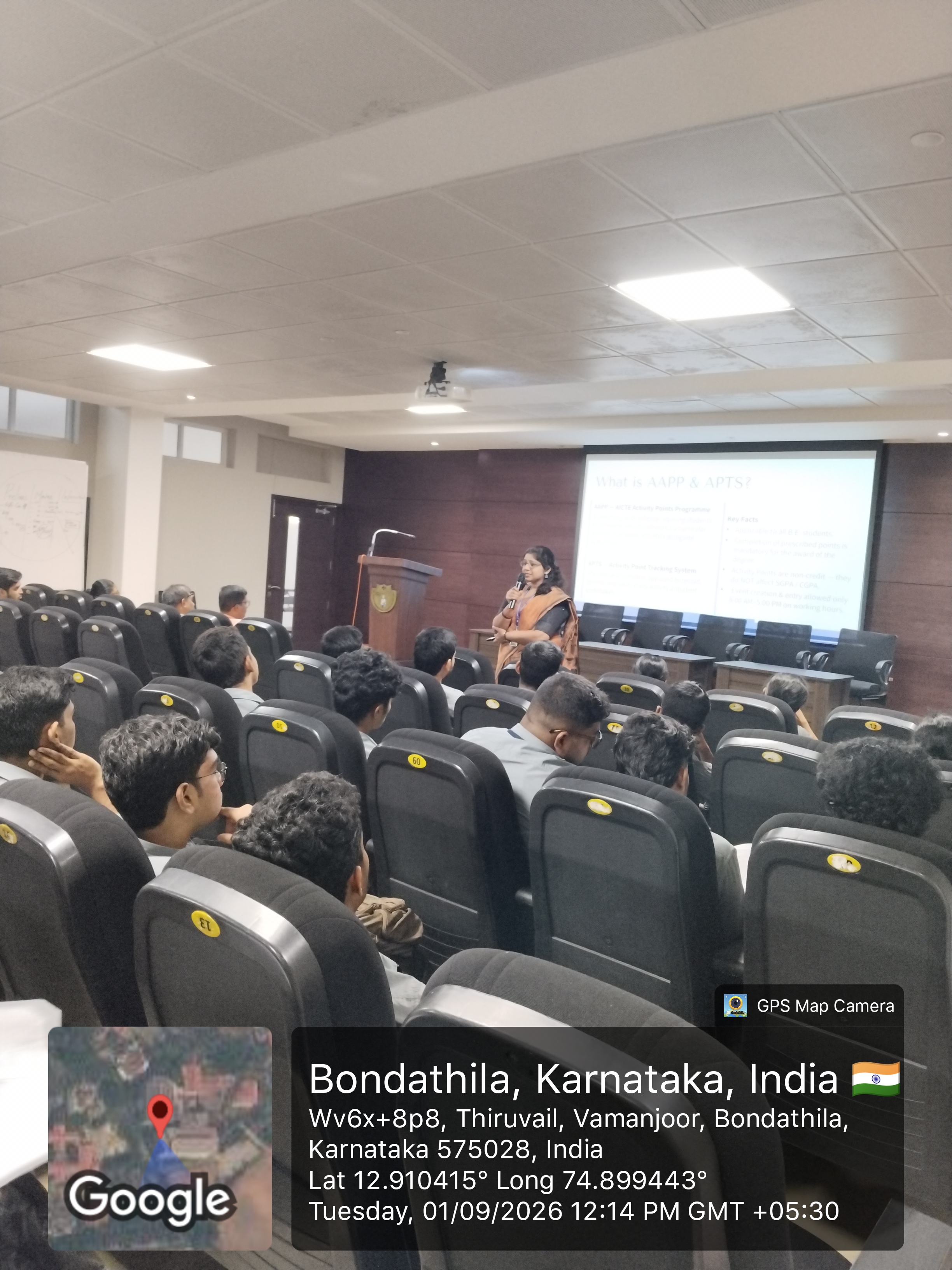
As part of the programme, an Orientation Programme for III Semester ECE students was conducted on 01 September 2026 from 9:00 a.m. to 1:00 p.m. at Prerana Hall, AB-III. The orientation programme was intended to familiarise students with the academic structure, autonomy curriculum, NBA accreditation, departmental activities, mentoring system, AICTE Activity Points, student clubs, and placement and training opportunities. The session commenced with an address by the Head of the Department, Dr Dayakshini, who welcomed the students and emphasised the importance of building a strong academic and professional foundation during the early years of their engineering programme. Mr. Keith R. Fernandes explained the structure of the Autonomy Curriculum, helping students understand the academic framework and effectively plan their academic journey. Mr. Prasad S M introduced the students to the Samarthya Club and highlighted the various opportunities available for students to participate in technical, co-curricular, and skill-development activities. Ms. Preetha D’Souza provided a clear overview of NBA Accreditation, explaining its significance in maintaining quality education, continuous improvement, and enhancing the academic reputation of the institution. Ms. Savitha J presented an overview of the department association, PRODIGI, emphasising its role in fostering technical, cultural, leadership, and professional development through student-driven initiatives. Ms. Madhavi Gatty briefed the students on the Mentoring System, stressing the importance of regular interaction with mentors and seeking guidance and support throughout their academic journey. Further, Ms. K Aarya Shri elaborated on AICTE Activity Points, explaining the importance of participating in co-curricular, extracurricular, social, and extension activities for the holistic development of students. The orientation programme concluded with a session by Ms. Florence Nishmitha on Placement and Training Opportunities. She highlighted the skills, competencies, and preparation required to enhance students’ employability and career readiness.
Technical and Skill-Enhancement Sessions:
The subsequent sessions for III Semester ECE students focused on Effective Calculator Techniques for Problem Solving, Fundamentals of Analog Electronics Circuits, Fundamentals of Digital Design, Strengthening Mathematical Foundations, and Laboratory-Based Learning.
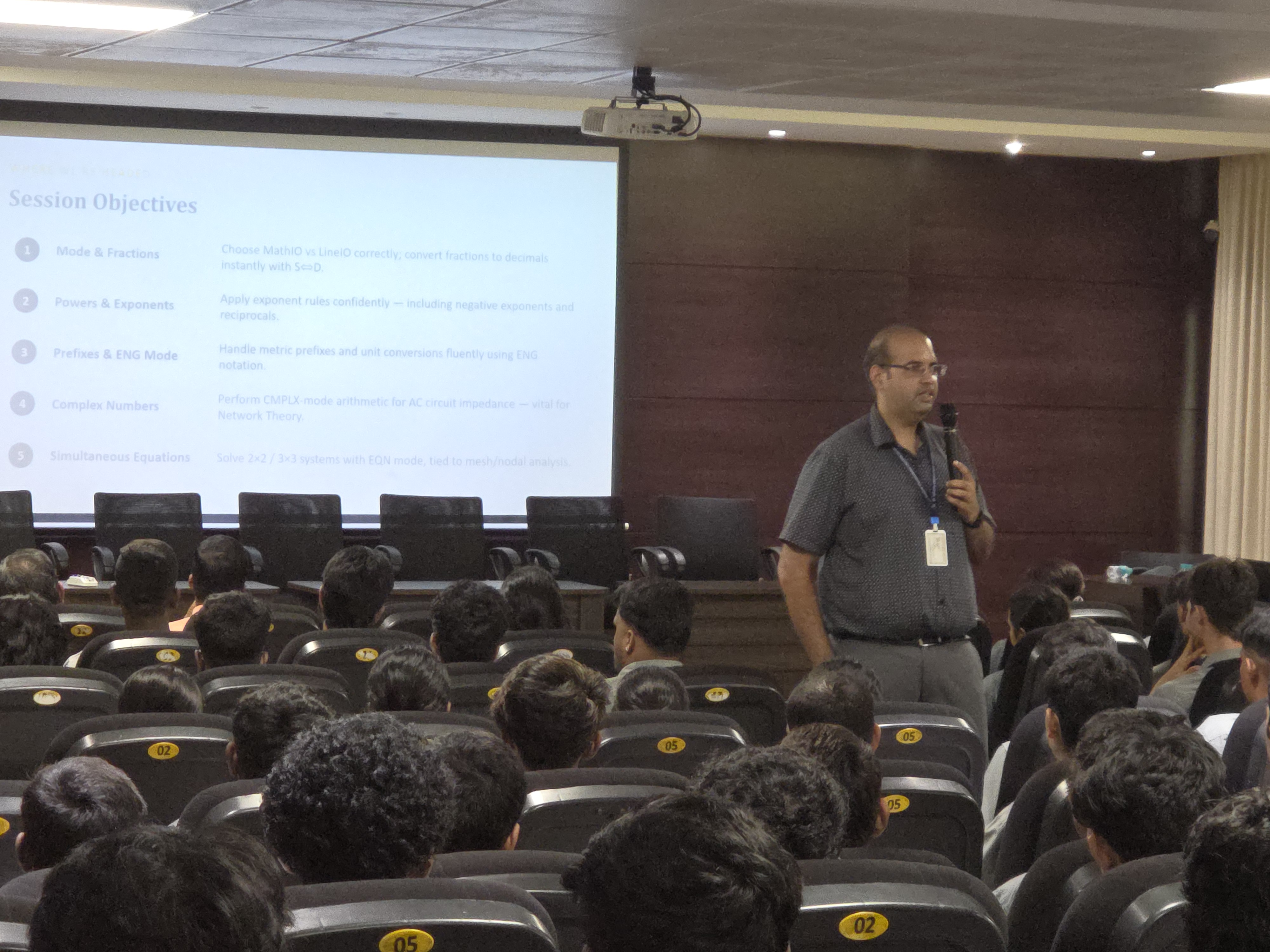
Effective Calculator Techniques for Problem Solving
The session on Effective Calculator Techniques for Problem Solving focused on improving students’ ability to effectively use scientific calculators for engineering and mathematical problem-solving. The session was conducted by Mr. Keith Raymond Fernandes and Ms. Savitha J, Assistant Professors, Department of Electronics and Communication Engineering.
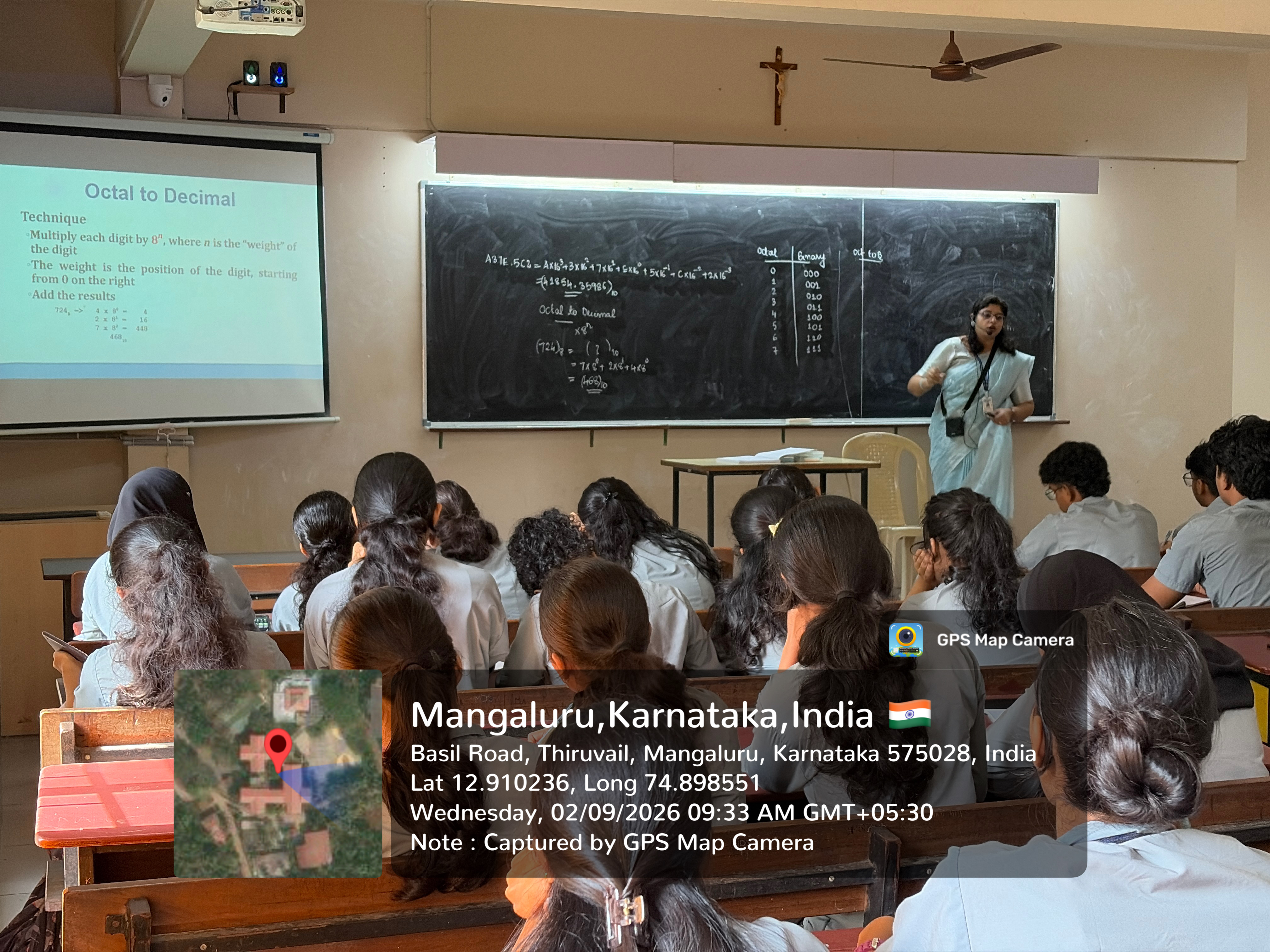
Fundamentals of Digital Design
The Digital Design sessions introduced students to fundamental concepts such as boolean algebra, logic gates, boolean expression simplification, and implementation of boolean expressions using basic logic gates.
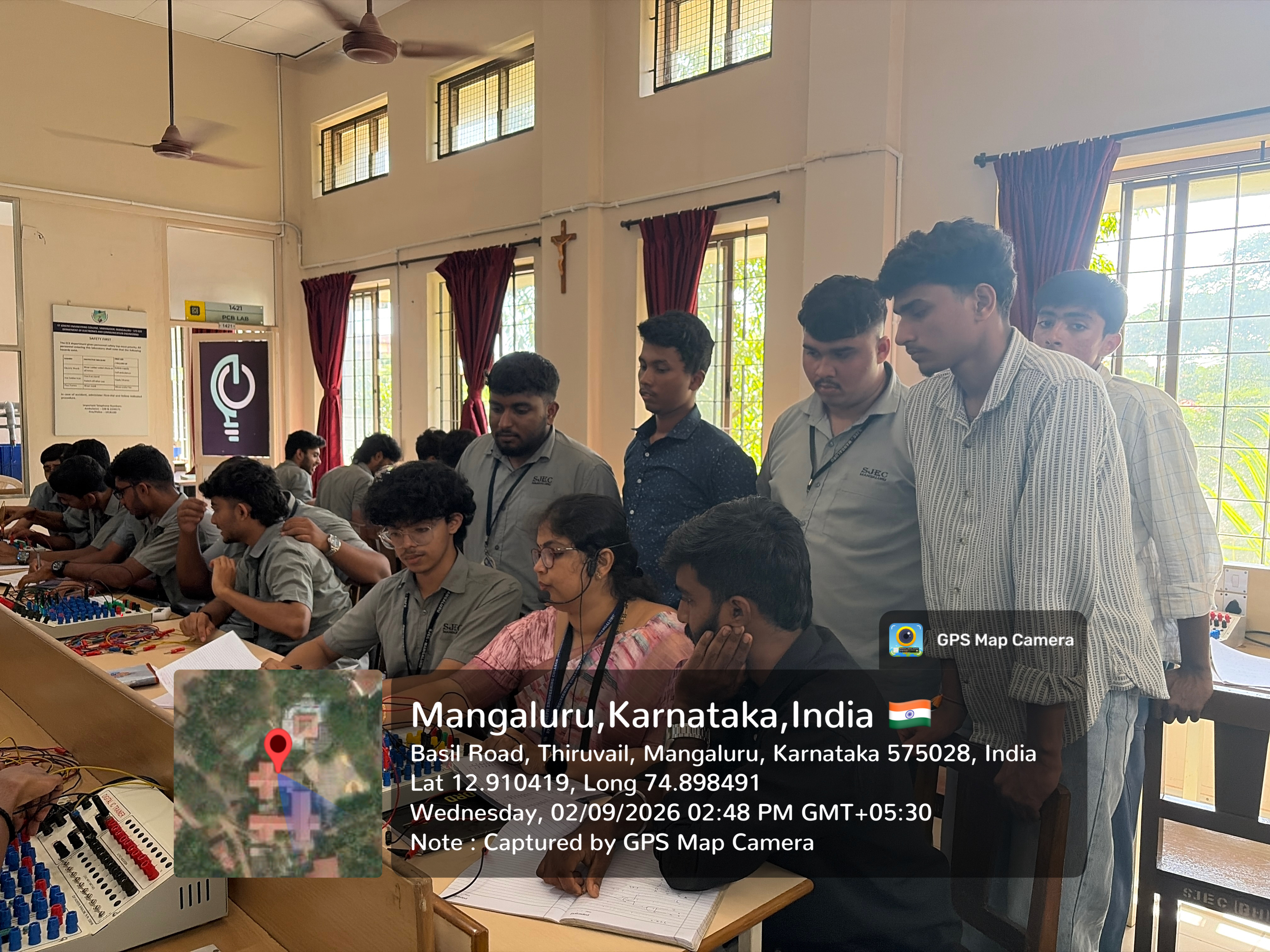
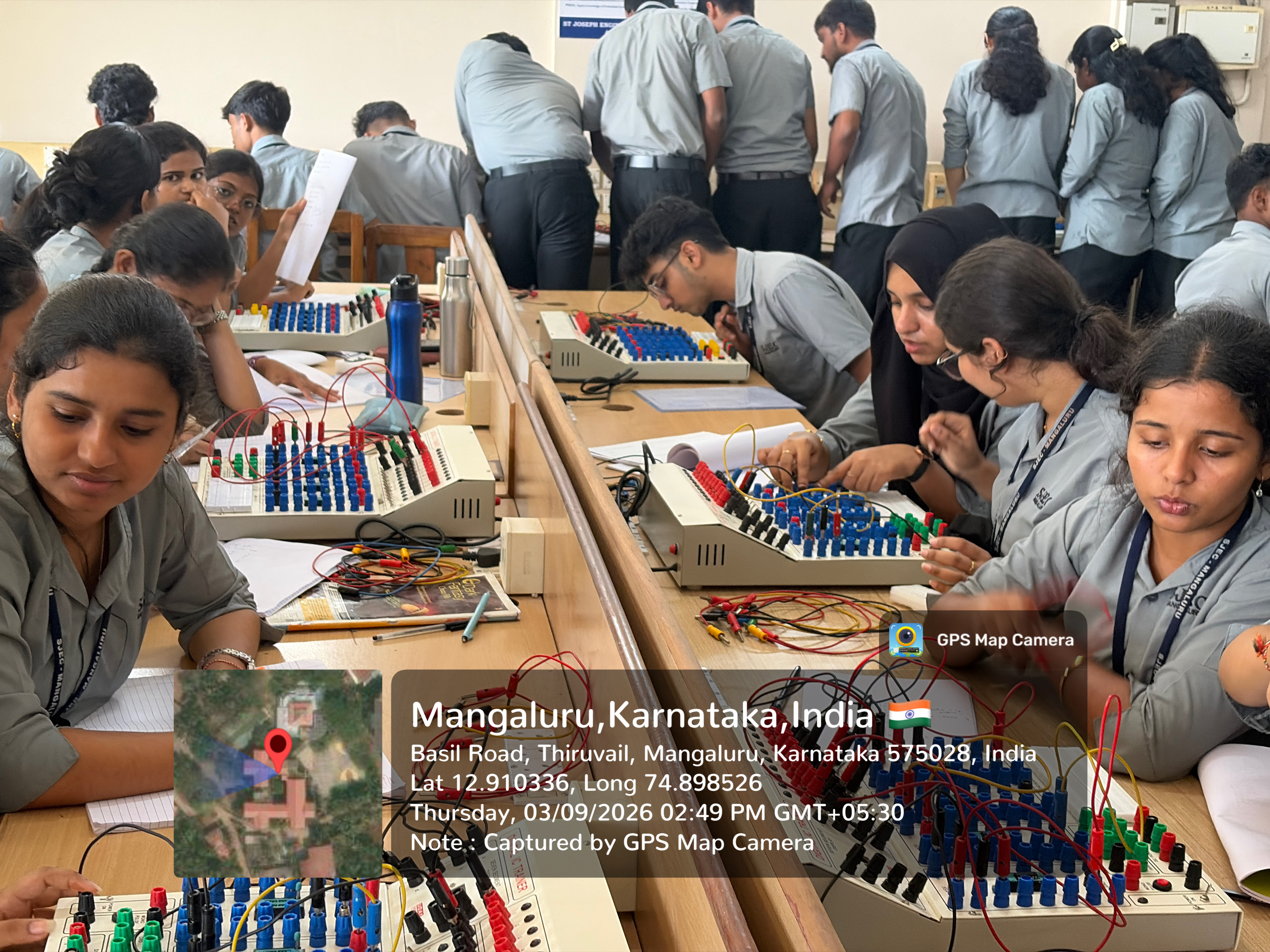
The laboratory component provided students with hands-on experience using digital trainer kits and standard digital ICs to realize basic logic functions. The practical exercises enabled students to relate theoretical concepts to actual digital circuit implementation.
The sessions were handled by Ms. Deepthi S. R., Ms. K. Aarya Shri, Ms. Madhavi Gatty, and Ms. Spoorthi Kumari, Assistant Professors, Department of Electronics and Communication Engineering, SJEC.
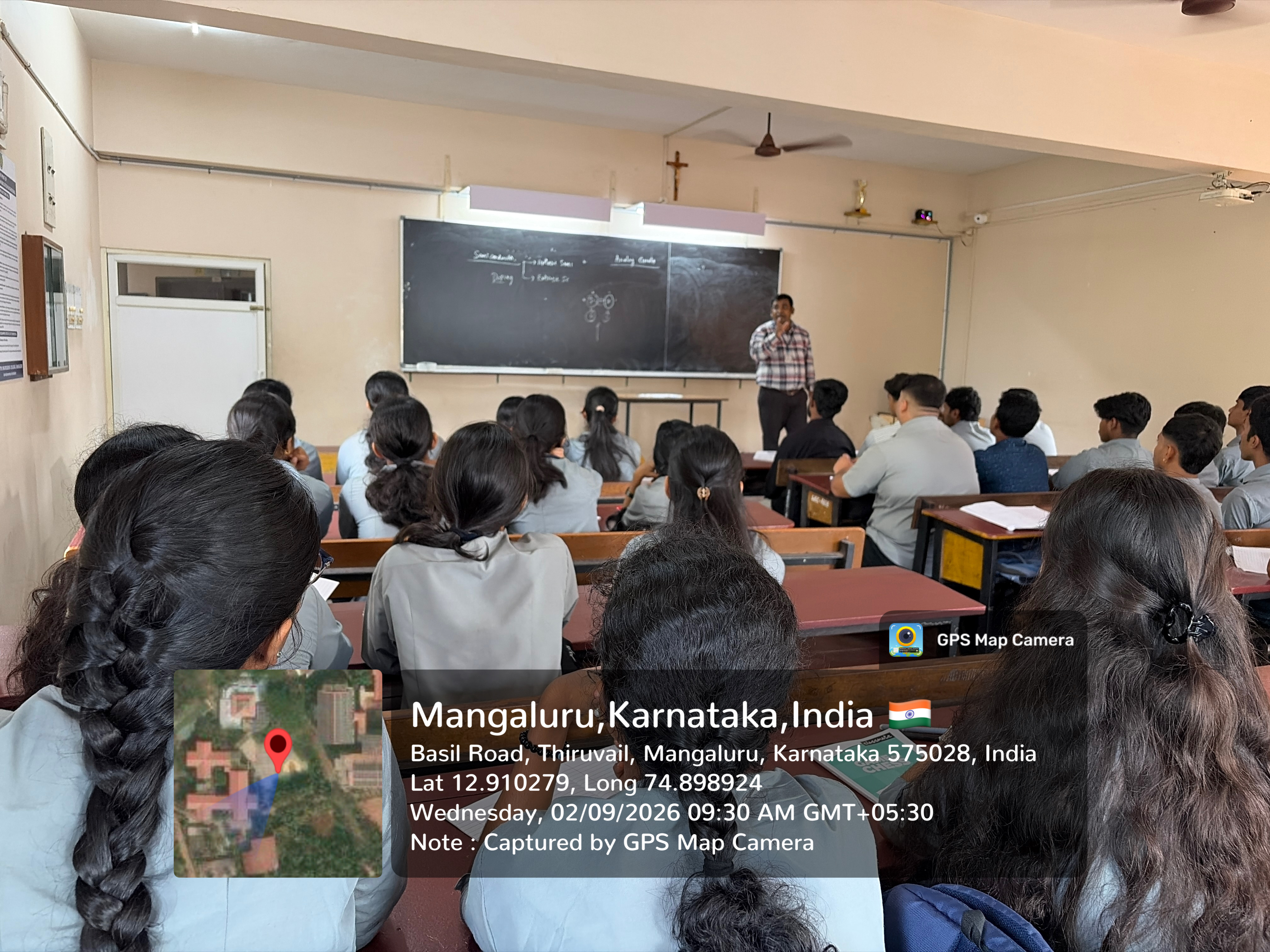
Fundamentals of Analog Electronics Circuits
The Analog Electronics Circuits sessions introduced students to active and passive electronic devices and covered fundamental topics including PN junction diodes, rectifiers, clippers, BJTs, and MOSFETs.
Students also gained practical exposure to essential laboratory instruments such as Digital Storage Oscilloscopes (DSOs), signal generators, and digital multimeters. The laboratory exercises included plotting the V-I characteristics of PN junction diodes, designing and analysing rectifier circuits, and studying transistor and op-amp configurations.
These activities enabled students to establish a strong connection between theoretical concepts and the practical behaviour of electronic circuits.
The sessions were conducted by Mr. Prasad S. M., Ms. Simi P. Thomas, Ms. Vinitha Pasanha, and Ms. Savitha J., Assistant Professors, Department of Electronics and Communication Engineering, SJEC.
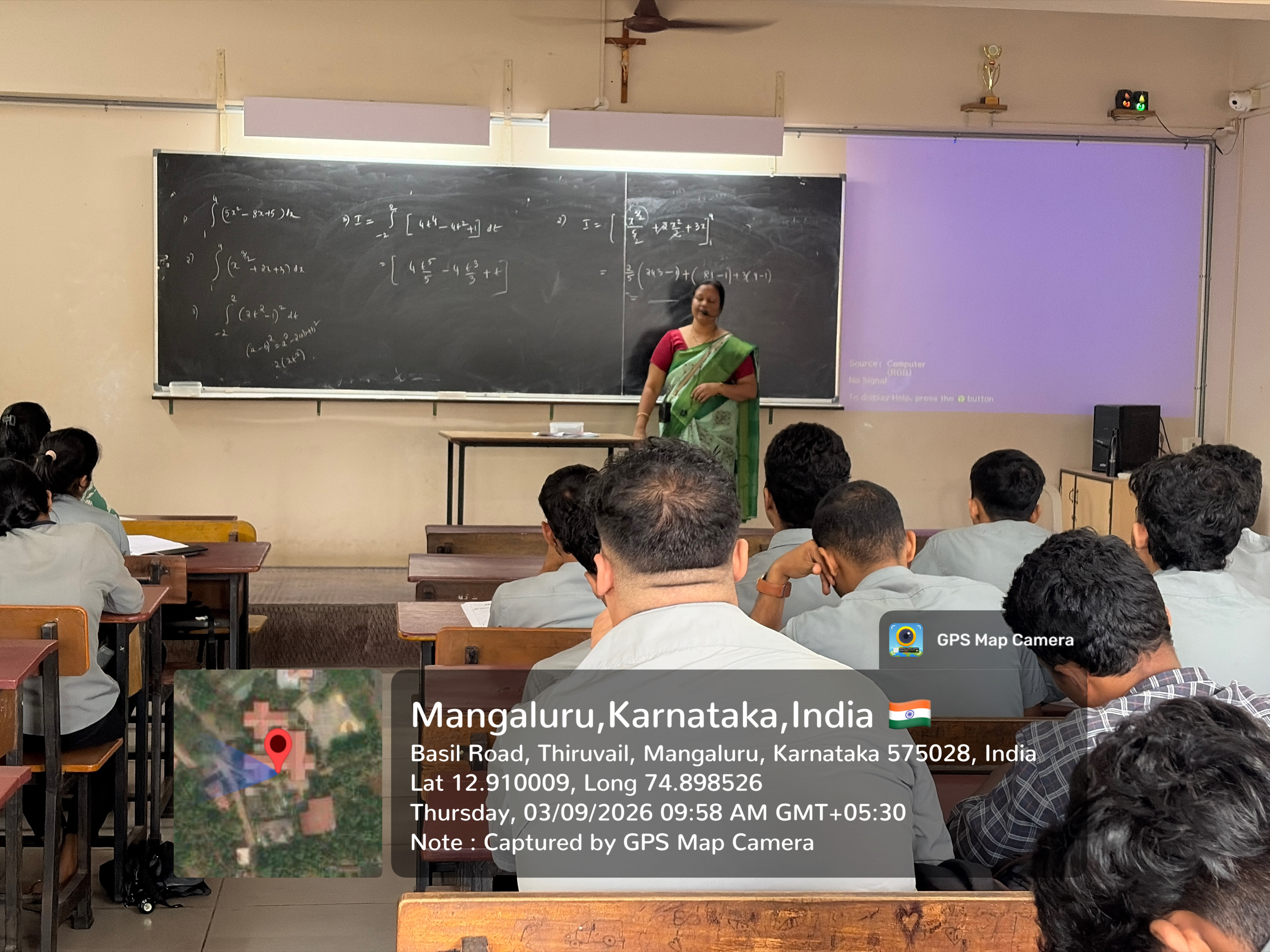
Strengthening Mathematical Foundations
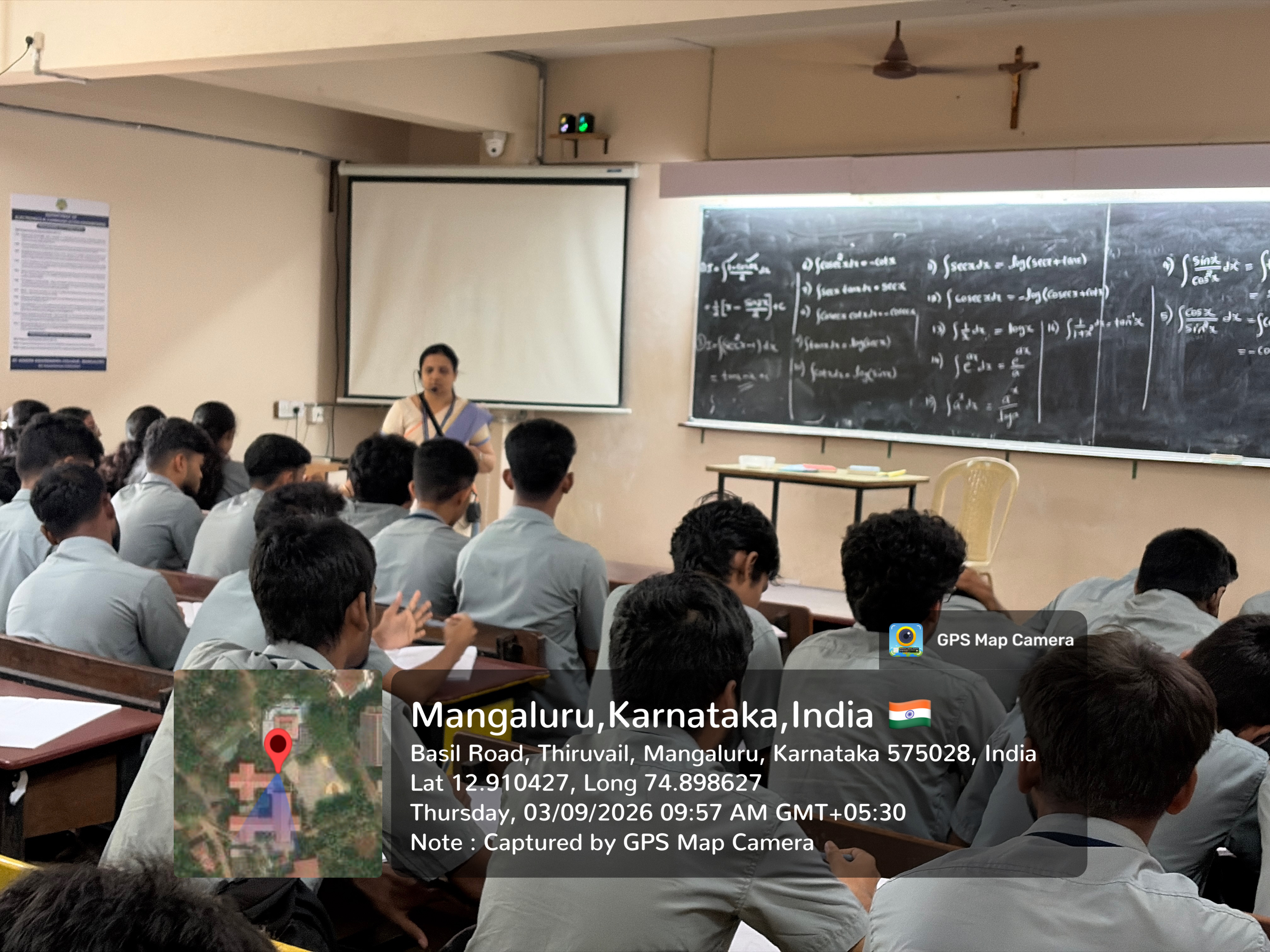
The session on Strengthening Mathematical Foundations focused on essential mathematical concepts required for engineering studies. The topics covered included differentiation, integration, arithmetic and geometric series, and Laplace transforms.
The session was conducted by Ms. Prathibha K. N. and Ms. Sowmya S., Assistant Professors, Department of Mathematics.
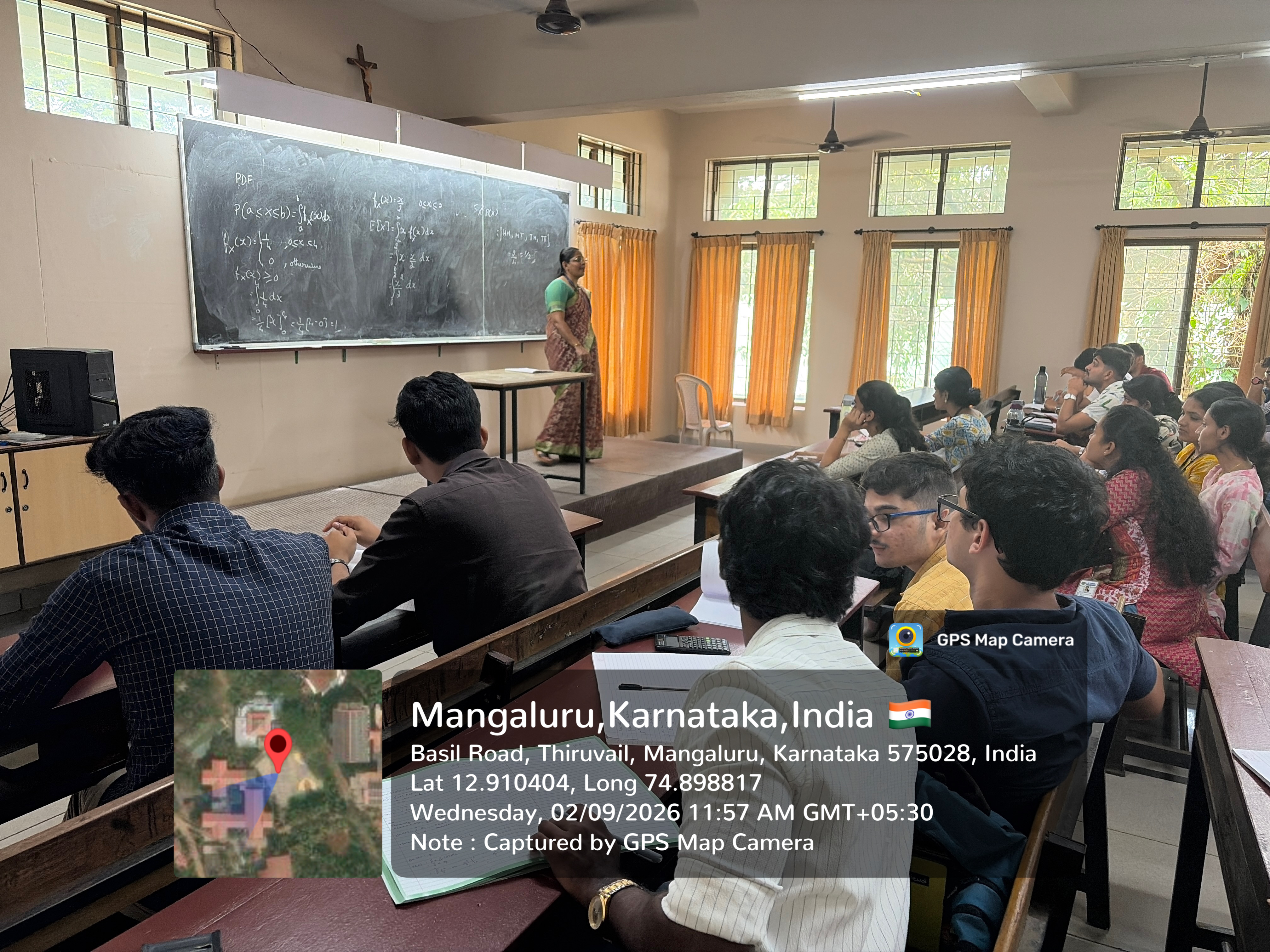
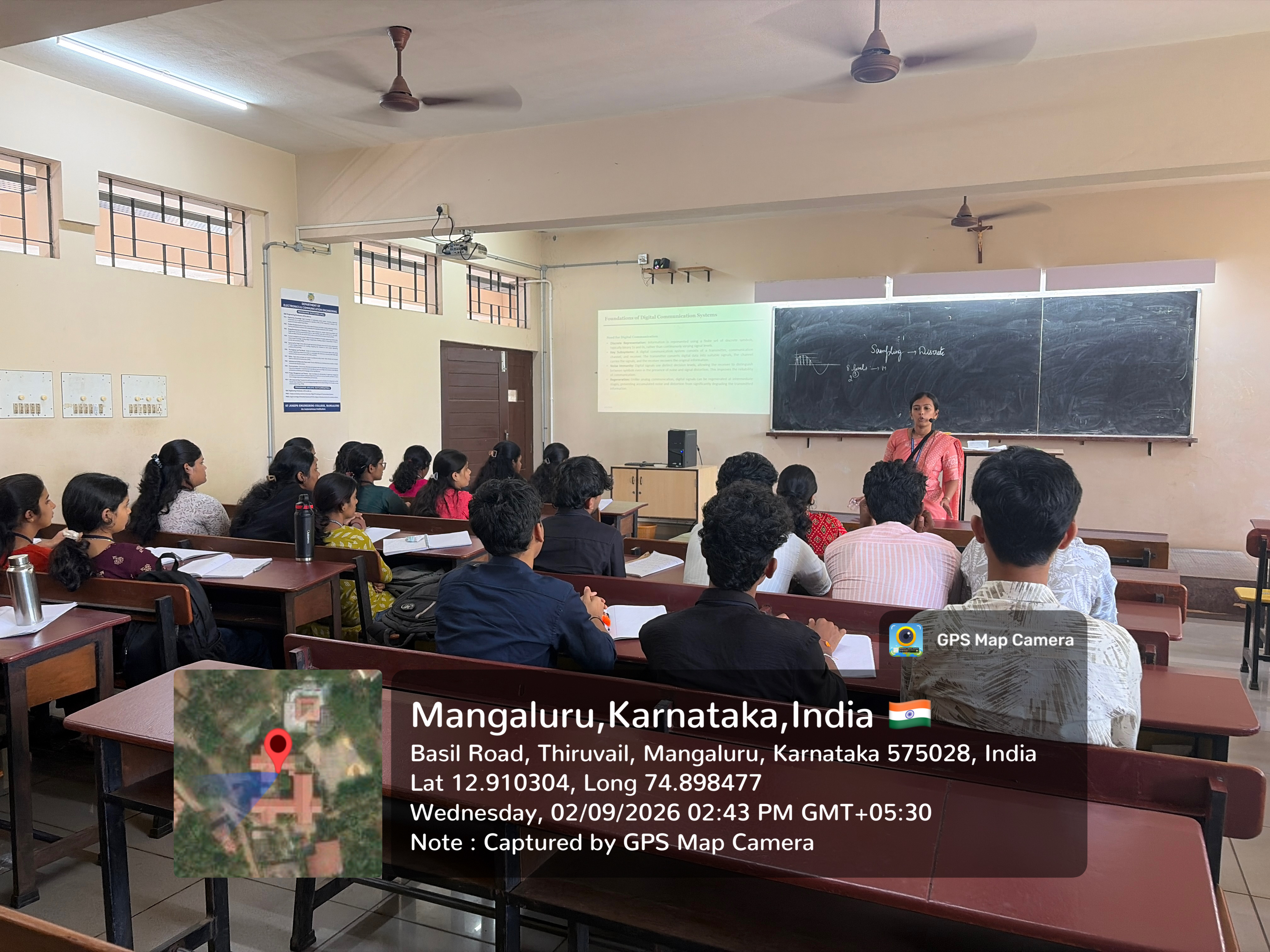
A two-day V Semester Bootcamp was conducted on 1st and 2nd September 2026 with the objective of strengthening students' conceptual understanding, numerical problem-solving skills, programming abilities, and practical knowledge.
Topics Covered
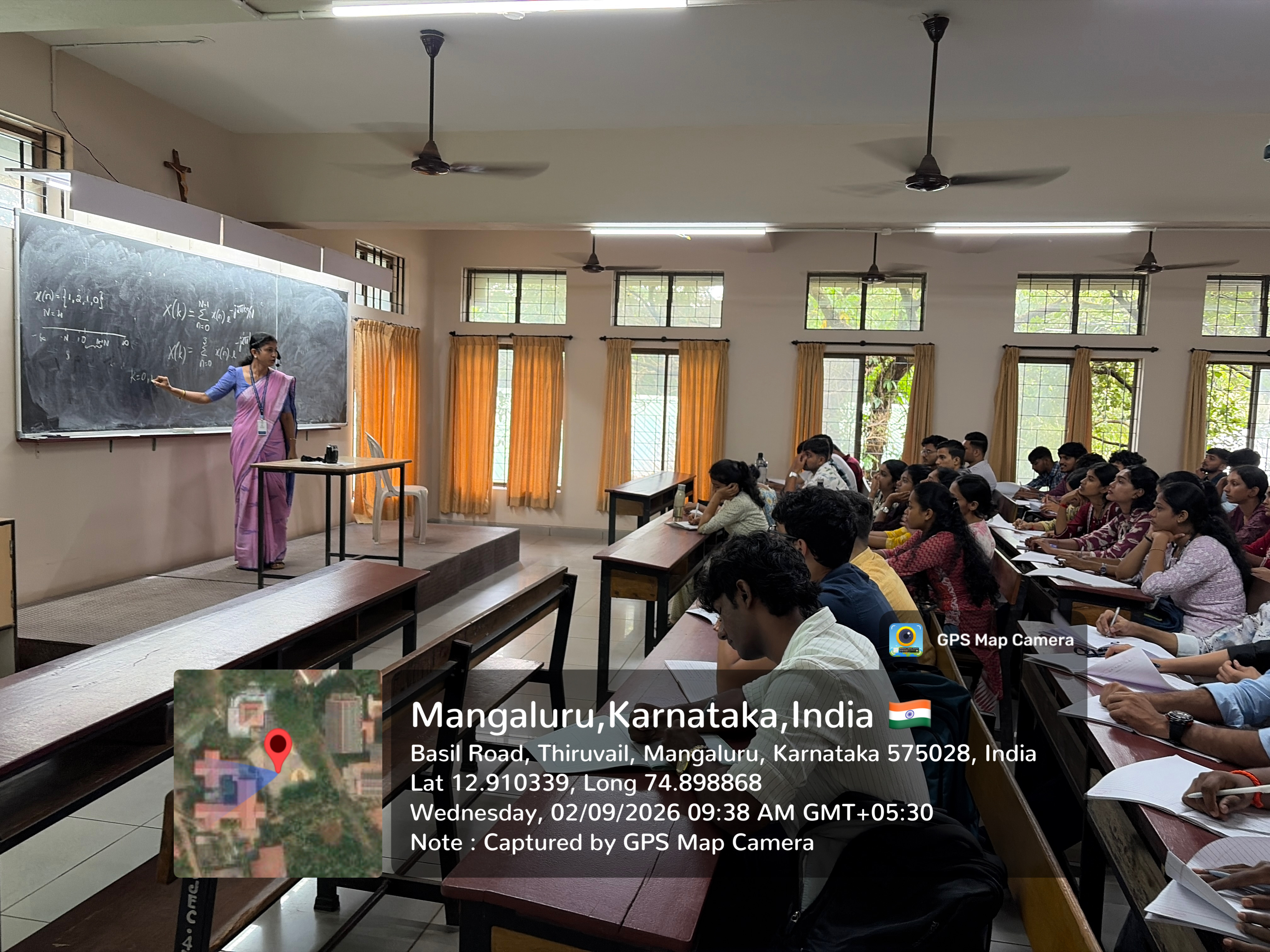
Fourier Transform: Fundamental concepts of Fourier Transform, frequency-domain representation, properties, and their applications were discussed. Students were encouraged to solve problems to reinforce their understanding of the concepts.
Discrete Fourier Transform (DFT): The concepts and computational procedure of DFT were covered separately, with emphasis on numerical problem-solving and understanding the representation of discrete-time signals in the frequency domain.
C Programming: Important theoretical concepts of C programming were reviewed, followed by hands-on programming exercises in the laboratory to improve students' coding and problem-solving skills.
Random Variables: Fundamental concepts of random variables and related numerical problems were discussed, helping students strengthen their understanding of probability concepts relevant to engineering applications.
Digital Communication: Important theoretical concepts of Digital Communication were explained, covering the fundamental principles and techniques involved in digital communication systems.
The programme was coordinated by Ms. Chaitra U R and Ms. Deepthi S R, Assistant Professors, Department of Electronics and Communication Engineering, SJEC.